
Creating an Effective Co-Parenting Calendar
When you create a co-parenting calendar, you want to do it well so you don't cause more stress for your children by changing the schedule later. Take time to think through the details before you commit to a schedule or calendar.
What is a co-parenting calendar?
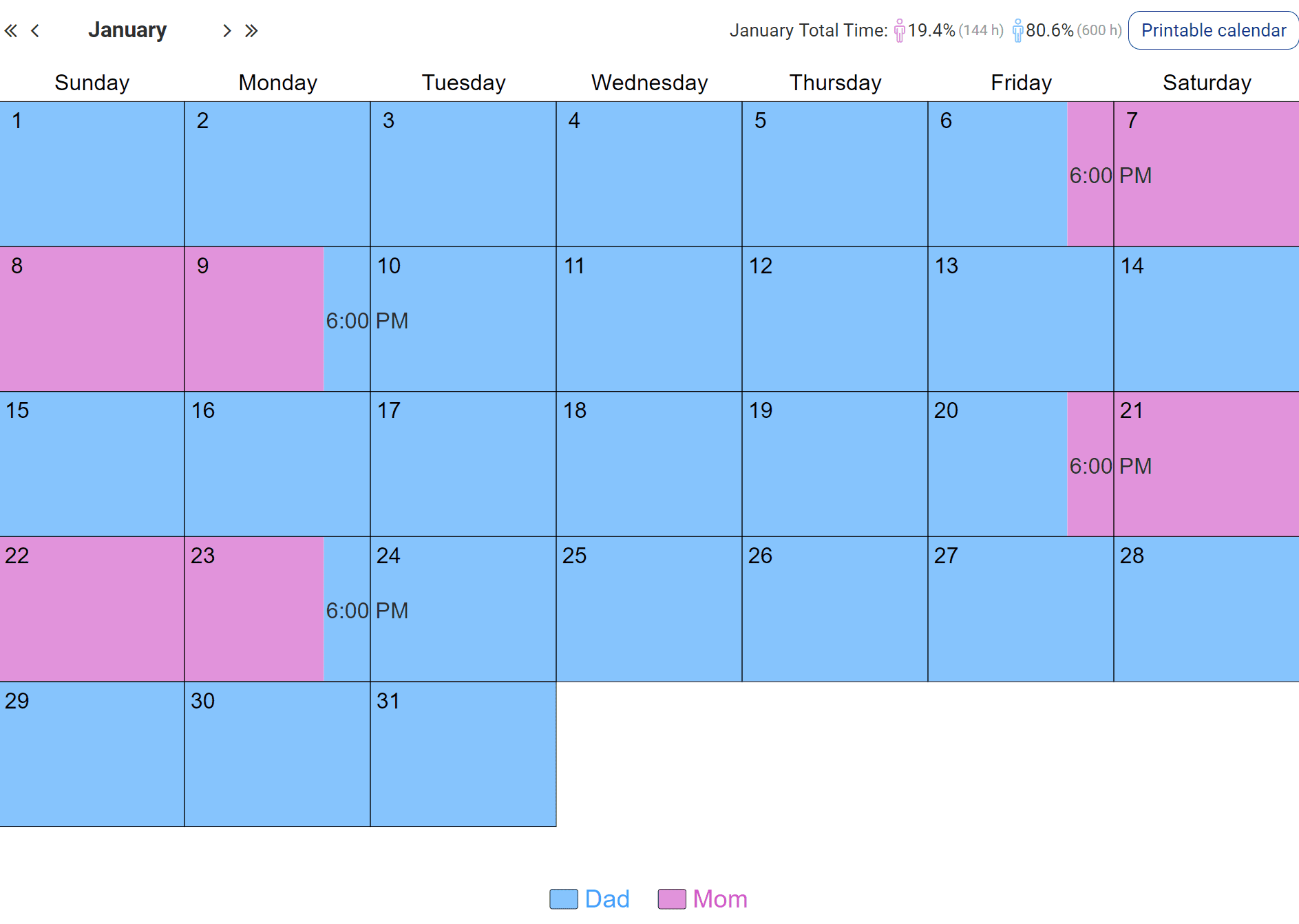
A co-parenting calendar is how divorced or separated parents determine where their children will be staying on any given day.
 Try this with Custody X Change.
Parents propose or agree to a schedule in their parenting plan, a document that outlines how they will co-parent. A calendar is how they visualize and keep track of the schedule.
Deciding on a co-parenting calendar (also called a visitation schedule or parenting time calendar) is often one of the most emotional parts of a divorce or custody proceeding.
Try this with Custody X Change.
Why your family needs a co-parenting calendar
Your family needs a co-parenting calendar to create stability for your children. Without one, there is too much room for miscommunication and conflict.
Here are some of the benefits of a detailed co-parenting calendar:
- A set schedule helps everyone adapt to life in two homes.
- You can make plans.
- You can plan a consistent parenting routine in both homes.
- It reduces the potential for arguments and miscommunication about visitation.
What information do I need to make a co-parenting calendar?
When you sit down with the other parent to create a co-parenting calendar, you should have your existing commitments written down. You're likely scheduling for at least the next year, so don't rely on your memory.
Bring with you:
- Start and end times for each child's school, including any short days
- Start and end times for each child's extracurricular activities
- Dates of school closures, including summer vacation
- Dates of holidays
- Dates of other important events, like vacations
With exact times and dates on hand, your co-parenting calendar will be more accurate. This will help reduce conflict.
You should bring drafts of a few calendars that would work well for you and your kids. This gives you a place to start negotiating and increases the likelihood that you'll end up with a schedule you like.
Before you start a draft, explore popular schedules. You can talk to friends, click through templates in the Custody X Change app, etc.
Try this with Custody X Change.
Don't try to have an AI chatbot make your co-parenting calendar. It can suggest ideas, but it won't give you a visual calendar. You'll need to make the parenting time calendar yourself or use an app.
If the other parent doesn't want to make a co-parenting calendar
If the other parent refuses to work with you on preparing a co-parenting calendar, create one on your own. You can submit a sample co-parenting calendar as part of your paperwork to the family court.
Since the court prefers to see a co-parenting calendar both parents contribute to, your judge may order you and the other parent to attend a mediation session.
However, it's also possible that the judge may agree with your individual proposal and make it official. As long as you show that the co-parenting calendar you've made is in the children's best interests, it could be approved as is. The judge may ask for minor modifications.
Don't skip out on giving the court a sample co-parenting schedule just because the other parent won't cooperate. As the expert on what is best for your children, you should let the court know your opinion on visitation.
If one parent wants to plan visits on the fly and the other parent wants a calendar, the court will decide that a parenting calendar is necessary. Scheduling without a calendar only works when both parents commit to that approach (and even then, it tends to get messy).
What judges want to see in a co-parenting calendar
The judge wants to see a co-parenting calendar that puts the children's needs ahead of parental convenience or desires. The goal of family court is to protect the children from any harmful effects of divorce or separation.
Ideally, the judge wants parents to cooperate on how they'll provide physical and emotional stability after the divorce. Parents who negotiate a parenting plan, including a co-parenting schedule, show the court that they're putting their children first.
The co-parenting calendar should show the judge that you are preserving the children's current lifestyle as much as possible. This may mean scheduling around the activities they already participate in, for example.
Here are some things to avoid when creating a co-parenting calendar:
- Avoid visits that last more than a few days for small children.
- Avoid more than a few transitions between homes in a week, especially if the homes are far apart.
- Avoid unreasonable transition times, such as late at night.
- Avoid significantly limiting the children's time with the noncustodial parent, unless the court finds it necessary.
- Avoid making a calendar hastily
Ensuring your calendar meets your children's needs
Keeping a parenting journal helps you see if your calendar is meeting your children's needs. It gives you a place to you keep track of notable events, from arriving at school late to your child acting out. Then you can recognize patterns.
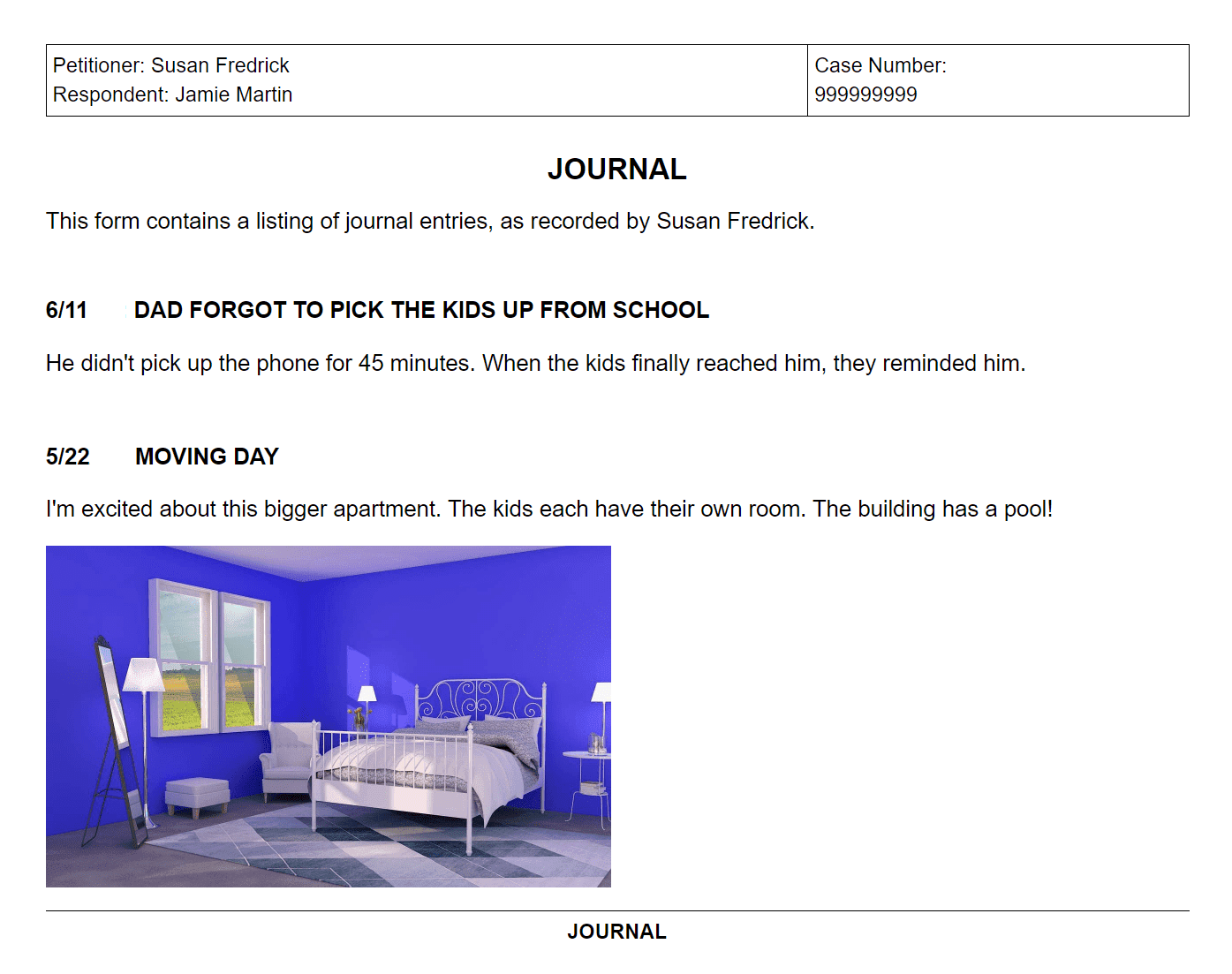
Tracking missed and late visits is also a good idea. This way you can see if your children are missing out on a significant amount of time with one parent. If so, you can adjust the schedule (or the child support amount).

The other parent is more likely to acknowledge that the calendar needs adjusting when you can point to evidence you noted as it happened. If you need to make official changes to the co-parenting calendar, your parenting journal or an actual parenting time report can help convince the judge that revisions are necessary.
The easiest way to make a co-parenting calendar
Creating a calendar on your own can feel overwhelming. You'll want it to address holidays and school breaks, divide parenting time appropriately, and work for years to come.
The Custody X Change app takes the guesswork out of the equation by helping you build a calendar piece by piece.
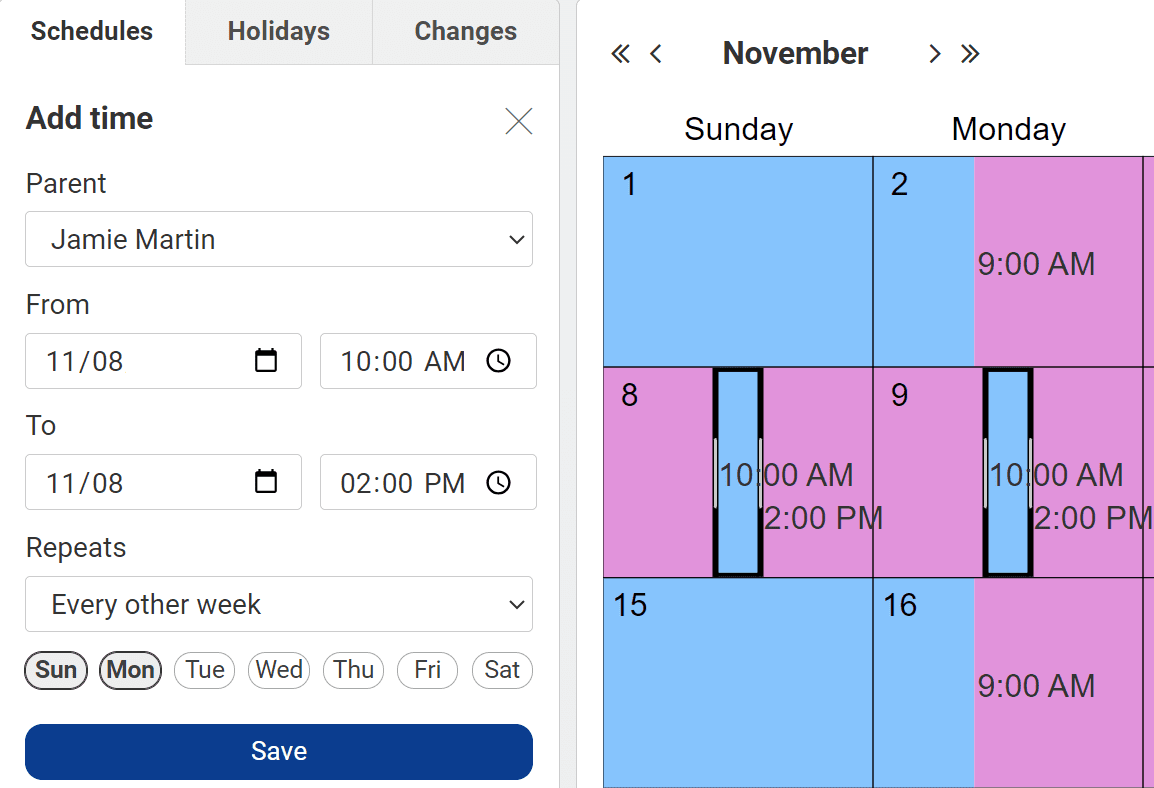
As a result, you get a visual calendar and a written schedule. They meet your family's needs, as well as the court's standards.
For quick, reliable and affordable help making a co-parenting calendar, turn to Custody X Change.