
Child Contact Schedules in Delaware (Custody Schedules)
A contact schedule tells parents when their child should be in their physical custody. Parents can agree on a schedule or let a judge decide.
After you start a custody or divorce case, the court will typically schedule a mediation session. You'll need to file a disclosure report, which details the contact schedule you prefer, on or before the mediation date. If you reach an agreement at mediation, you'll get a consent order that includes your chosen schedule. Otherwise, the judge will decide at trial.
Why a contact schedule is important
Without a court order, neither parent can prevent the other from being with the child at any moment. The situation often becomes disorganized, with no enforceable rules to rely on. For this reason, obtaining a court order is strongly recommended.
Choosing a schedule
Here are some of the factors the court considers before ordering a schedule. Parents should also consider them when choosing a schedule.
- The child's wishes
- What parents believe is best for the child
- If both parents have encouraged the child to be part of one another's lives (If one hasn't, they may get less time.)
- The child's relationships with other family members (e.g., siblings and grandparents)
- How much time the child is used to spending with each parent
- How far parents live from one another and the child's school
- How well the child has adjusted to their school and community
- Any history of domestic violence
Some parents choose to schedule virtual visitation, as well, if one parent has a busy work schedule or lives far away.
You could give grandparents or other relatives regular visitation time, too, though this usually happens informally (not in the court order).
Keep in mind that the number of overnights you spend with the child can impact the child support amount.
Sample contact schedules
If you can agree, the court is willing to approve just about any schedule — though there are some limits. "Courts don't like a child to be away from a parent for more than two weeks," said Attorney Thomas Gay of Georgetown. (Exceptions can be made for summer break, discussed further below.) Overall, your schedule must serve the child's best interests.
If a judge picks your schedule, they will likely choose the one Delaware's contact guidelines recommend for your child's age.
Here are some common schedules in Delaware.
Shared physical placement
Shared physical placement means the child spends almost equal time with each parent. For child support purposes, this is at least 164 overnights a year.
Courts lean toward this arrangement for children 5 and over, so long as both parents can care for the child.
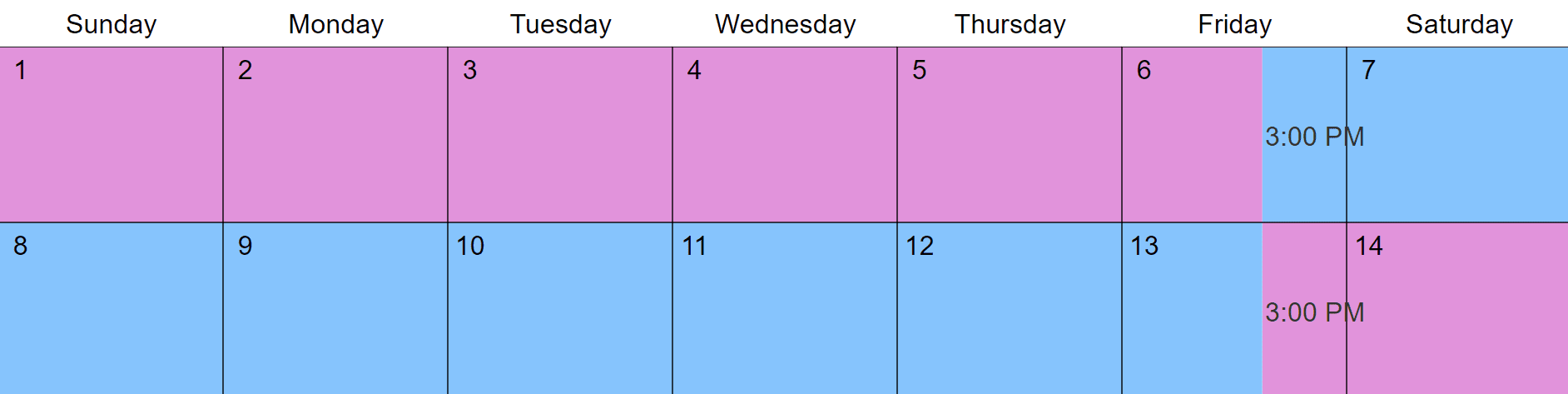
An alternating-weeks schedule gives the child seven days in a row with each parent.
 You can customize this with Custody X Change.
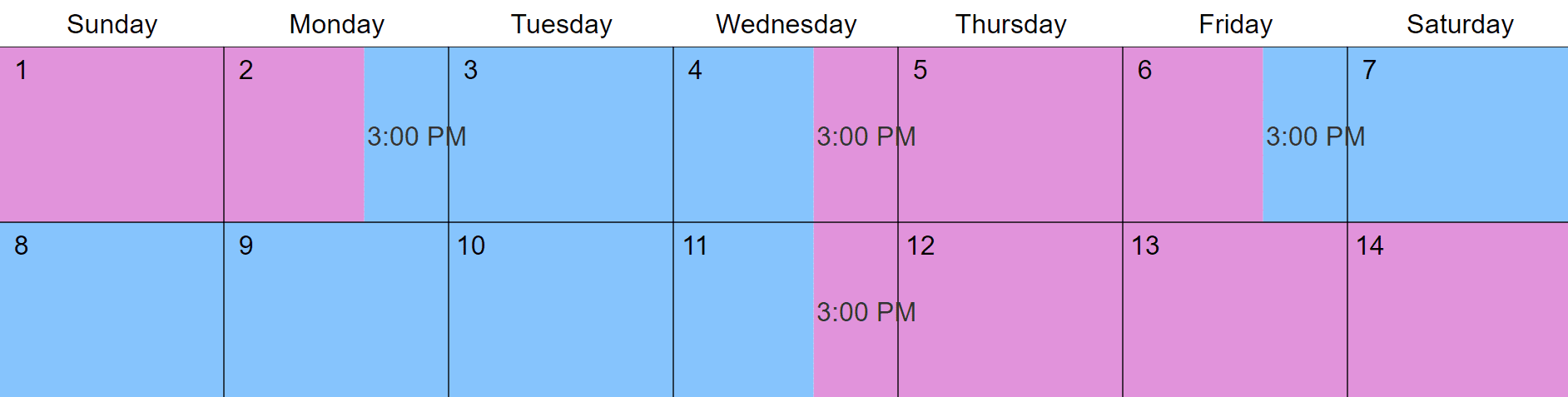
The 2-2-5-5 schedule has shorter visits and more exchanges during the week, which can work well if both parents live near the child's school.
 You can customize this with Custody X Change.
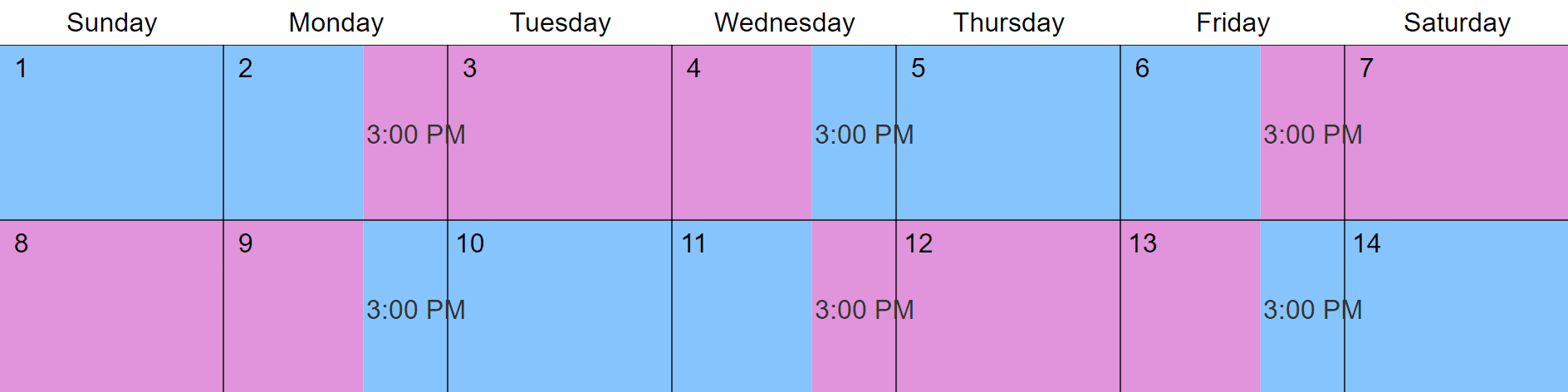
The 2-2-3 schedule offers more exchanges for a child who needs to see both parents frequently.
 You can customize this with Custody X Change.
Primary physical custody
Primary physical placement means the child mainly lives with one parent while the other parent has scheduled parenting time. Visits might be supervised if a parent poses a danger to the child.
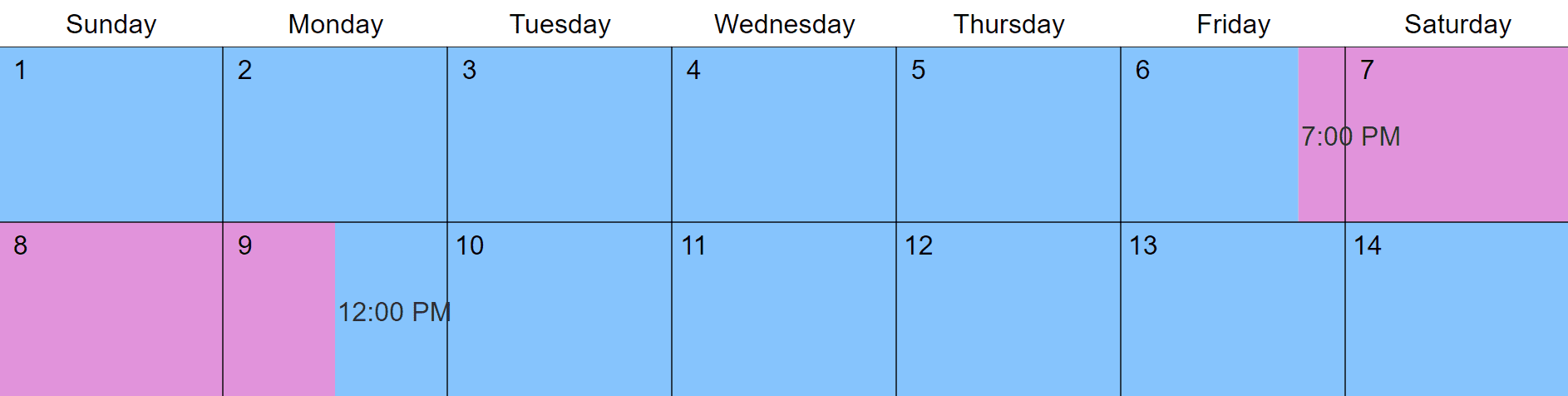
In this arrangement, it's most common for the child to spend every other weekend with the noncustodial parent.
 You can customize this with Custody X Change.
There might also be a midweek dinner visit…
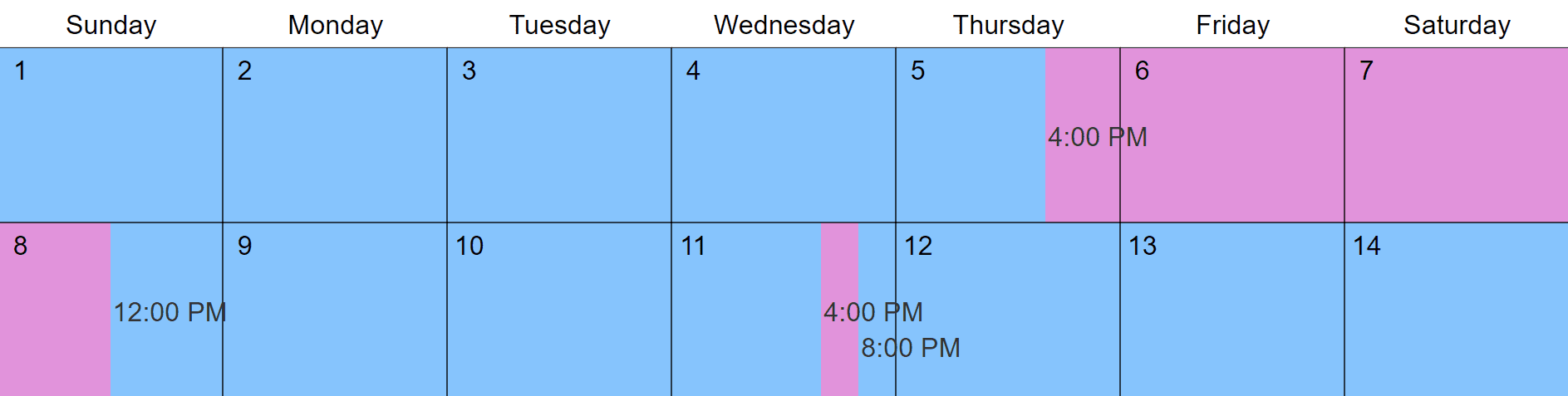 You can customize this with Custody X Change.
…or a midweek overnight.
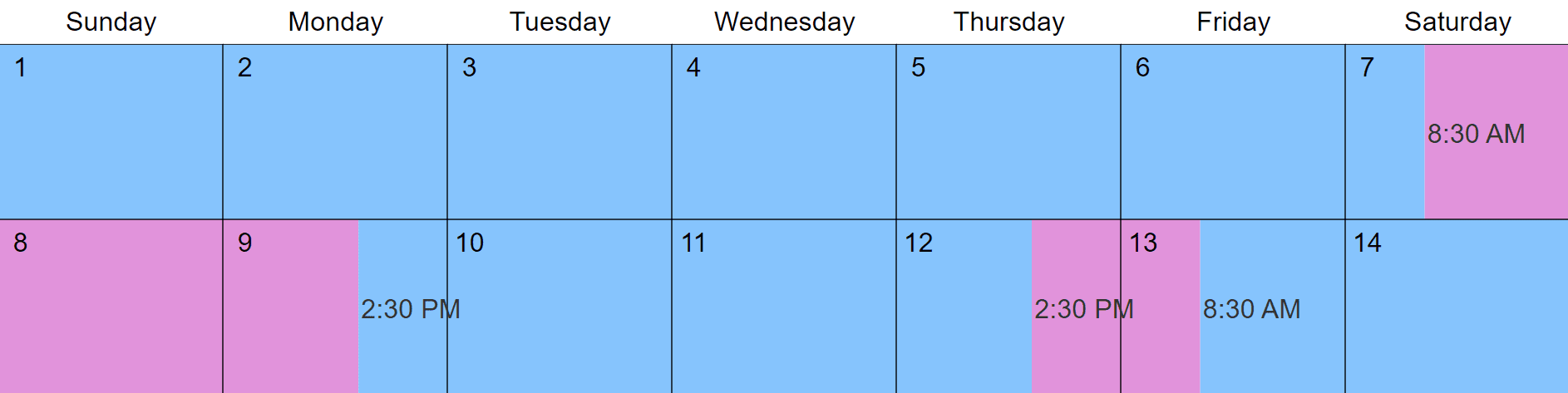 You can customize this with Custody X Change.
Holidays and summer break
Include holidays and school breaks so you don't have to decide where the child will be at the last minute.
Parents typically alternate holidays by odd and even years. In other words, if one parent has Christmas Day this year, the other parent will have it next year.
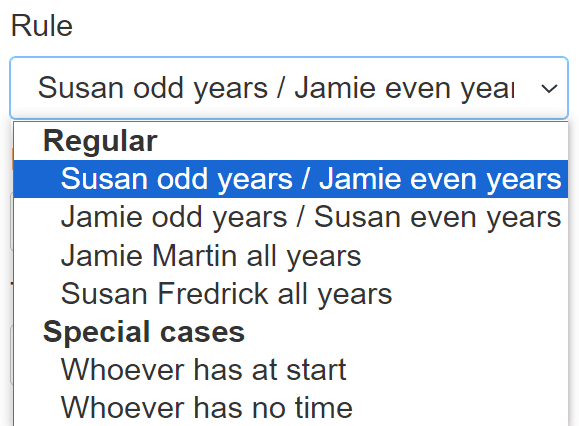
Summer schedules vary. The court may choose to follow Delaware's contact guidelines, which advise switching to an alternating-weeks schedule (if parents aren't already following one). Parents also get two nonconsecutive weeks of vacation during that time.
Parents who reach an agreement can choose to split summer break differently. Each parent might get a few weeks at a time.
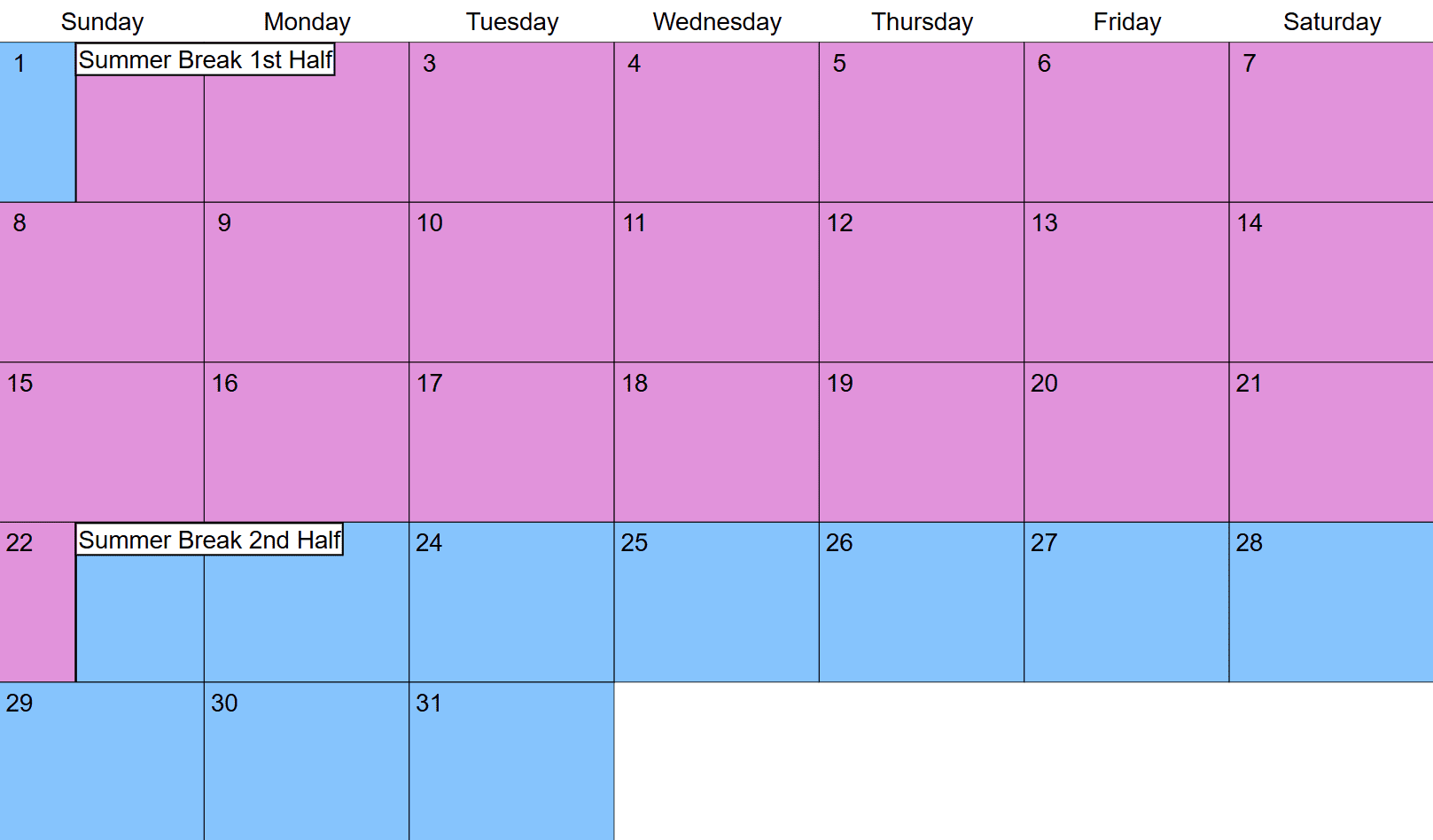 You can customize this with Custody X Change.
The easiest way to make a schedule
If you're like most parents, creating a custody and visitation schedule will feel daunting. How do you write something that meets legal requirements and doesn't leave any loose ends?
The Custody X Change app makes it easy. Either customize a schedule template, or click and drag in your custody calendar to make a schedule from scratch.
Try this with Custody X Change.
Then watch a full description appear in your custom parenting plan.
Try this with Custody X Change.
The combination of a visual and written schedule means your family will have no problem knowing who has the child when. Take advantage of Custody X Change to make your schedule as clear and thorough as can be.