
Visitation Plans in Puerto Rico (Visitation Schedules)
A visitation plan (also called a visitation schedule) spells out when a child will spend time with each of their parents.
Create any schedule that works for your family. The child can stay with each parent for days, weeks or even months at a time.
How the court decides your schedule
Parents can agree to follow a set schedule or a flexible routine. They put the details in their parenting plan, and a judge approves it if it's in the child's best interests.
If parents can't agree, each one proposes a schedule in their initial paperwork. The court assigns a social worker to review the case, and the judge considers their recommendation when deciding.
If the court decides, joint custody will be the first preference unless it's not in the child's best interests. Even in a joint custody arrangement, the child may spend more time with one parent.
Things to consider when choosing a schedule
- Your child's age
- Distance between parents' homes
- Location of the child's school
- Parents' work schedules
- Your child's school and extracurricular schedules
- Availability of day care and babysitters for the child
- Whether you'll need supervised visitation
- Visitation with grandparents and other relatives
Note that a parent pays less child support if they have at least 20% of parenting time.
Common schedules
The alternating-weeks schedule lets the child stay with each parent for one week at a time. It's a 50/50 schedule.
 Try this with Custody X Change.
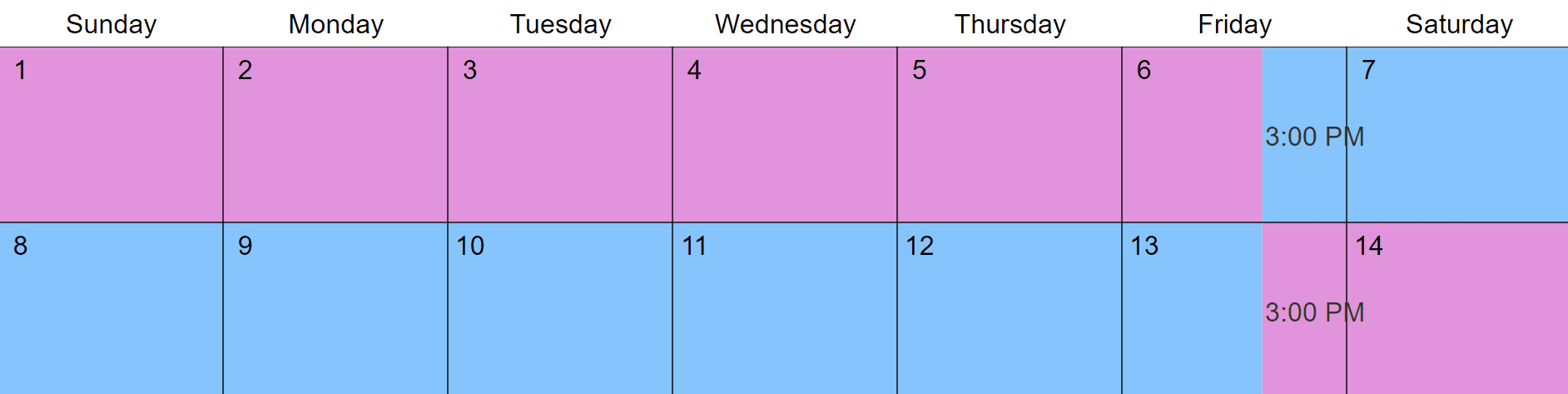
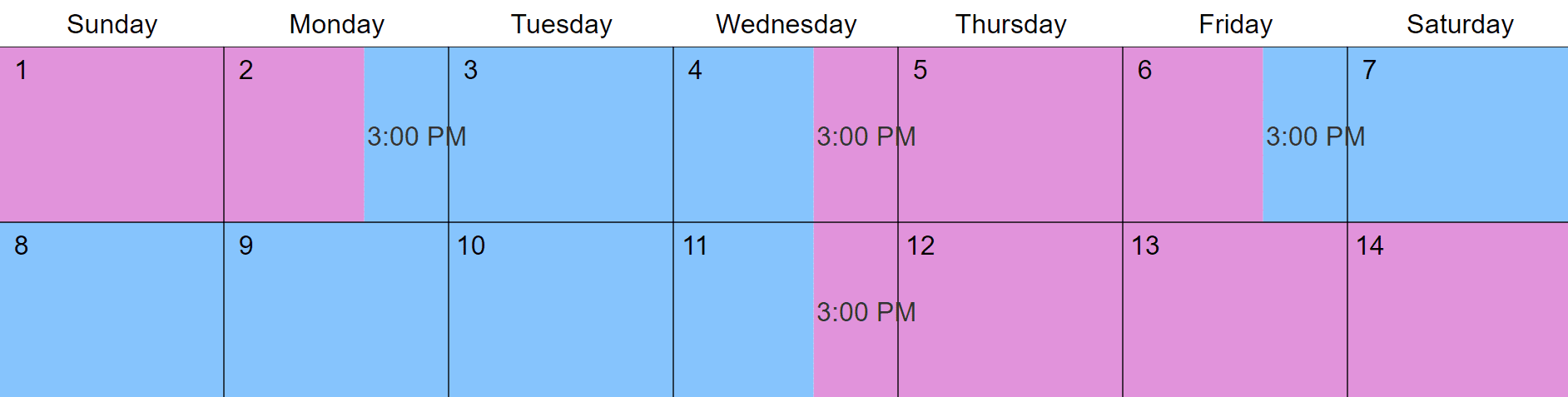
The 2-2-5-5 schedule is a popular choice with more frequent exchanges. Each parent has the same two weekdays every week, while the long weekend alternates between them. It's another 50/50 schedule.
Placing the child with the noncustodial parent every other weekend is a possibility. This is an 80/20 schedule.
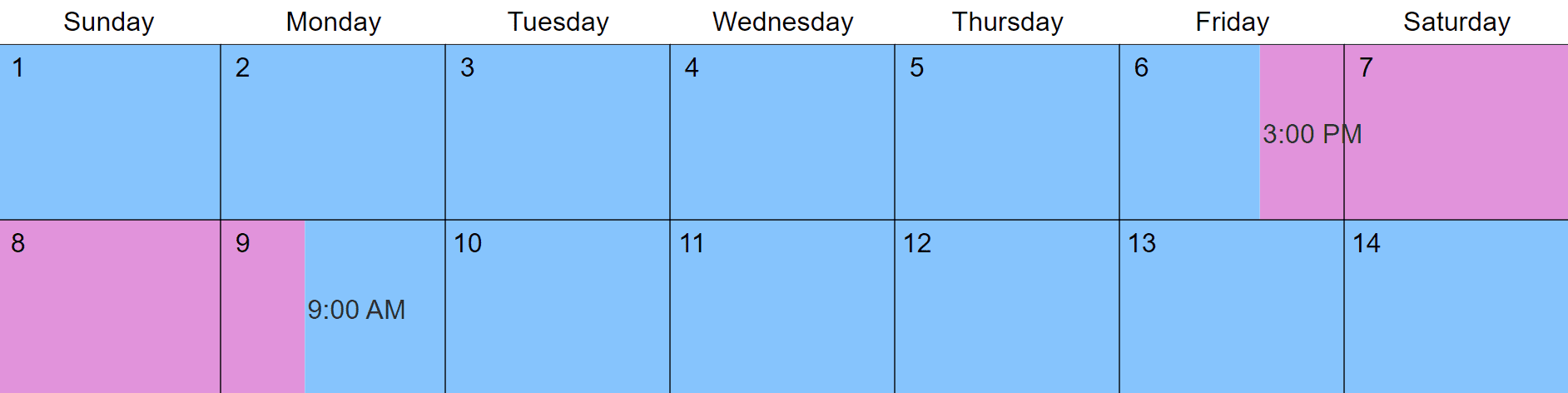
The first-third-and-fifth-weekends schedule gives the noncustodial parent a few extra weekends a year. (When a month has five weekends, they get two weekends in a row: the fifth weekend, plus the first weekend of the following month.) It's still roughly an 80/20 schedule.

Schedules when your co-parent lives off the island
If the other parent lives outside of PR, choose a long-distance schedule.
One option is to give the long-distance parent one weekend each month…
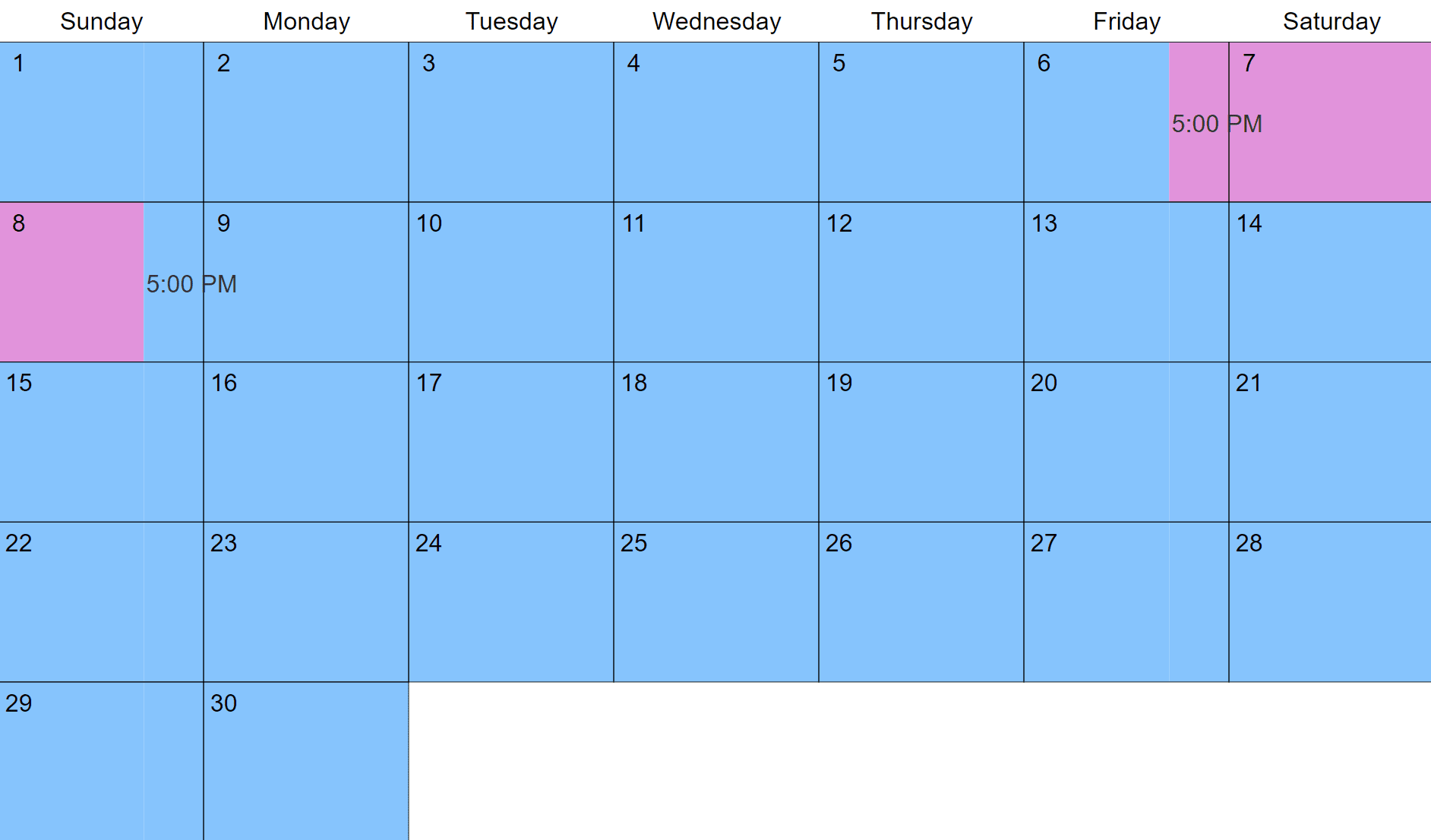
…then more time in the summer.
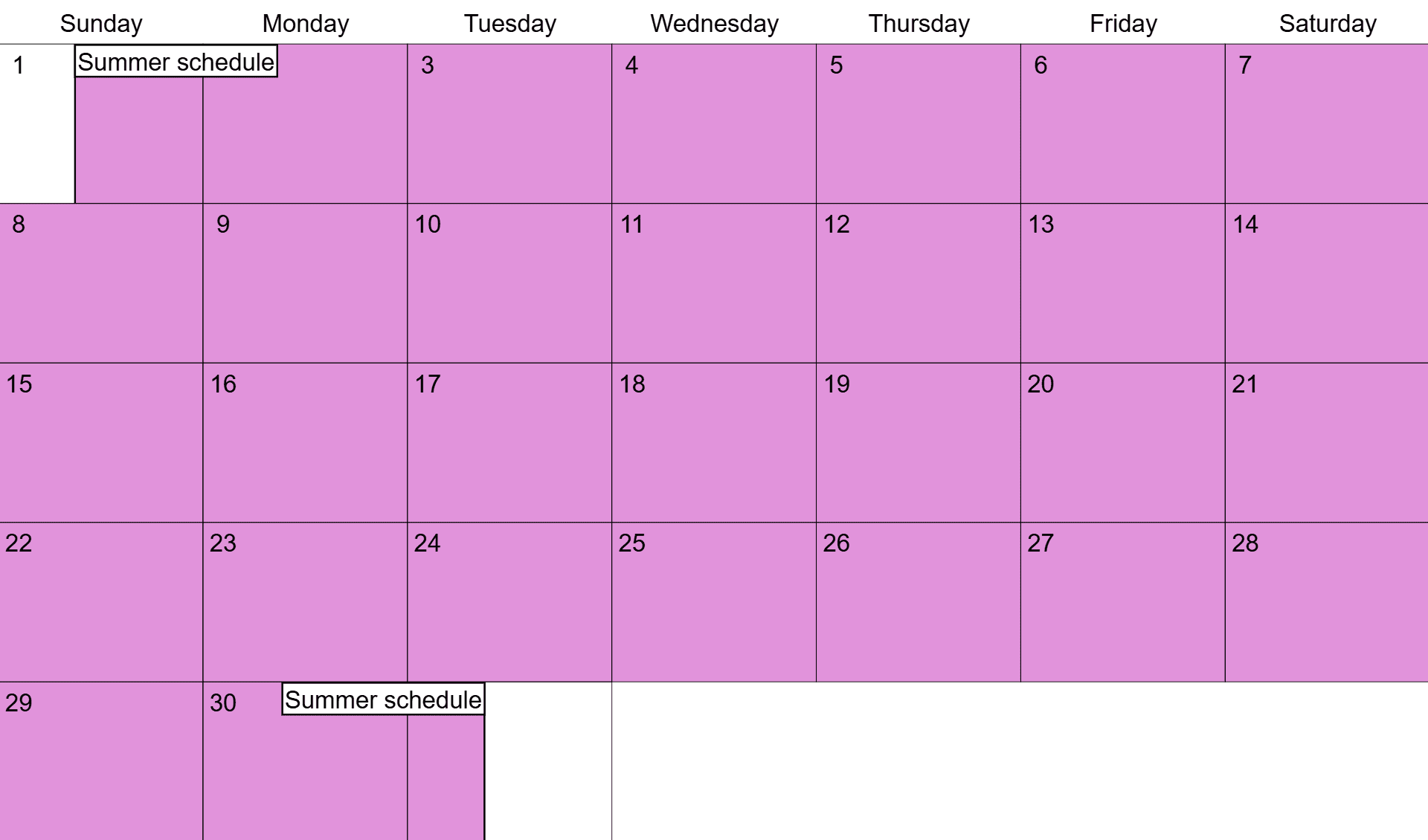
Or you may need to do all your visits over the summer and other school breaks.
Holidays and school breaks
You could continue to follow your regular schedule on holidays or choose another.
Many parents alternate holidays. For example, one parent will have Día de la Puertorriqueñidad (November 19) in even-numbered years, and the other parent will have it in odd-numbered years.

You may split longer school breaks, like winter and summer break, in half.

The easiest way to make a schedule
If you're like most parents, creating a custody and visitation schedule will feel daunting. How do you write something that meets legal requirements and doesn't leave any loose ends?
The Custody X Change app makes it easy. Either customize a schedule template, or click and drag in your custody calendar to make a schedule from scratch.
Try this with Custody X Change.
Then watch a full description appear in your custom parenting plan.
Try this with Custody X Change.
The combination of a visual and written schedule means your family will have no problem knowing who has the child when. Take advantage of Custody X Change to make your schedule as clear and thorough as can be.
Frequently asked questions
Can I change my visitation plan?
Yes. You can change your plan if it no longer works for your child or a parent. You may agree on a new schedule or ask the court to decide. Either way, fill out a Motion Concerning Custody, Visitation, or Parental Rights (Moción sobre Custodia, Relaciones Filiales o Patria Potestad) to officially request a schedule change.
What can I do if the other parent isn't following the schedule?
First, try to talk it out (on your own or in mediation). If they show up late a few times, moving the pickup time could help. If they miss several visits or withhold the child, you may need to go to court. File a Motion for Contempt (Moción sobre Desacato). If the court finds the parent has disobeyed the order, it may penalize them. The parent might even lose custody.