
North Dakota Parenting Schedules
A parenting time schedule details when a child will be in each parent's care. A schedule is one part of a parenting plan.
If parents agree on a schedule, they create it together. If they don't agree, they each create their own proposal. Regardless, the judge must approve the schedule for it to become part of the final custody order.
What to consider when making a schedule
You'll want a schedule that will work for years to come. Consider the following when you choose a pattern:
- Your child's daycare or school schedule
- Your child's age
- Parents' work and other schedules
- Distance between parents' homes
- Distance parents live from the child's school
- Transportation costs
- Who will transport the child
- Visits with grandparents and other relatives (During whose time will they fall?)
- Whether you'll need supervised visitation
- Whether you'll need supervised transitions
- When you'll need to revise the schedule
Equal residential responsibility
Equal residential responsibility gives each parent at least 50% of overnights in a year.
The parent who pays child support pays less than they would if the other parent had primary residential responsibility.
Alternating-weeks schedule
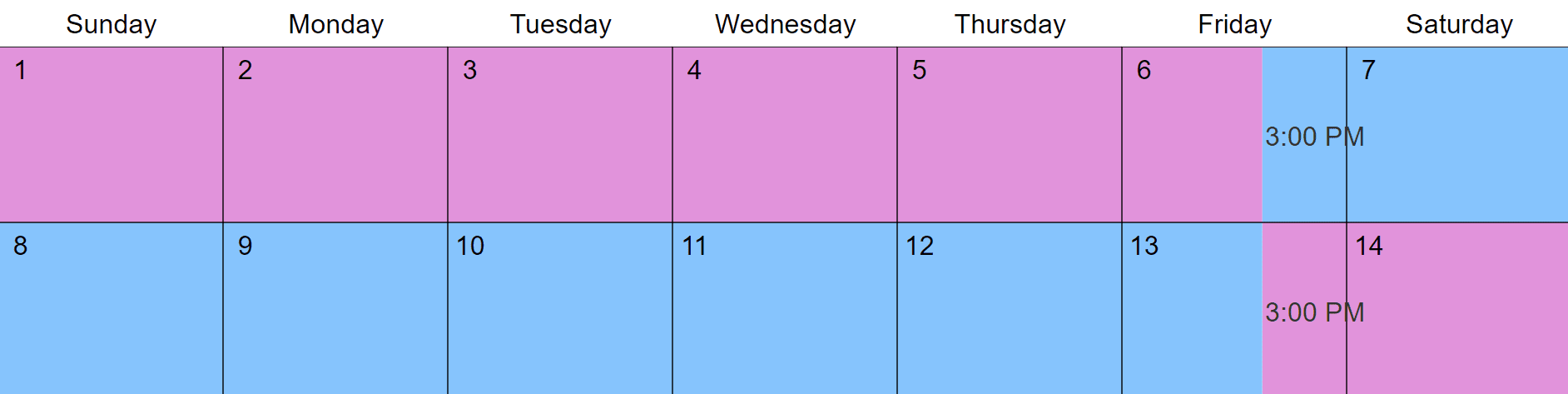
With the alternating-weeks schedule, the child stays with each parent for one week at a time.
 Try this with Custody X Change.
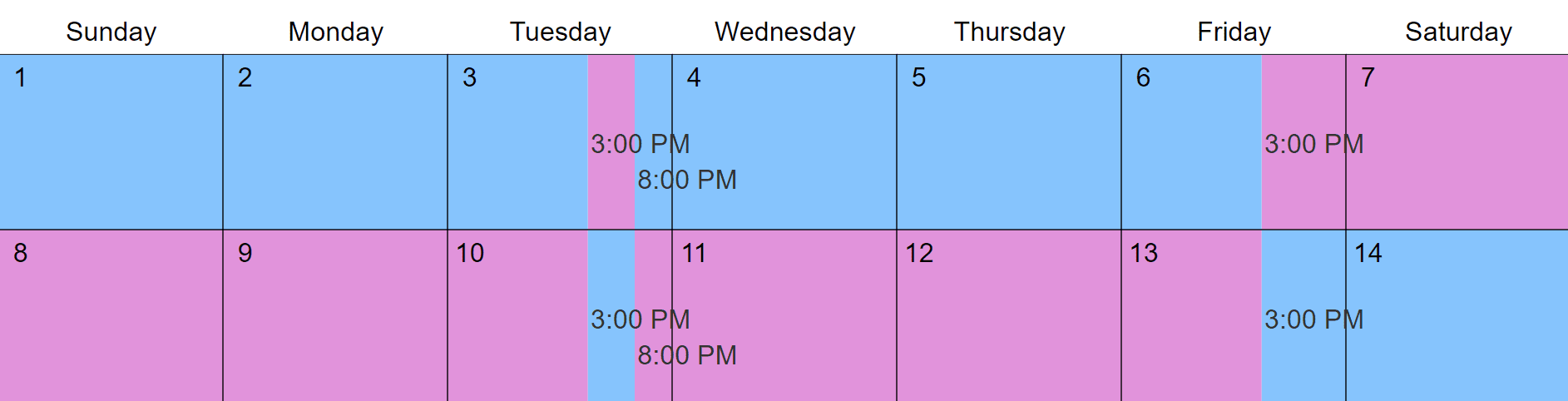
You can add a dinner visit for the parent who doesn't have the week.
Two-weeks-each schedule
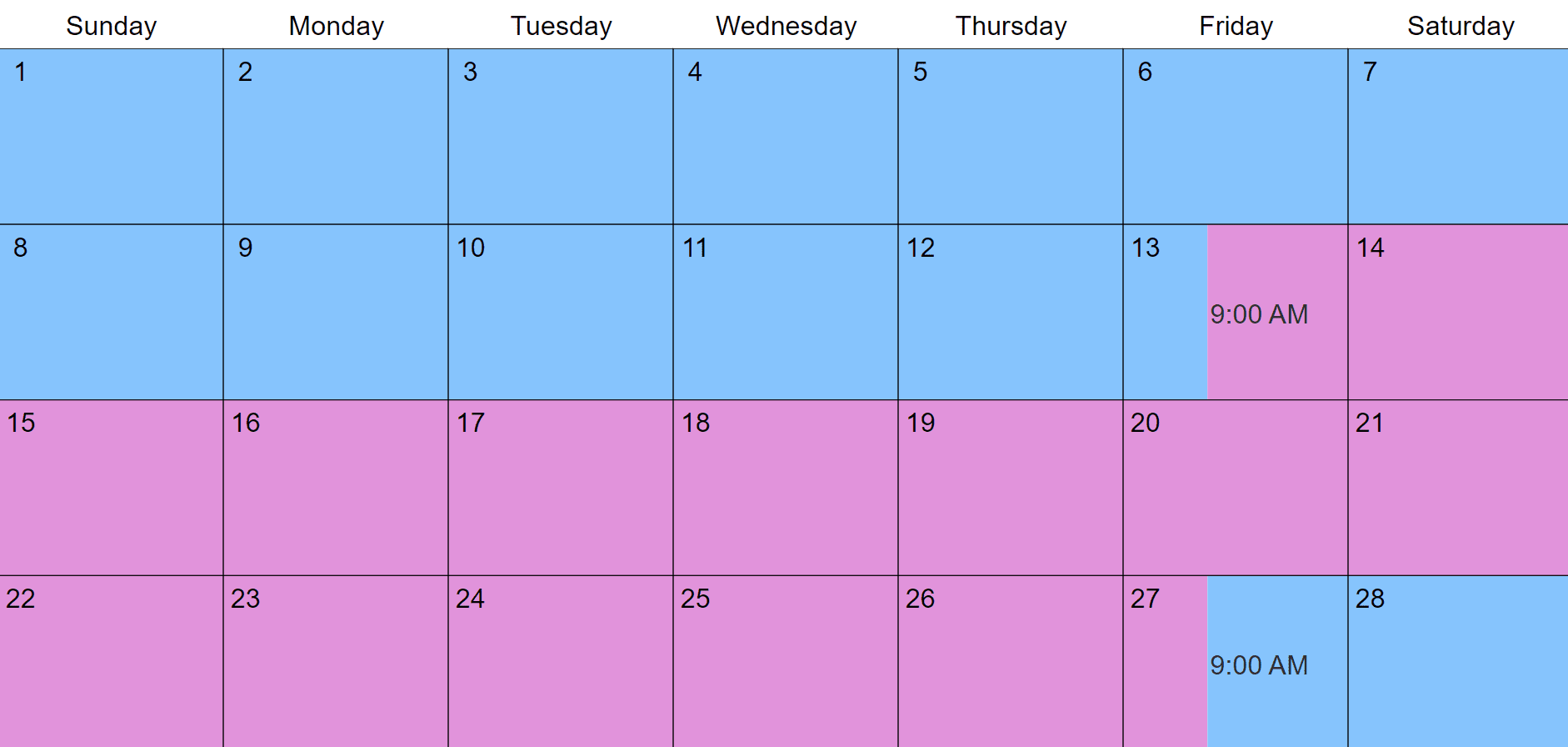
The two-weeks-each schedule places the child in each parent's home for two weeks at a time.
2-2-3 schedule
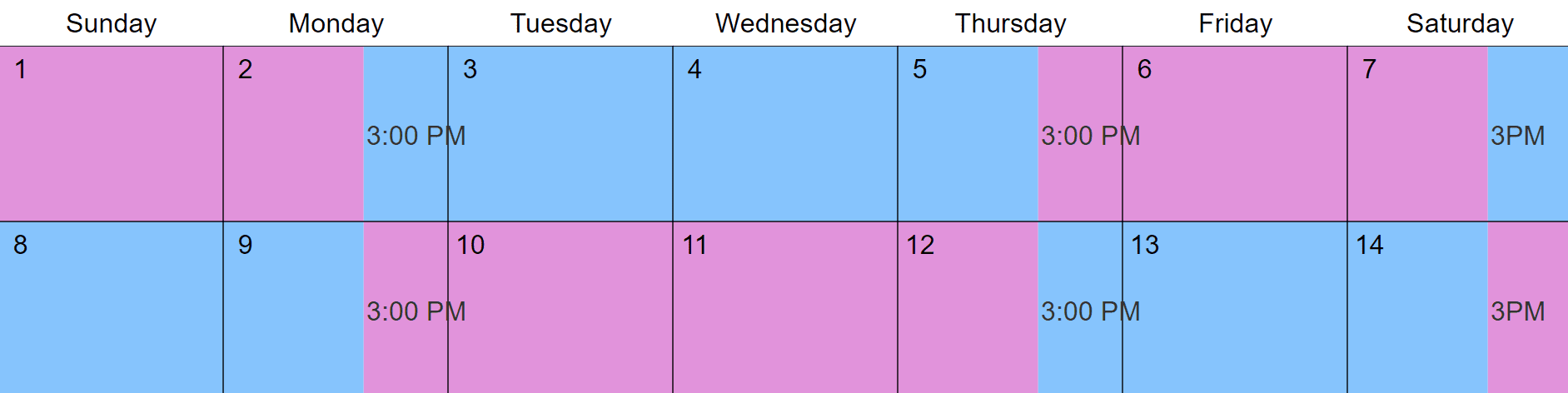
The 2-2-3 schedule allows more exchanges, which can be good for younger children. The child lives with one parent for two days, spends the next two days with the other parent, then returns to the first parent for three. The next week, the parents swap their days. This schedule is not recommended for parents who have issues communicating.
Primary residential responsibility
Primary residential responsibility gives one parent the majority of parenting time. The nonresidential parent has regular visits.
Alternating-weekends schedule
The nonprimary parent usually has alternating weekends. This is what the parenting guidelines advise for children 5 and older.
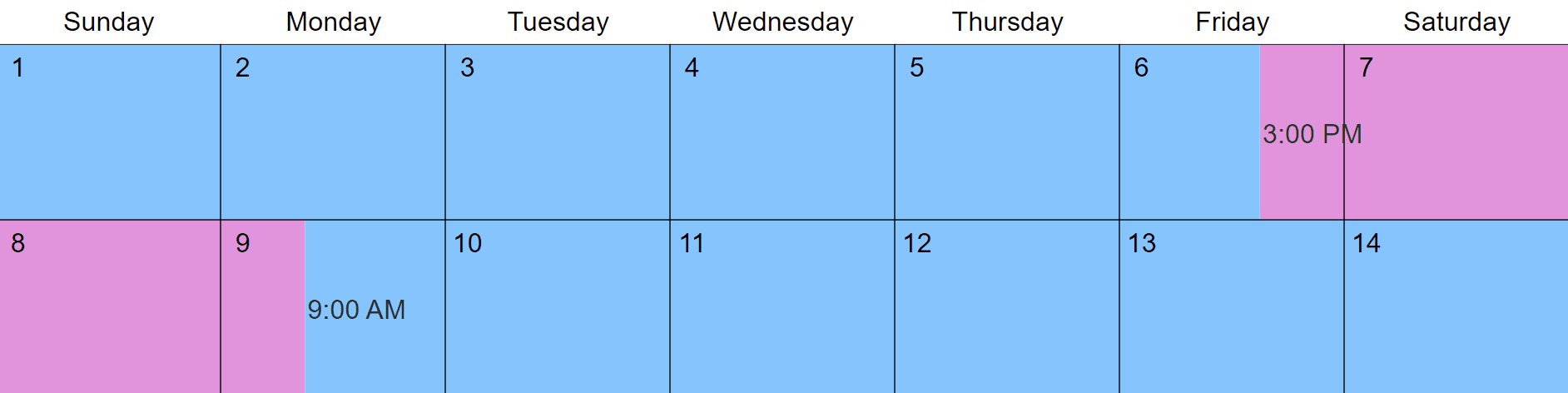
When they don't have the upcoming weekend, they might get an overnight during the week.
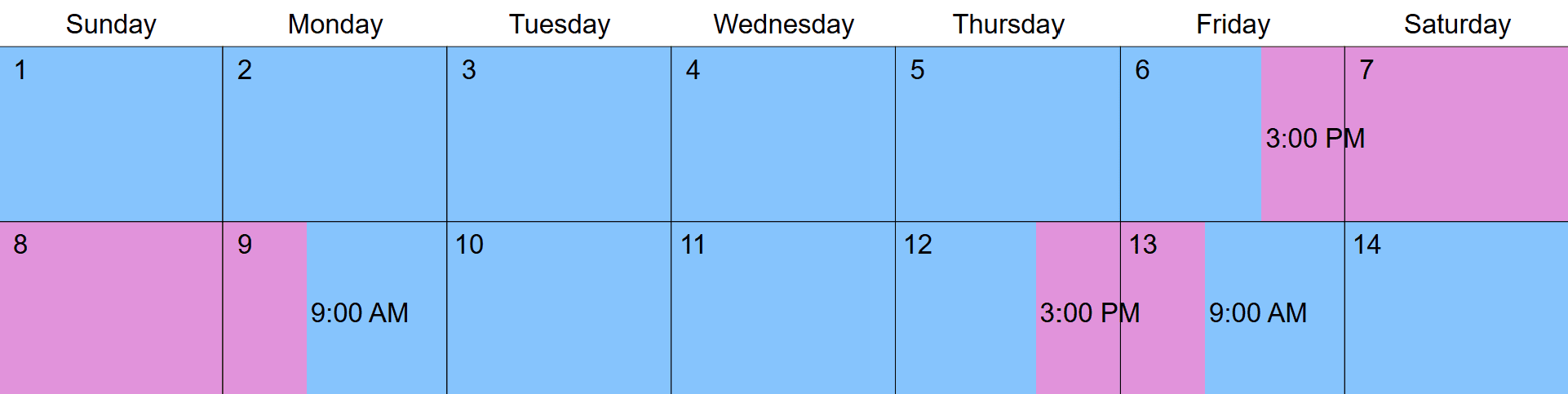
One-weekend-a-month schedule (long distance)
One weekend each month often works for distanced parents who live five hours or more away from their child, said Attorney Misty Nehring of Williston. It gives the nonprimary parent about 10% of the year. Generally, they also get extended parenting time during the summer, increasing their percentage.
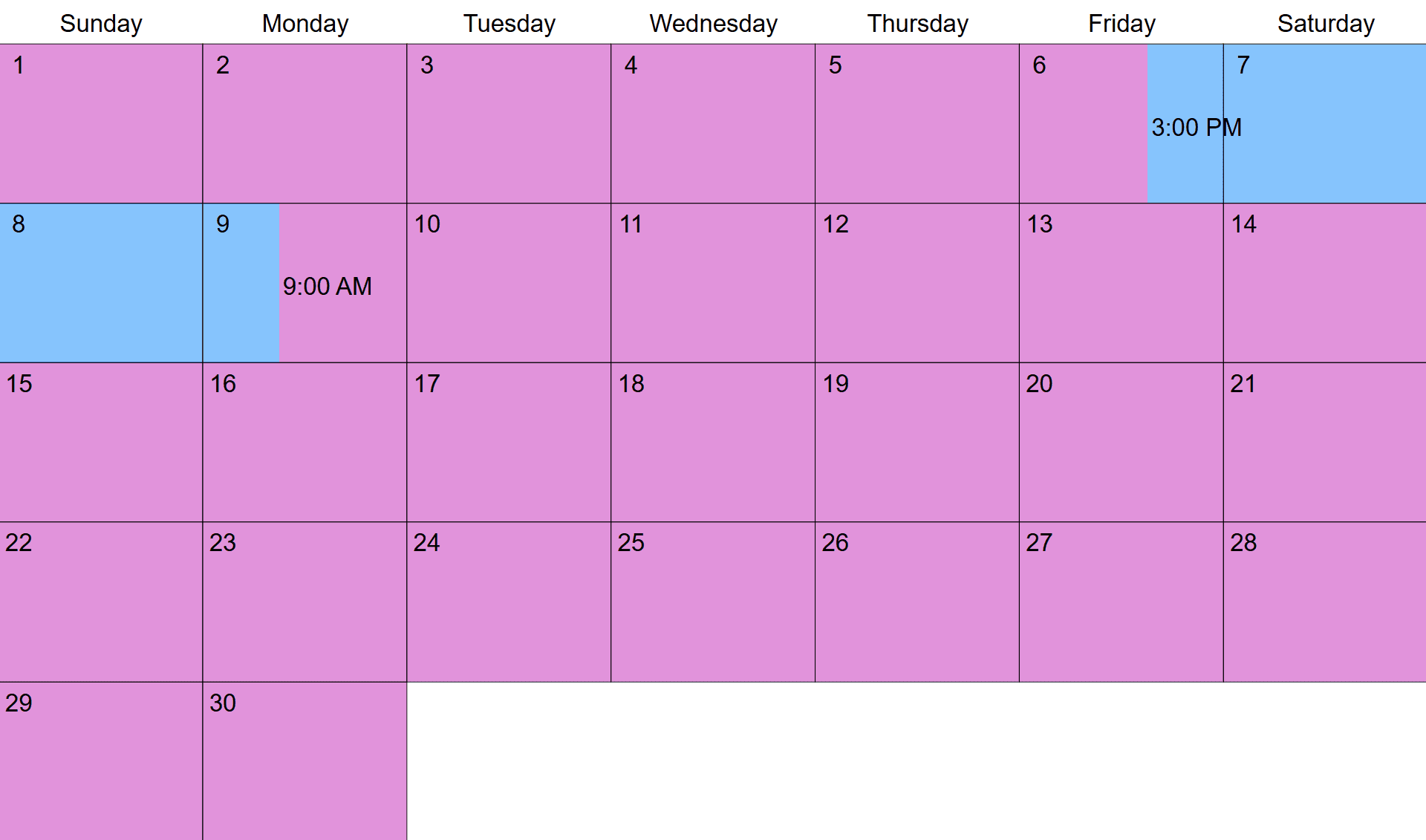
Every-third-weekend schedule
The every-third-weekend schedule is similar, but it increases the nonresidential parent's timeshare to about 15%. It's harder to remember because the visit doesn't fall on the same weekend every month. The nonprimary parent may still get extended summer time.
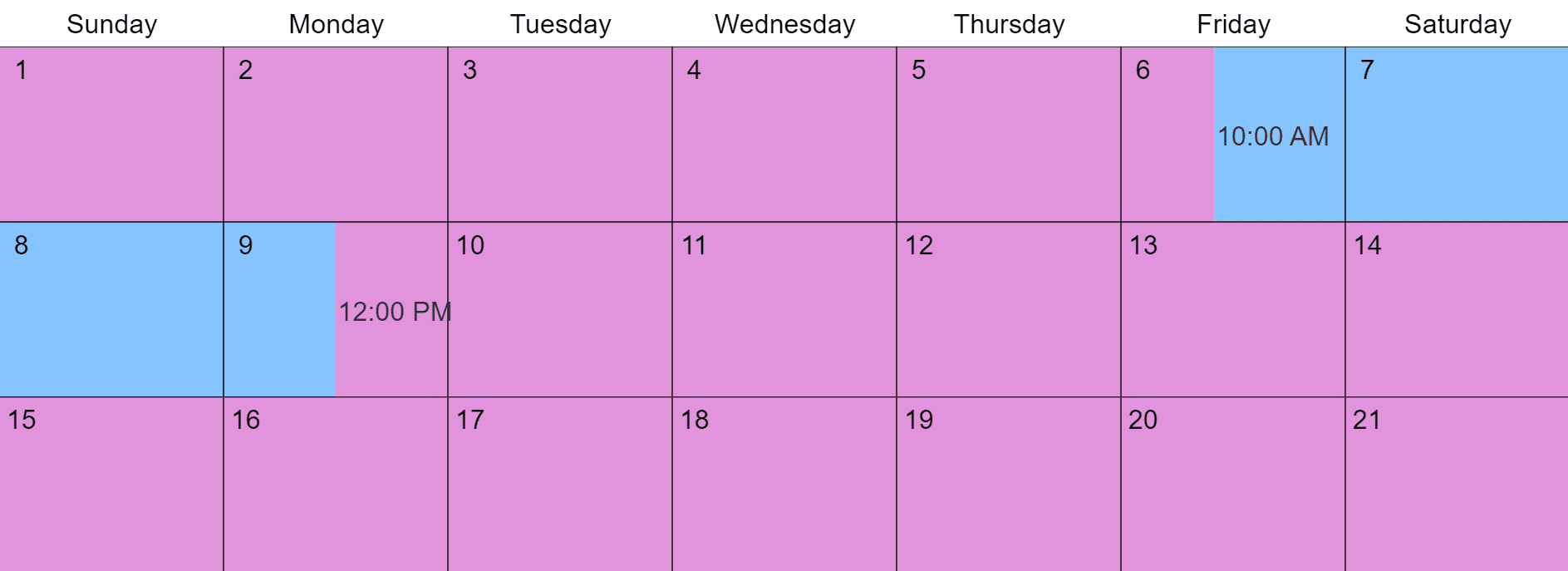
5-2 schedule
A less common schedule that could work for children who need frequent contact is the 5-2 schedule. The two-day visit can start on any day that works for the parents.

Holidays and school breaks
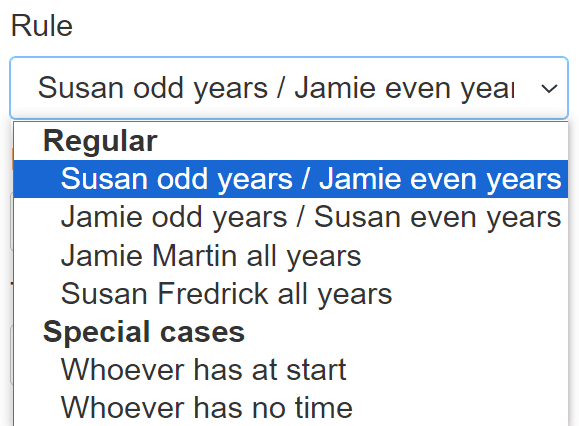
Parents usually switch holidays each year. For example, if one parent gets Thanksgiving in even years, the other gets it in odd years.
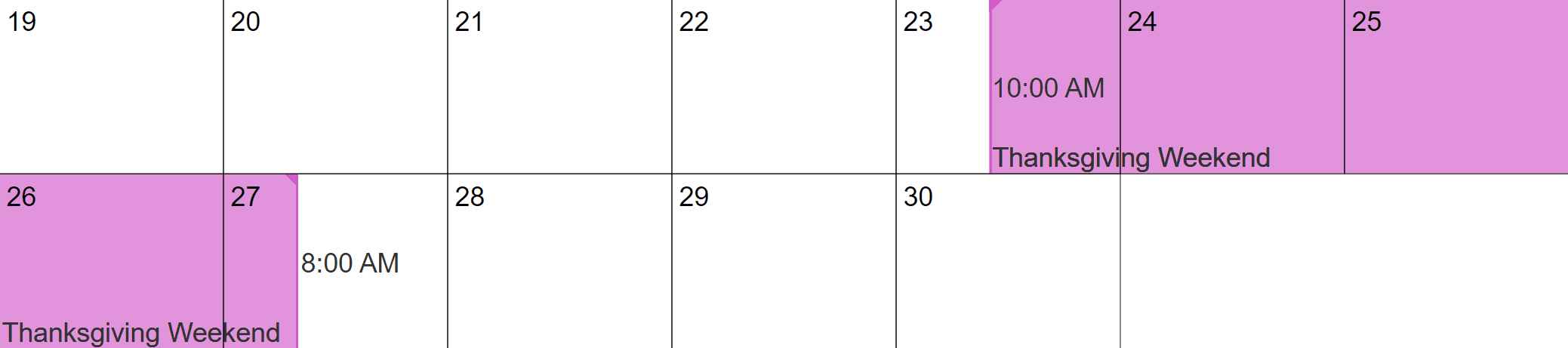
Parents could also divvy up school breaks. For example, one parent gets spring break, and the other parent gets Thanksgiving break. They might swap breaks each year.
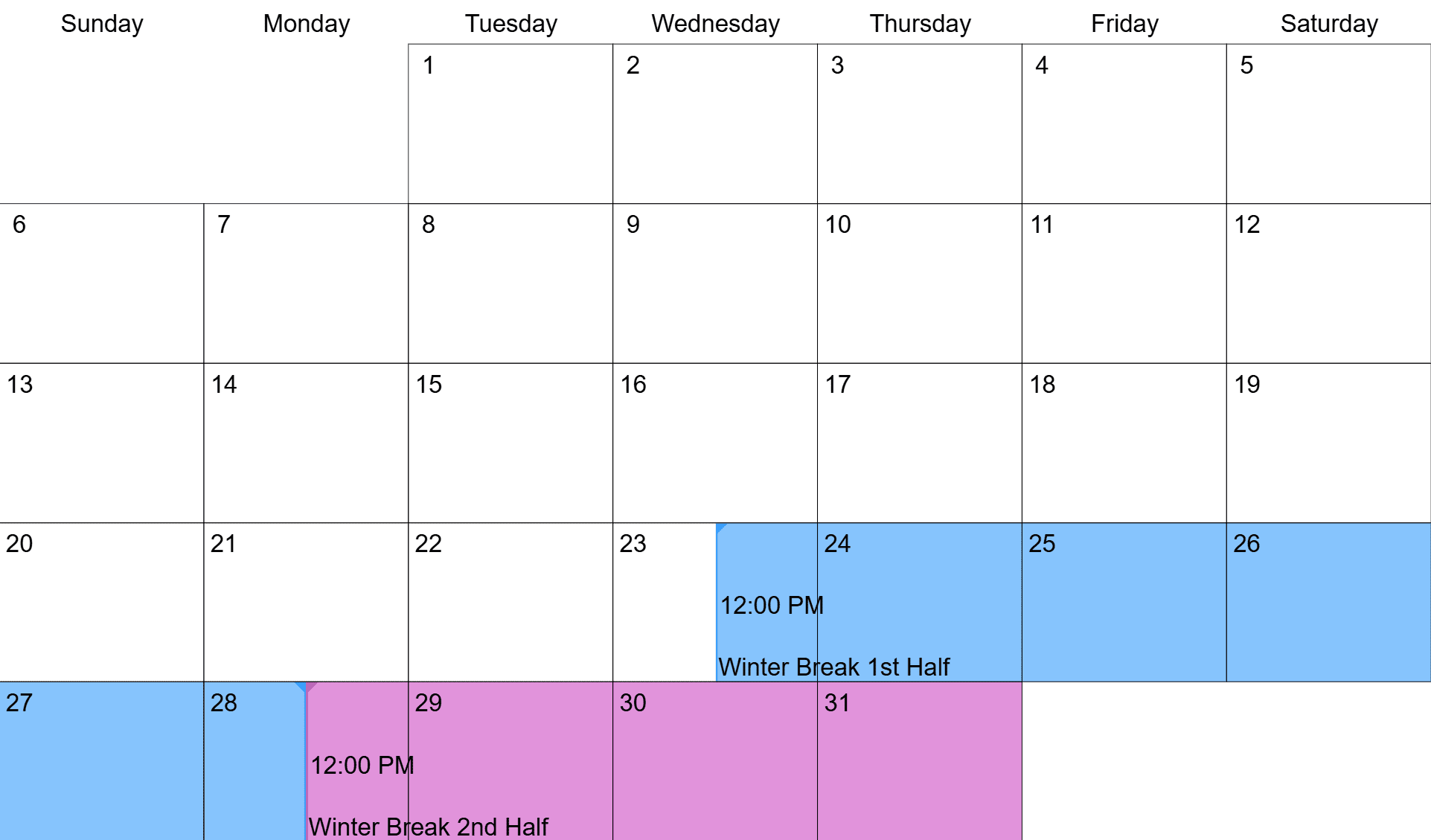
Parents often split longer breaks, like winter break, in half. One parent gets the first half of the break, which generally includes Christmas Eve and Christmas Day. The other gets the second half, including New Year's Eve and New Year's Day. They generally alternate who gets which half each year.
The calendar below is similar to the Fargo school district's calendar, giving Parent A the 23rd through the 28th, and Parent B noon on the 28th into January.
During summer, a parent who lives far away usually gets extra time. They might also gets extra blocks of time throughout the year when school isn't in session.
You can also give each parent a certain number of days to vacation with the child throughout the year.
The easiest way to make a schedule
If you're like most parents, creating a custody and visitation schedule will feel daunting. How do you write something that meets legal requirements and doesn't leave any loose ends?
The Custody X Change app makes it easy. Either customize a schedule template, or click and drag in your custody calendar to make a schedule from scratch.
Try this with Custody X Change.
Then watch a full description appear in your custom parenting plan.
Try this with Custody X Change.
The combination of a visual and written schedule means your family will have no problem knowing who has the child when. Take advantage of Custody X Change to make your schedule as clear and thorough as can be.
Frequently asked questions
Does North Dakota have standard parenting time schedules?
No. Some schedules are more common, like the alternating-weeks schedule, but there is no law that says parents will get a certain schedule.
What can I do if the other parent misses a visit?
You can keep track of missed visits, as well as late pickups and drop-offs. Custody X Change has an actual time tracker where you can mark all this without the other parent seeing. This gives you accurate parenting time numbers and helps you figure out makeup time, if you decide to schedule that. You can also show the data to the other parent to encourage them to stick to the schedule.