
South Dakota Parenting Schedules
If you have a South Dakota custody or divorce case, a schedule will be part of your parenting plan. You can create a schedule with the other parent or suggest one to the judge on your own. Either way, the judge must approve for it to become your final order.
If you don't create a schedule, you'll have to follow the one for your child's age in South Dakota's Parenting Guidelines. Keep in mind, the guidelines are for primary custody, so one parent will have less than 40% of the time with the child.
Tips for creating a schedule
Tailor your schedule to your family's situation. Some things to consider:
- Your child's age and maturity
- Your child's school schedule
- Parents' work schedules
- How far parents live from one another
- Who has the means to transport the child
- Visits for grandparents and other relatives
You could incorporate elements of the South Dakota parenting guidelines into your agreement or proposal, like the arrangements for holidays (more below).
Schedule options
At a minimum, you'll need a written schedule. "One of the most important things you can do is provide clarity," said Attorney Tony Teesdale of Brookings. He uses the Custody X Change calendar to help his clients visualize their schedules, like in the examples below.
Joint physical custody
Joint physical custody means parents have nearly equal parenting time. For child support purposes, this is 180 or more nights a year.
It's common for parents to agree to joint physical custody. In cases where only one parent wants joint custody, the court considers several factors before ordering it.
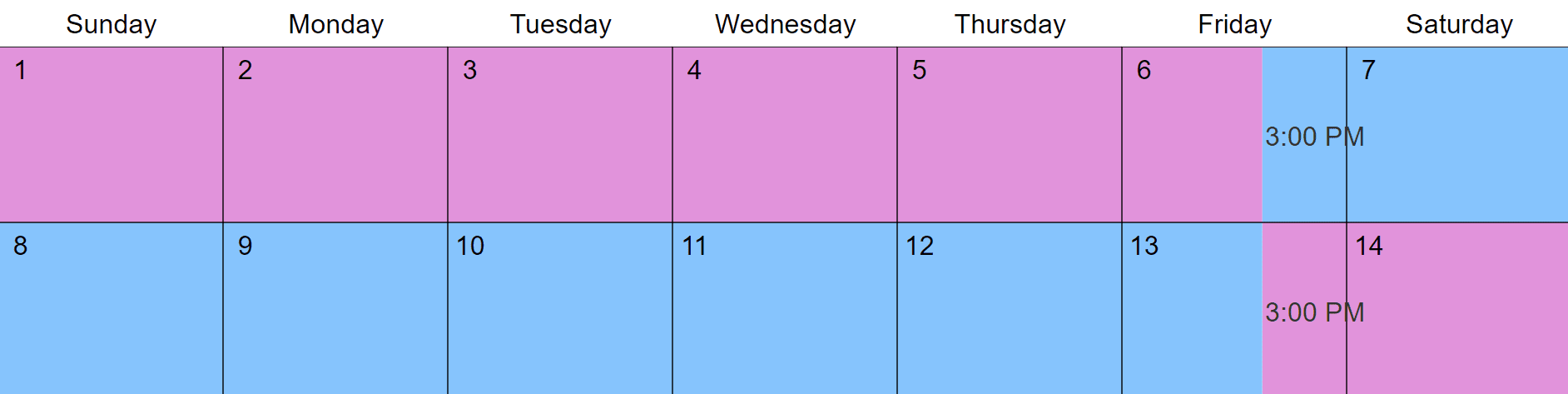
One popular joint custody schedule is the alternating-weeks schedule (also called the week-on, week-off schedule). It places the child in each parent's home for one week at a time.
 Try this with Custody X Change.
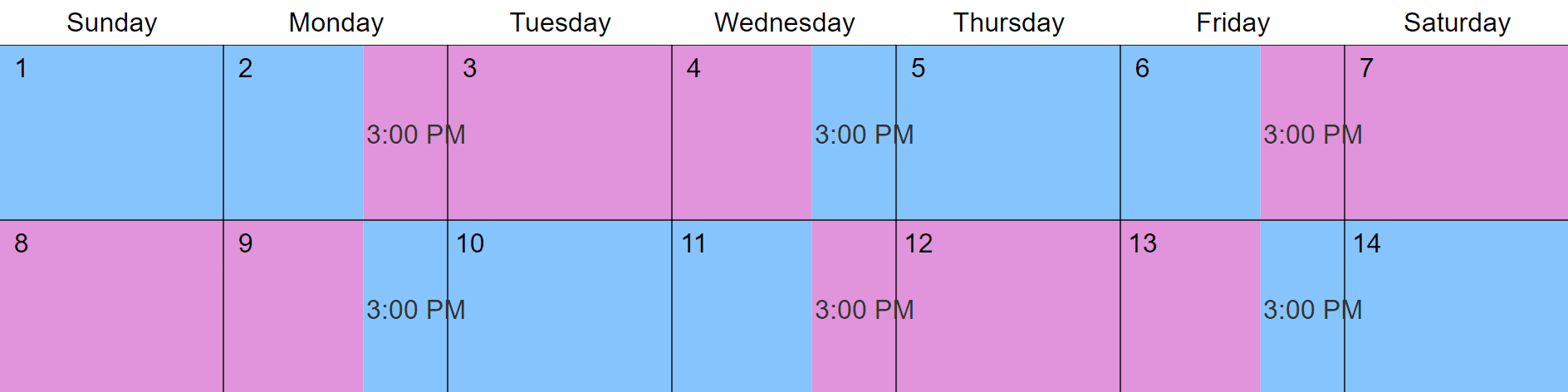
With the 2-2-3 schedule, the child spends the first two days of the cycle with one parent, the next two days with the other parent, then finishes the cycle spending three days with the first parent. Parents switch days the following week.
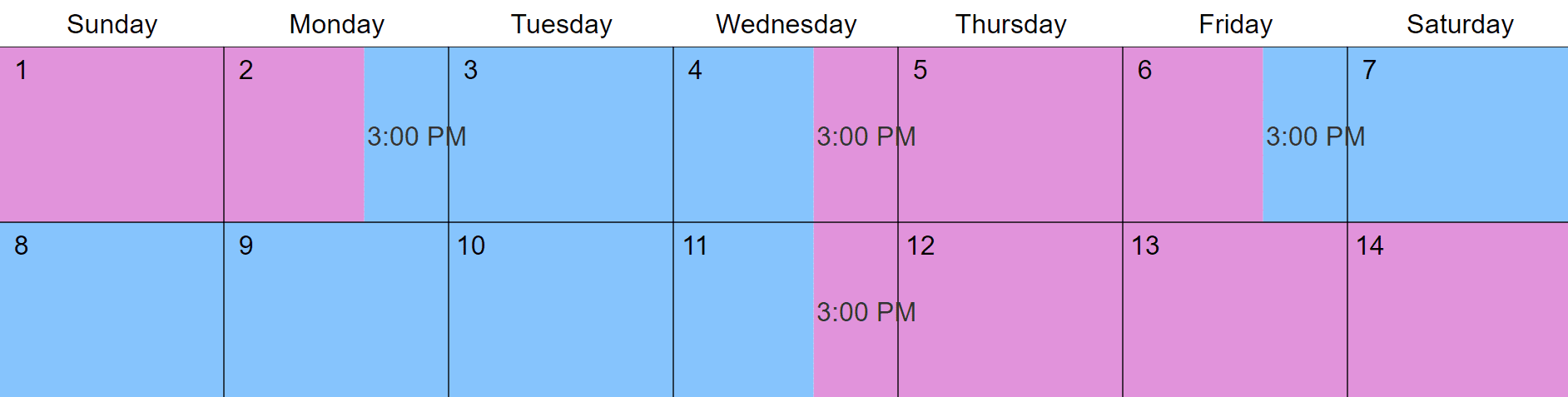
With the 2-2-5-5 schedule, the child lives with one parent for two days, then the other for two days and finishes the cycle spending five days with each parent.
Primary physical custody
Primary physical custody means the child lives with one parent most of the time and visits the other (called the nonprimary parent).
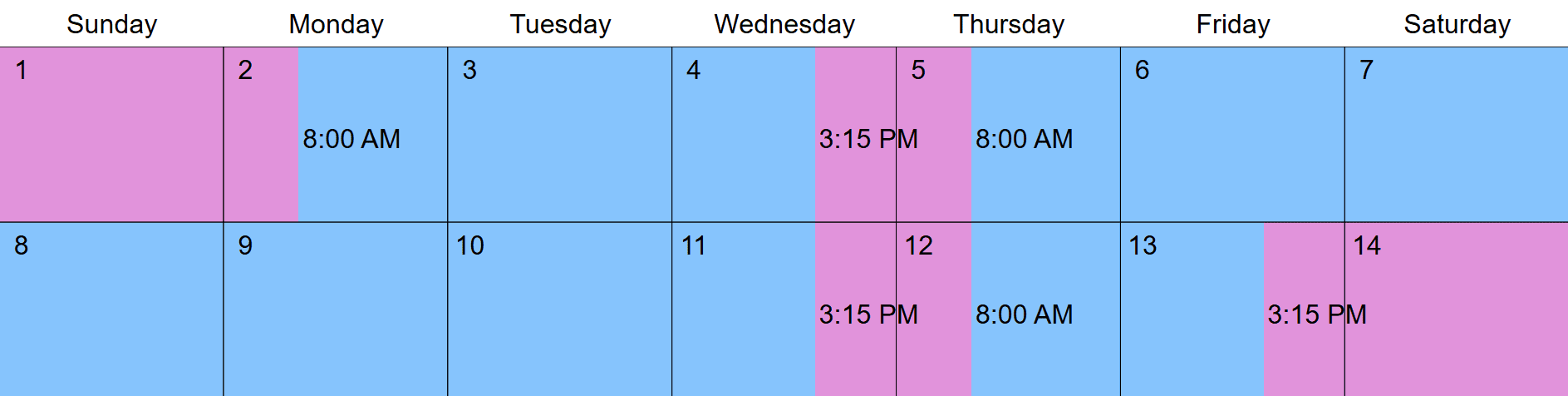
The nonprimary parent usually has alternating weekends. This is what the parenting guidelines advise for children 5 and older.
Weekends start on Friday at 3:15 p.m. (or whenever the child gets out of school) and end Monday at 8 a.m. (or whenever the child is due back at school). There's also an overnight on Wednesdays.
If you make a different schedule, try to give the nonprimary parent at least as much time as the guidelines do for your child's age.
For example, you might choose to let the nonprimary parent have daytime visits throughout the week if you have a baby. You can introduce overnights as your baby matures.
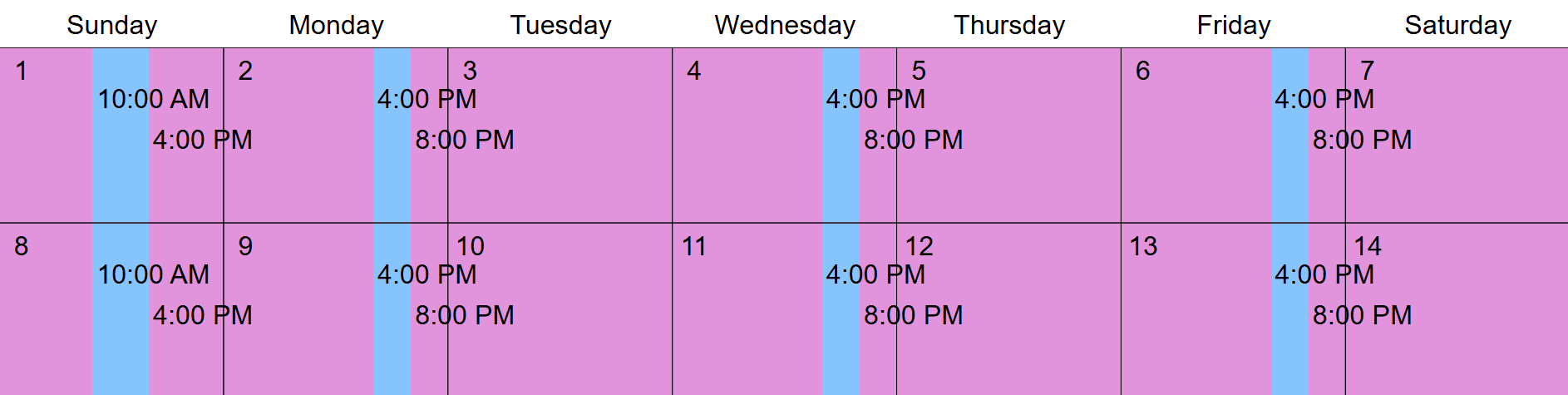
Or you could choose the 4-3 schedule if you have a school-age child or teenager who can handle regular overnights in each parent's home. The child stays in one parent's home for four consecutive days, and in the other parent's home for three consecutive days.

Supervised visits are possible if the child shouldn't be alone with the nonprimary parent. These visits last a few hours in the daytime. The parent can switch to unsupervised visits once they meet goals set by the court or agreed to by the parents (e.g., passing regular drug tests).
Holidays and vacations
Include holidays, birthdays, school breaks and vacations in your schedule so you don't have to decide who gets the time at the last minute.
The parenting guidelines suggest alternating holidays.
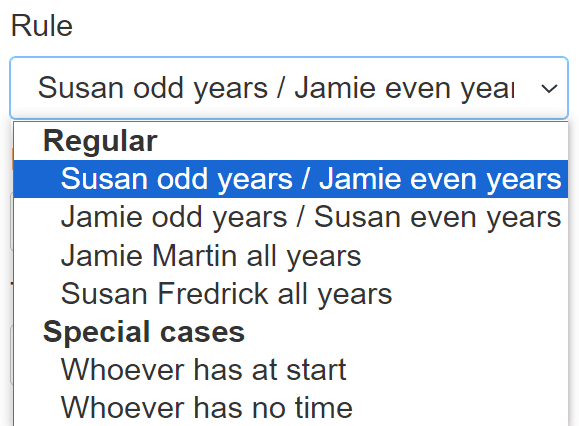
You could opt to split some holidays.

The guidelines include a long list of holidays, which may not be observed by every family. Parents might have to work on some of the holidays listed.
Due to this, Attorney Teesdale said parents usually only schedule time for the "big five" holidays. These are Thanksgiving, Christmas Eve, Christmas Day, Easter and the Fourth of July.
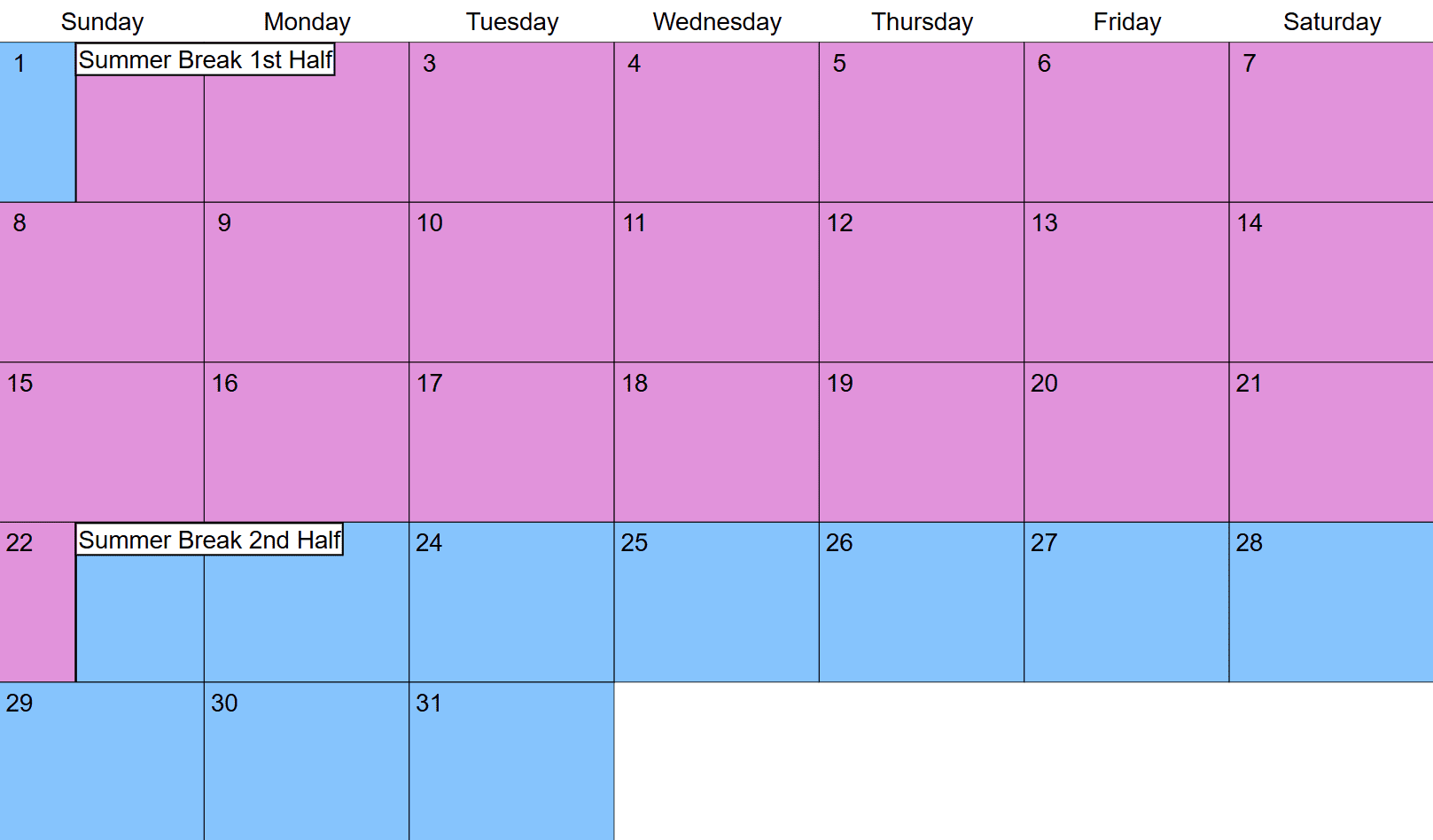
Summer is usually split 50/50. For primary physical custody, the first week of summer break typically goes to the primary parent, then parents follow a week-on, week-off schedule for the rest of the summer. For joint physical custody, each parent gets several weeks at a time with the child.
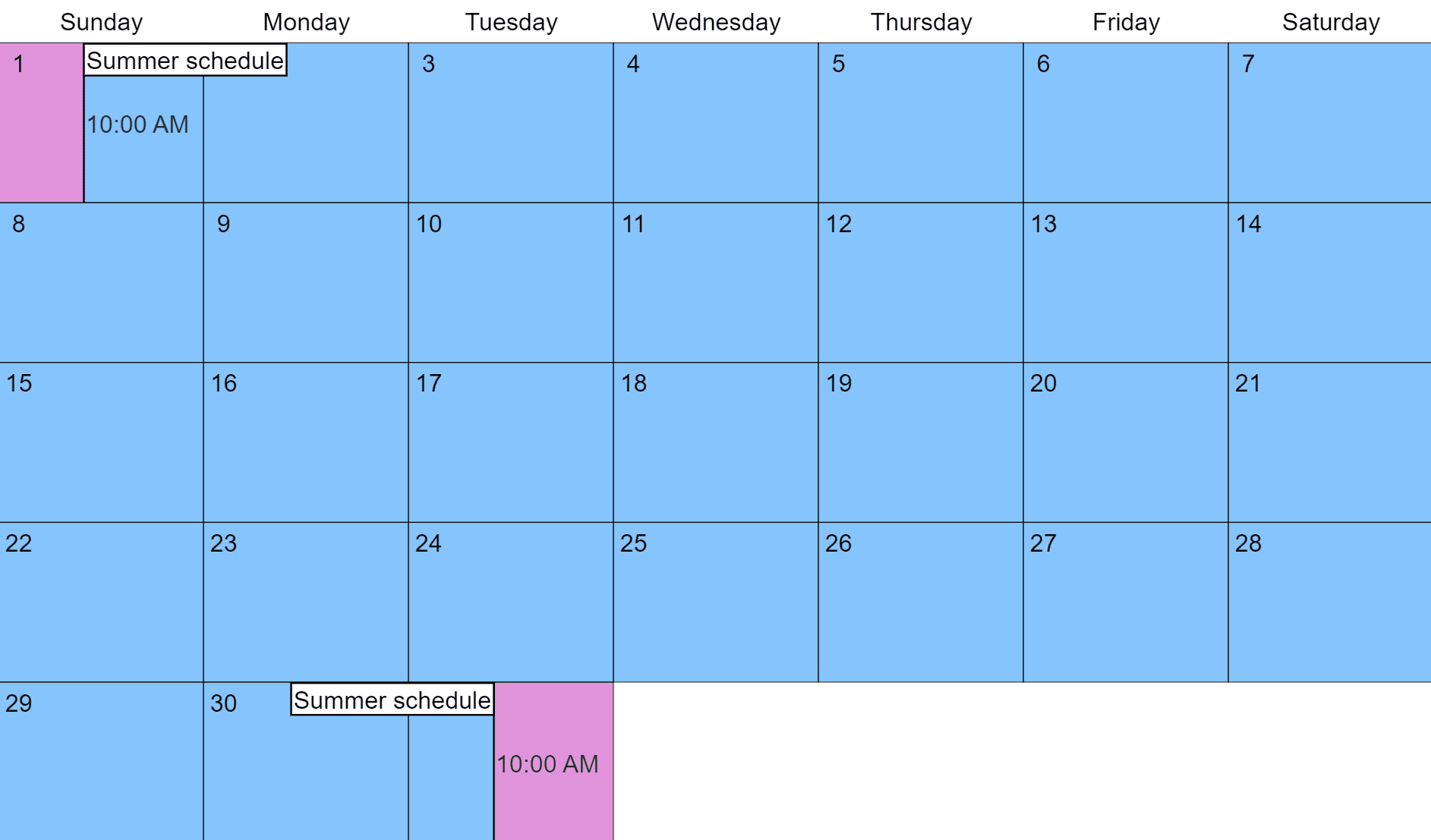
If parents live more than 200 miles apart, the entire summer usually goes to the distanced parent.
The parenting guidelines allow parents a five-day vacation with the child twice a year. Parents must give 30 days written notice before they use their vacation days.
The easiest way to make a schedule
If you're like most parents, creating a custody and visitation schedule will feel daunting. How do you write something that meets legal requirements and doesn't leave any loose ends?
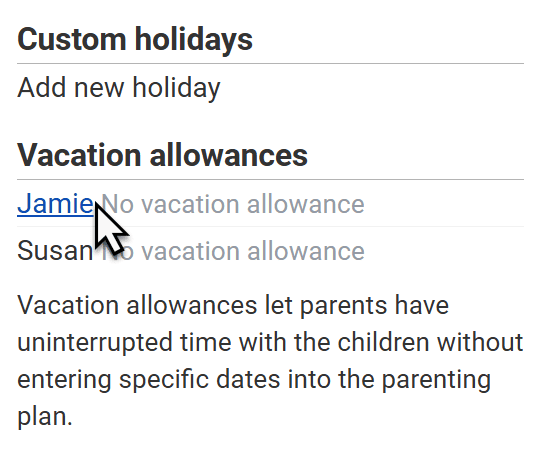
The Custody X Change app makes it easy. Either customize a schedule template, or click and drag in your custody calendar to make a schedule from scratch.
Try this with Custody X Change.
Then watch a full description appear in your custom parenting plan.
Try this with Custody X Change.
The combination of a visual and written schedule means your family will have no problem knowing who has the child when. Take advantage of Custody X Change to make your schedule as clear and thorough as can be.