
Are There Laws Against Bad-Mouthing the Other Parent?
Parents have a strong influence on their children. Bad-mouthing the other parent in front of your child shapes the way your child sees both parents.
There are no laws against bad-mouthing the other parent, but there can be consequences.
Can you lose custody for bad-mouthing the other parent?
Yes, you can lose custody for bad-mouthing the other parent. Bad-mouthing can be used against you in a custody case if it hurts your child.
Bad-mouthing can cause your child emotional distress. They might feel pressure to pick a side, and feel guilty that they still love the disrespected parent. They might repeat the things they hear. If they lose respect for the disrespected parent, they may not respect that parent's authority.
In extreme cases, bad-mouthing can lead to parental alienation, in which the child becomes emotionally — and sometimes physically — estranged from one parent.
Bad-mouthing is often a sign that a parent has no interest in co-parenting or encouraging a relationship between the child and their other parent. Both go against the best interest of the child in most cases and thus can lead to loss of custody.
How to protect your child if the other parent is bad-mouthing you
Although the words aren't about them, bad-mouthing hurts kids the most.
Here's what you can do to protect them:
- Motion for contempt of court if your custody order has a provision against bad-mouthing.
- Ask the court to change custody if bad-mouthing by the custodial parent is affecting your child's mental health.
- Explain in an age-appropriate way that it's not okay to speak ill of others.
- Listen to your child and reassure them that you love them.
- Hire a counselor to help your child talk through their feelings.
Include provisions about respect and not interfering with parent-child relationships in your parenting plan. This often encourages parents to act accordingly, and if they don't, they may face consequences.
What to do if your co-parent is bad-mouthing you
Keep things civil. Don't retaliate by bad-mouthing the other parent back. Otherwise, you'll be causing more harm to your child and giving the other parent ammunition to use against you. Find other ways to let out your frustrations, like going to therapy or venting to a friend or family member (never your child).
Document everything. Hold onto texts, emails and social media posts where the other parent denigrates you. If your child says something nasty to you, like calling you a name, write it down with the time and date. They might be repeating something the parent told them, and this way you can track patterns.
Limit communication. Only communicate when it's about the child and absolutely necessary. Use a co-parent communication app to keep conversations in one place and encourage civility.
Prioritize your child. The other parent's words may get to you. Don't change yourself in an attempt to get the bad-mouthing to stop. They'll just find something else to pick on. Focus on being a parent and setting a good example.
Using technology to keep track of what happens
You'll want to have a record of the way the other parent treats you if you go to court.
Messaging your co-parent on Custody X Change highlights hostile language, making it easy to prove when your co-parent is being uncivil.
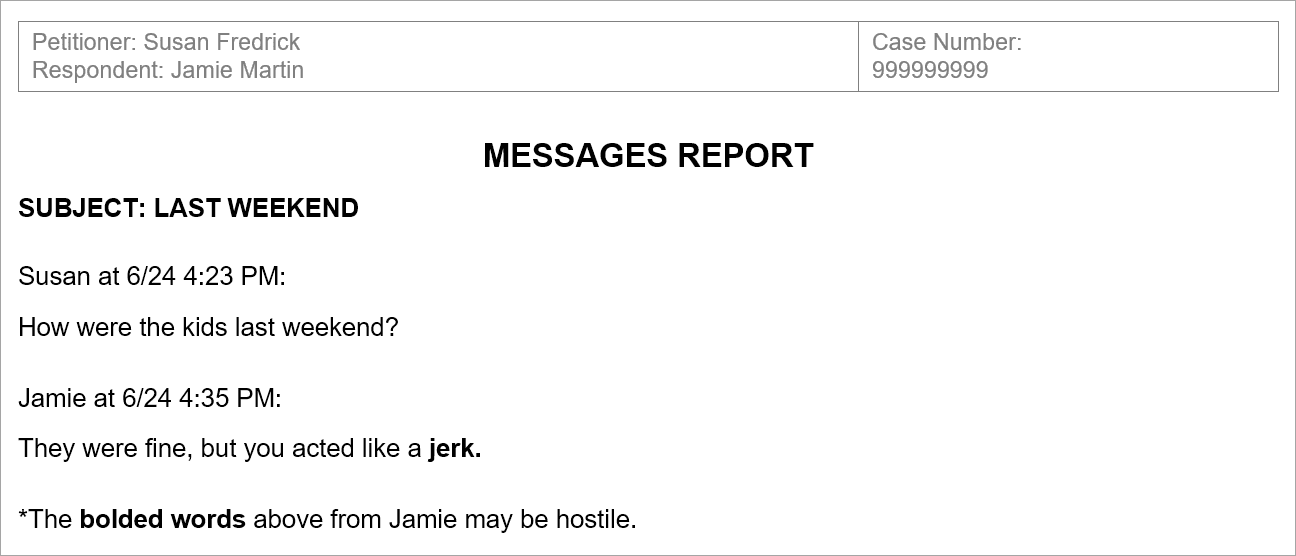 Try this with Custody X Change.
In the Custody X Change parenting journal you can write about interactions with your co-parent and your child.
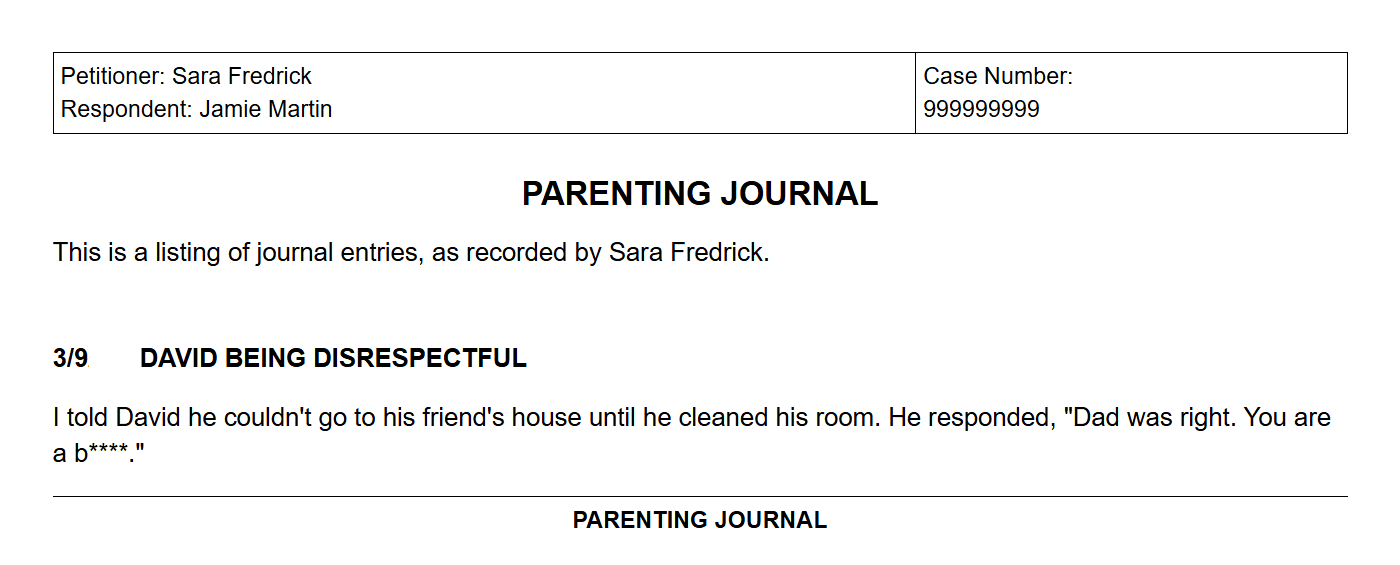
Custody X Change makes it easy to document hostility in your co-parenting relationship. The evidence can help you get the court orders you need to protect your child from it.