
Co-Parenting With Your Ex and Their New Partner (Or Yours)
Bringing a new partner into your life is a big step post divorce — especially when you're co-parenting with your ex.
Setting boundaries for new partners when it comes to your children is important. You'll also need to set some ground rules for co-parenting with your ex and their new partner.
Establishing the role of new partners in your child's life
Co-parenting when your ex has a new girlfriend or another partner is tricky. The person will be part of your child's life, but how involved can they be in raising the child?
It's best to plan ahead for new relationships you might have in the future. When negotiating a parenting plan, or creating a plan proposal, specify whether new partners are allowed to:
- Pickup or dropoff your child for visits
- Stay overnight when the child is visiting
- Watch the child when the other parent isn't available
- Discipline your child
- Make decisions for the child (explain which decisions)
- Attend the child's extracurriculars and family gatherings
- Post about your child on social media
Even if you already have a custody order, it's possible to request a modification to add these terms.
Get professional help if you're struggling to have conversations about integrating a new partner into your child's life. Mediators can help you talk through your differences while parenting coordinators can be the decisive voice when you can't agree. Consider therapy if new partners cause resentment.
When a new partner is interfering with parenting
While new partners are often positive and supporting presences in a child's life, this is not always the case. Some new partners feel jealous that their partner regularly contacts their ex — even if they only talk about parenting. They might try to control conversations between the co-parents, convince their partner to deny the co-parent's rightful parenting time or act in a parental role without legal authority or parents' permission.
Whether it's a girlfriend interfering with parenting or another partner, you can go to court if their meddling hurts your ability to parent. You could request that the court change the custody order to give you more time to make up for what you've been deprived of. You might also ask for the court to bar the new partner from pickups and dropoffs if they are confrontational during them.
You'll need strong evidence to support your case, like:
- The new partner's history of crime, violence or substance abuse
- Significant changes in your percentage of parenting time
- Audio from phone calls (if allowed in your jurisdiction)
- Messages exchanged between you and the partner
- Social media posts
If you want to avoid the expense of court, find other ways to keep new partners out of co-parenting matters.
- Communicate through an app like Custody X Change to keep conversations civil and only between you and your co-parent.
- Bar the new partner from contacting the co-parent.
- Don't bring your new partner to events the co-parent is attending.
- Don't involve the new partner in co-parenting discussions.
What you can do to preserve your co-parenting relationship
Co-parenting with your ex and new partners isn't easy, but you don't have to give up on co-parenting. Try the following strategies to keep your co-parenting relationship strong.
Always prioritize your children
What matters for your child is that the adults in their life are safe and nurturing. Adults may not get along with each other, but don't allow someone else's negativity toward you to impact your relationship with your kids. When your focus is on your kids, it's easier to shut out any resentment or rejection from a co-parent or their new partner.
You and your ex should continue to co-parent as you did before your new partners were in the picture. If a new partner ends up sticking around, you and your co-parent can begin making changes to include them in your child's life.
Move on emotionally from your ex
Redefining your relationship with your ex is a key component of a successful co-parenting relationship. Let go of lingering feelings from your relationship and focus on co-parenting. This could also help you have a more positive relationship with your or your ex's new partner — you won't harbor jealousy or ill-will.
Take your time with a 'rebound relationship'
If you haven't fully processed or adjusted to your separation, you may not yet have the perspective to know what you want in a new relationship. Jumping into a new relationship feels exciting, but you may not be ready to know whether you should live together with or marry this new person. Every relationship is unique, and it's OK to follow your own timeline.
Introduce your new partner to your ex, then to your child
It's common courtesy to introduce your new partner to your co-parent before you introduce them to your child. Your ex may sometimes need to speak directly with your new partner (at least in emergencies) if they'll be spending time with your child, so help them open that line of communication. Children should not be interrogated about what's happening in their other parent's romantic life, nor should they be used as messengers.
Before you introduce everyone, make sure this new partner is someone you can see yourself being with long-term; frequently introducing your child to different partners may overwhelm or confuse them.
Slowly integrate your new partner into the equation
Ease your child — and your new partner — into the dynamic. Start with a brief introduction. When they first begin spending time together, do fun activities so there's less pressure to make conversation. Adjust until everyone is comfortable. Encourage your child to develop a relationship with your new partner, but don't force it.
Don't rush to give your new partner a parental role
Early on, your new partner should take a backseat in your parenting. Don't let them discipline your child or dictate how you parent. Make sure your new partner respects the co-parenting dynamic between you and your ex as well as your relationship with your child.
Your child should respect your new partner as they'd do for any other caring adult in their life. However, your child isn't required to treat them like a parent; don't make your child address them as "mom" or "dad."
Mind how your new partner treats your ex
Even if your new partner dislikes your ex, they should respect your co-parent's role as the other parent of your child. If your new partner is disrespectful toward your ex — in person or on social media — tell them it's not okay. If you tolerate continued disrespect, your co-parent may take it as proof that you condone your new partner's behavior and support their hurtful opinions. This could fracture your co-parenting relationship, which will negatively impact your child.
Planning for new relationships
Including rules for co-parenting with your ex and new partners in your parenting plan will save you time when the issue arises.
Unfortunately, figuring out how to put your rules into airtight legal language can feel overwhelming.
Use technology to take the guesswork out of the equation. The Custody X Change app walks you through each step of creating a plan, making it easy to detail the involvement of new partners in your child's life.
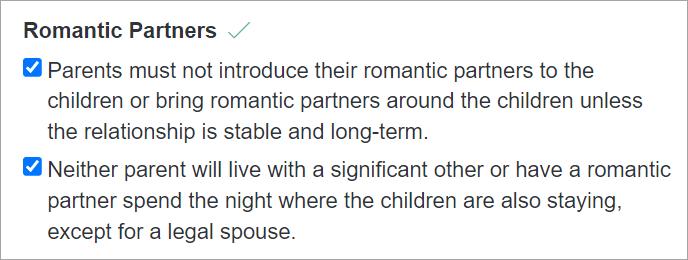 Try this with Custody X Change.
The result will be a professional document that demonstrates your competence as a parent and secures your child's future.
Try this with Custody X Change.