Child Support in North Dakota
Child support ensures both parents financially contribute to their child's upbringing. The parent who spends less time with the child usually pays. If parents have equal residential responsibility, the the higher-earning parent pays — or both parents if the child is on public assistance or in foster care.
Support continues until the child turns 18 or until the month they graduate high school (whichever is later). Generally, support won't continue past 19, even if the child is still in high school.
How courts calculate child support
Courts use North Dakota's Child Support Guidelines to determine child support amounts. The parent who pays support is called the obligor. The parent who receives support is the obligee.
The guideline support amount depends on the following factors:
- The obligor's net income (gross income minus deductions for taxes, the child's health insurance premium, support paid for other children, etc.)
- Number of children
- Each parent's share of parenting time
- Other children the obligor supports
The court can deviate from the guideline support amount if it's in the child's best interests and at least one of the following is true:
- The child has more needs due to disability, age (12 or older) or other circumstances.
- The child attends private school.
- The obligor's personal expenses are high because of medical costs or travel related to parenting time.
- The obligee's income is at least three times the obligor's income.
- The obligor's monthly income is over $25,000.
- The support order is for six or more children.
If the obligor has more than 100 overnights per year, they may qualify for a support reduction. You must have a court-ordered parenting schedule to get a discount.
Child support services
North Dakota Child Support (NDCS) manages support orders.
Parents must sign up for limited or full services.
With limited services, NDCS receives and distributes support payments. It can order support to be withheld from the obligor's paycheck.
With full services, NDCS can also establish paternity, adjust support orders and do more to enforce support (details below).
Applying for child support
You can apply for child support when you start a divorce or residential responsibility case.
Or, follow the steps to get a support order on its own through your local district court.
If you're not married to the other parent and you get public assistance (or apply for it), your information will be sent to NDCS to start a child support case. Keep in mind, the child must live with you for you to apply for public assistance for them.
Agreeing on child support
Parents can agree to the guideline support amount or a different amount.
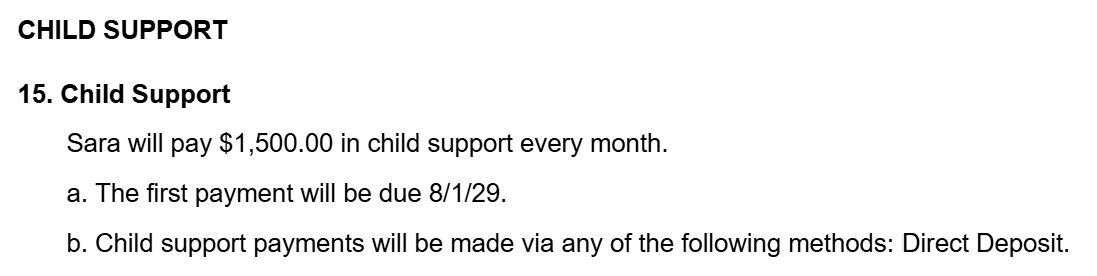
Include support in your parenting plan or write out a child support agreement. Give proof of the parents' incomes and finances.
 Try this with Custody X Change.
You can agree to an amount less than the guideline only if there's a good reason. See the list of acceptable reasons for deviation in "How courts calculate child support" above.
Parents can agree for support to go on longer — for example, until the child graduates college.
Paying and receiving child support
All support payments must go through NDCS.
There are specific ways to pay child support and ways to receive child support.
Typically, if you're employed, you'll pay via income withholding. This means support is automatically taken out of your pay.
If the obligee receives public assistance, the state may keep all or part of their support money.
Enforcing child support
NDCS can take enforcement action if the obligor misses payments.
If you have a receive full child support services, NDCS can take many actions, including:
- Seizing tax refunds and lottery winnings
- Reporting missed payments to credit bureaus
- Suspending driver's licenses
If you have a limited services case, the most NDCS can do is issue an income withholding order — if one isn't already in place. You can file a motion with the court to request more enforcement help.
Modifying child support
If you have a full services case, you can request a review and adjustment of child support every 18 months.
Otherwise, you can request to modify child support through your local district court. You can do this after one year or whenever there's a significant change in income.
If you have more than one child, your support order or agreement might include a "step down" support amount. It goes into effect as each child ages out. If you don't have this, you may need to return to court to get a reduction as children age out.
Getting an accurate child support order
North Dakota allows reduced child support if the child spends significant time with the obligor.
Estimating your number of overnights, rather than calculating them exactly, can impact your child support order by thousands of dollars a year.
The Custody X Change app lets you quickly calculate your time with your child.
Try this with Custody X Change.
Whether you're paying or receiving child support, use Custody X Change to make sure your calculation is exact. The number will affect you, your child and the other parent for years to come.
Frequently asked questions
What if the support obligor lives in another state?
You can apply for child support in North Dakota, but the state where the obligor is a resident will determine the support amount according to their guidelines. If you have full services with NDCS, the office will refer your case to the Outgoing Interstate Center (OIC). OIC will send you the forms you need. If you have limited services, contact an attorney.
Can I deny the other parent visitation if they don't pay child support?
No. Your custody order and support order are separate. The obligee cannot deny visits because the obligor did not pay; the obligor cannot withhold child support because the obligee withheld visitation. Either could result in a contempt of court charge.