
How To Get Temporary or Emergency Custody Rights
It can take a while to get a final custody order. In the meantime, you can get a temporary custody order to set how you'll raise your child with your ex. Parents can agree on temporary arrangements or have the court decide.
If you simply want to give your child stability during your custody case, you'll want to pursue temporary custody. If your child is in danger, you'll want to pursue emergency custody.
How to file for emergency custody
Emergency custody orders are meant to help parents get their children out of dangerous situations.
You might want to get temporary emergency custody because:
- A parent has been neglectful or violent toward the child
- A parent is threatening to abduct the child
- A parent has substance abuse issues
- A parent is allowing unsavory characters around the child
- A parent is incarcerated or incapacitated
Courts usually have petitions for emergency custody like the one below. If there isn't a petition form, you can file a motion for temporary emergency custody. In your petition or motion, you'll explain the situation in detail. Consider hiring a lawyer to prepare your motion or petition. Your child's safety might depend on it.
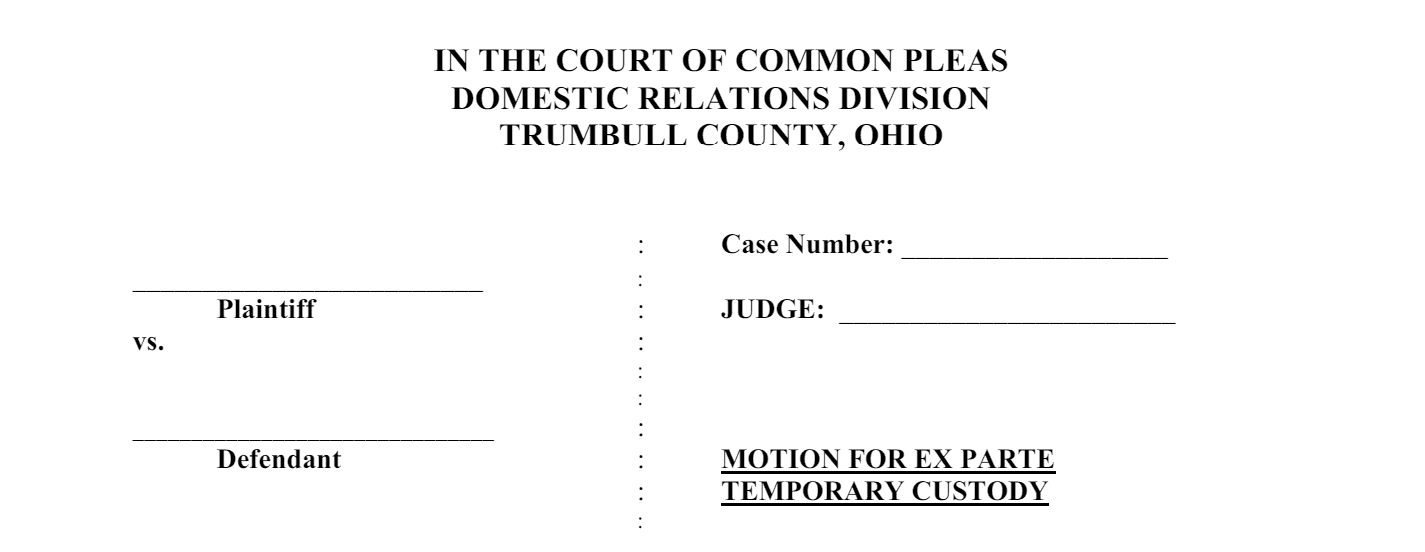
Attach evidence to support your request. This can include:
- Medical reports
- Sworn statements from doctors, teachers and others
- Photos of injuries
- Reports from the police or child protective services
- Proof that the parent has withheld your child from you, such as text messages.
Where to file for emergency custody
File your petition or motion for emergency custody with the family court in the county where your child lives. You usually don't have to inform the other parent that you've requested the order.
In many locations, you can file for emergency custody even if you don't have an active custody case.
Preparing for an emergency hearing for custody
The court typically holds an ex parte hearing within a few hours or days after a petition is filed. This is a short meeting that only the parent asking for the order attends. The judge only considers the contents of the petition or motion when deciding whether to grant an order.
If the judge gives you an emergency order, the court schedules another hearing. The other parent can attend to present evidence. If you want the order to stay in place, you'll need to show the child is better off in your custody. For example, you could show that your child's school attendance has improved since they've been living with you.
Based on each parent's evidence, the judge decides whether to extend the order, get rid of it or replace it with another.
How to file for temporary custody
Temporary custody provides short-term custody arrangements while a case is in progress. It helps the child adjust to living in two households and gives them some stability.
You can usually ask for temporary custody when you file a case for permanent custody. Your court might have a separate petition or a temporary motion for custody. Attach a proposed temporary parenting plan to support your case.
Hand in your paperwork with the family court in the county where your child lives. If you're filing for divorce, you might have to file in the county where your spouse lives. The other parent must receive notice of the case. You'll get your order at a hearing or court conference.
Generally, the order includes a temporary visitation schedule. It might also cover other things like child support and legal custody. The terms of these orders are based on the child's best interests.
Temporary custody orders last as long as your court proceedings. Final orders replace them.
How to get temporary custody without going to court
A parent can agree to give temporary custody to the other parent. Another option is giving temporary guardianship to a relative or friend.
You could negotiate one-on-one or try a form of alternative dispute resolution to figure out the details of your agreement.
You should file your agreement with the family court so that the court can enforce the terms if a parent disobeys it.
Temporary custody rights
Temporary custody rights vary based on what is best for the child. If the child is used to mostly spending time with one parent, the court might grant that parent temporary sole custody and the other visitation. If the child has spent significant time with both parents, joint custody might work best.
It's rare for a court to change a temporary order. The court might allow a change if a parent isn't following the order, the child is in danger or a parent is planning to move a significant distance away.
Temporary custody laws tend to mirror final custody laws. You have to follow your order or risk being held in contempt of court.
What happens after temporary custody is granted
The court process will continue. You either reach a custody agreement with the other parent or go to trial and let a judge decide custody. A judge could choose to keep the terms of the temporary order if it worked well.
Once a judge signs the final custody order, it becomes the order you must follow.
Using technology to get a temporary or emergency custody order
You'll need to present strong evidence that the temporary custody arrangement you propose is best for your child, or that emergency custody is necessary to keep your child safe.
The Custody X Change online app has the tools you need to support your case.
The parenting journal helps you document important developments.
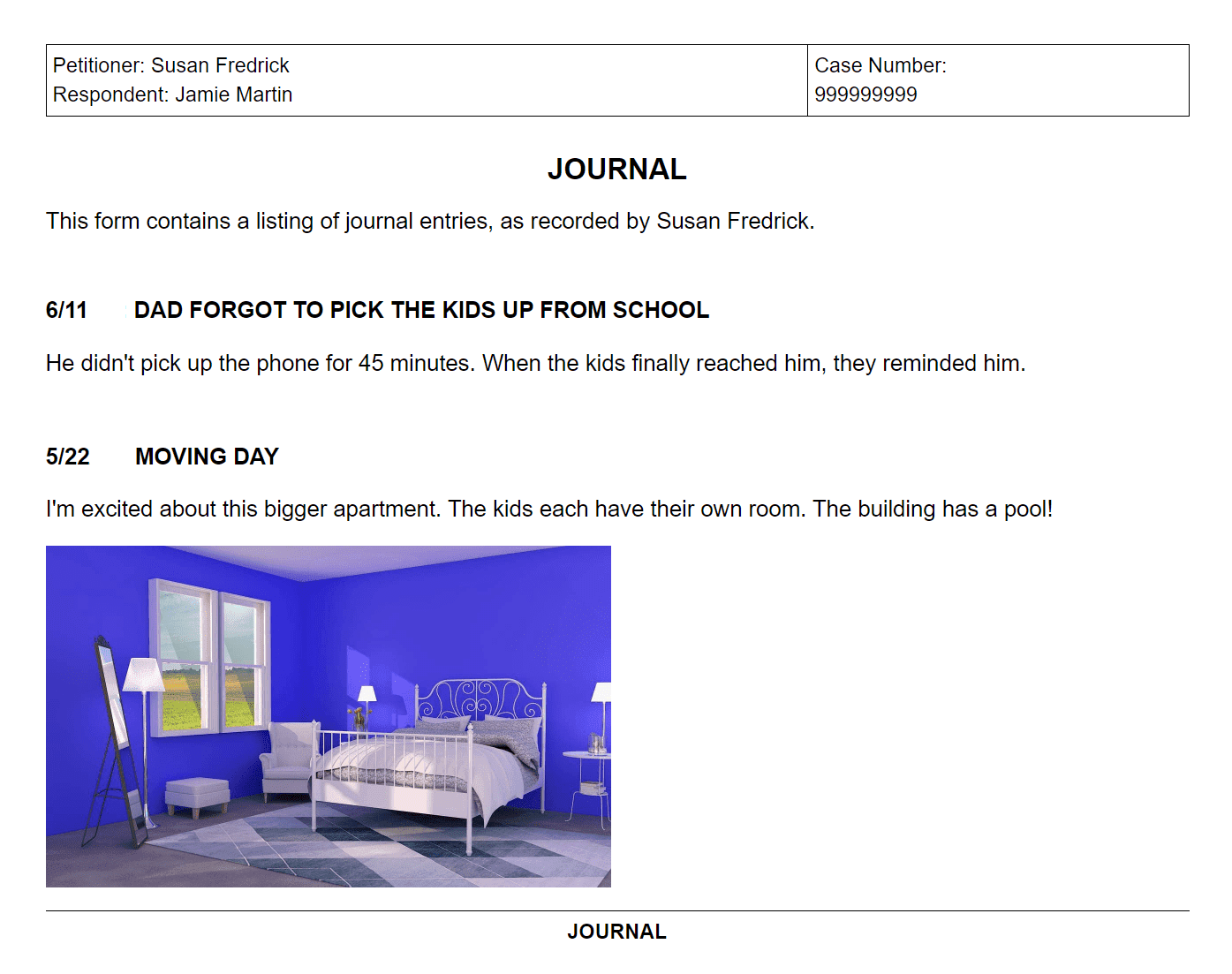 Try this with Custody X Change.
The parenting time calendar lets you propose when the other parent should have regular or supervised visits.

A printout of messages exchanged with your ex can highlight hostile language and prove unsafe behavior.

Custody X Change lets you create all of these items in one place. It makes sure you're ready for your emergency and temporary custody hearings.
Take advantage of technology to get what's best for your child.