
Can a Parent Lose Custody for False Accusations?
Child custody cases can get volatile. The fear of having less time with their children can drive some parents to make false accusations in family court. False accusations are usually made during child custody and divorce cases in the hopes of swaying the judge.
False accusations harm the accused, the accuser and their child. They make the court process more exhausting and expensive, and can even cause a parent to lose custody. The accused has a right to defend themself to prove their innocence.
Common false allegations in family court
False allegations in family court are among the dirtiest tricks to win custody.
Common false accusations include:
- Physical and sexual abuse
- Emotional abuse
- Neglect
- Parental alienation
- Denying the child medical treatment
You don't need to worry about allegations of infidelity since that's not relevant to custody decisions.
Consequences for false allegations during a custody battle
The fallout varies based on your case, location and whether the truth comes to light. Here are common consequences.
Loss of custody
A parent can lose custody for making false allegations.
The court will only take custody from the accuser if the allegation harmed the child. For example, you could lose custody if your child rejected the other parent because of the accusation. Or you could lose custody if your accusation caused the child physical harm, as is often the case with Munchausen syndrome by proxy. A parent who cannot prove their innocence can also lose custody.
Damage to reputation typically doesn't result in the accuser losing custody. However, the court may change custody in other ways — for instance, the falsely accused parent might go from having visitation to joint custody.
Perjury charges
If you're caught making false accusations, you could be convicted of perjury, and you may face fines, jail time or both.
Higher legal fees
If the accuser is proven to have lied, they may have to reimburse the falsely accused for their legal costs, and may also have to pay them for defaming their character.
Regardless of whether the truth surfaces, more time in court means higher legal fees. Parents may need to pay for:
- The cost of a lawyer
- Expert witnesses, such as custody evaluators
- Filing fees and other court fees
In total, you could end up paying tens of thousands of dollars on top of what you're already paying for your case.
Loss of credibility with the court
When a parent lies in a custody case, they risk their reputation in the eyes of the court. The court might undervalue later accusations, even if they are truthful. This could put the child in danger if their safety is legitimately in jeopardy.
Strained parent-child relationships
If the court buys the accusations, it might restrict the accused parent's access to the child. Time the child spends away from the accused parent can make reunification difficult. The child may feel uncomfortable being around the parent.
The child may also lose trust in the accusing parent after they've told such a big lie. They may resent the parent for trying to hurt their relationship with the other parent.
Disrupting the child's life
The child often has to go through stressful mental health and medical evaluations. The court may place them in an unfamiliar living situation with the accusing parent or another relative. All this could impact their school grades and social life.
Inability to co-parent
False accusations create animosity between parents. The accused parent might be reluctant to co-parent after the dust settles. Some accused parents might want "revenge," which could lead to counterparenting.
Invasion of privacy
Child Protective Services (CPS), the police department and mental health professionals are often called upon to investigate. They interview the parents, the children and people who know them. Your employer, family and friends, plus your child's teachers, daycare providers and others will likely find out about the allegations.
More time spent in court
The court will delay your custody or divorce case to conduct a thorough investigation. Contentious divorce and custody cases already take a year or so to resolve. A CPS investigation alone could add 60 days to the timeline.
False abuse allegations
Domestic violence is one of the most common false allegations in family court.
There are tell-tale signs of false abuse allegations:
- They are inconsistent. Details about the allegation often change, and the timelines don't add up.
- There's no precedence. There's usually no prior history of abuse or allegations of abuse against the accused parent.
- The parent is unwilling to compromise. The accusing parent is set on going to court and unwilling to try alternative dispute resolution methods.
Courts take abuse allegations seriously. They will often give the accuser emergency custody and a temporary order of protection. If you're the accused, follow the orders even if you know you're innocent. Disobeying them could hurt your case. The court will schedule a hearing where you can contest the orders.
If the allegations are proven false in court, you could:
- Request the case be dismissed
- Request the accuser pay you back for your legal costs, plus damages for defamation
- Ask for a change of custody or visitation
An attorney could help you repair your reputation.
False abuse allegations ruin lives. They hurt the accused's personal and professional relationships and their future prospects.
A parent's rights against false allegations
It's important to know a father's or mother's rights against false allegations.
A parent has a right to an attorney. An attorney will know the best way to defend against the false allegations. They will help you gather and present evidence to prove your innocence. CPS often gives you a list of defense attorneys with the letter informing you of the allegations against you.
A parent has a right to hire professionals to support their case. You can bring in a child psychologist, doctor or other professionals as witnesses to back up your case.
A parent has a right to refuse to cooperate with the investigation. This is not recommended as it could backfire and possibly make you look guilty. Plus, agencies like CPS can get a court order to enter your home and interview your child.
How to prove false allegations in family court
When a parent makes an allegation, the burden of proof is ultimately on them to prove it's true. However, you'll want to present a case that proves your innocence if you've been falsely accused.
Evidence that can help you defend yourself against false accusations includes:
- Photos
- Your child's school and medical records
- Expert testimony
- Character reference letters
When you're falsely accused of something, act fast. Consult with a lawyer to figure out how to proceed and what evidence you'll need to defend yourself. Tailor your approach to the allegation. For example, if you're accused of sexual abuse, request that your child get medically evaluated.
Tips for denying false accusations
- Journal about interactions you have with the other parent and your child.
- Keep a record of communication with the other parent.
- Document legal expenses. You could have them reimbursed by the other parent if your case is successful.
- Deny the accusation in court. Don't argue with the other parent about it.
- Cooperate with the court's investigation.
- Be mindful of what you say to others and post on social media about your case.
- Don't retaliate by falsely accusing the other parent of something.
- Don't use your child to relay messages to the other parent.
A good way to avoid false allegations altogether is to be proactive. Go to mediation once it's clear your relationship is breaking down. Get a lawyer early on if it seems like the other parent may be malicious.
Using technology to defend yourself against false accusations
When a parent lies in a custody case, you need strong evidence to prove your innocence.
The Custody X Change app has the tools to supporting your case in court, including:
A parenting journal where you can write about what happens and attach photos
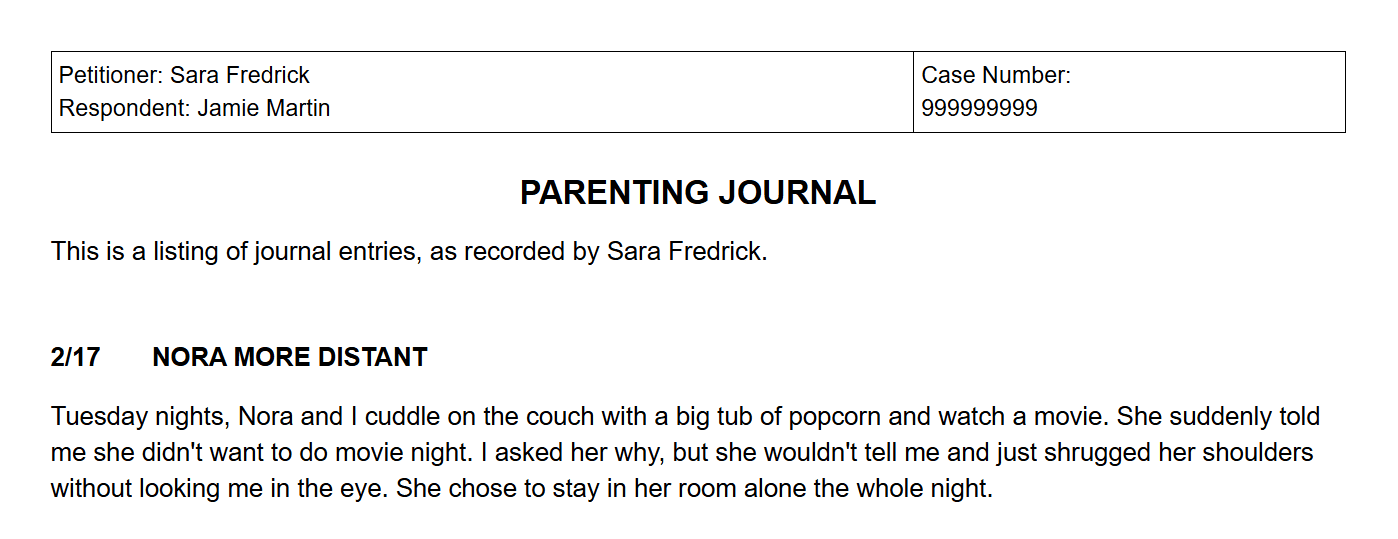 Try this with Custody X Change.
Co-parent messaging that can help you prove the other parent's intentions
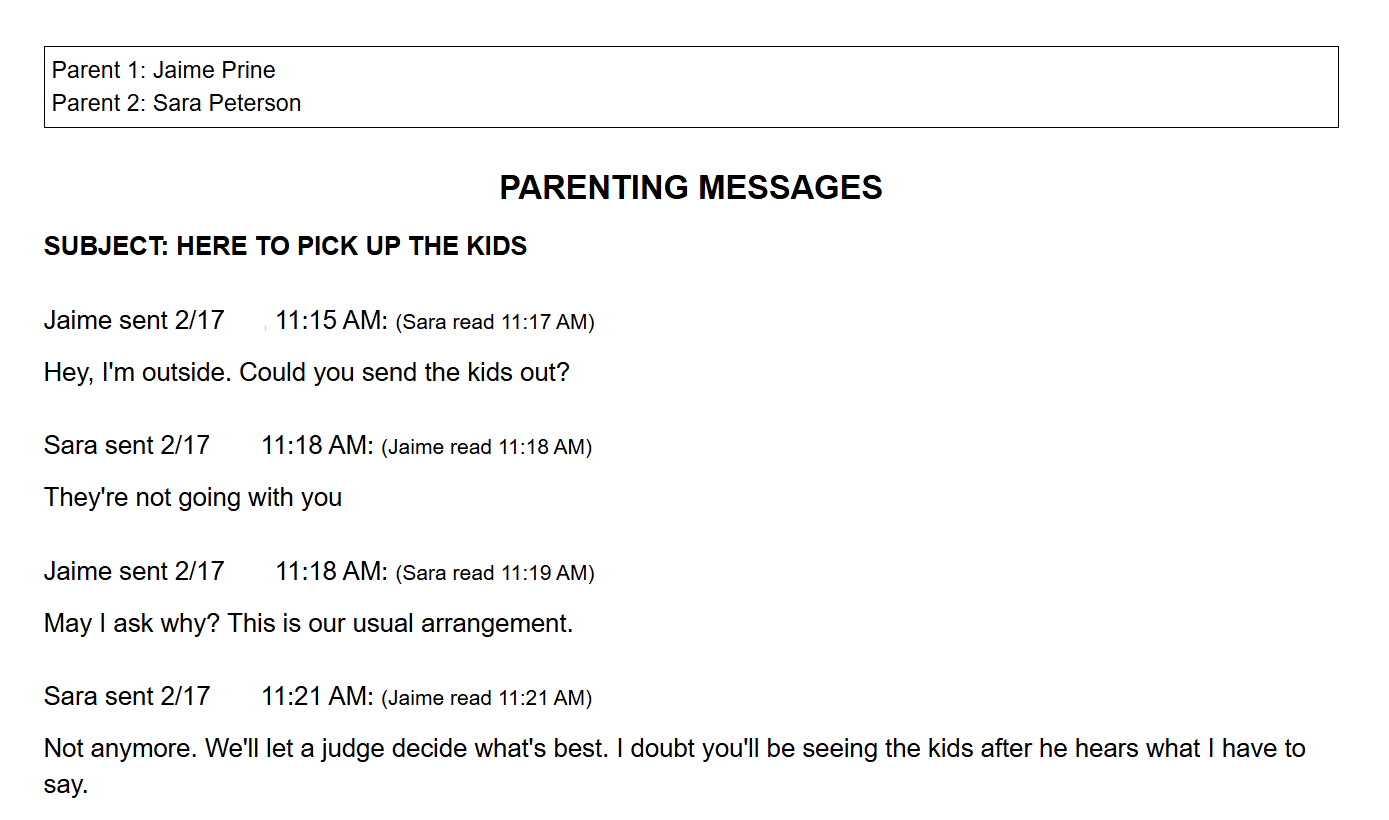
And more
Let Custody X Change help you fight against false accusations.