
Hanukkah Holiday: Ways to Schedule Custody Time Fairly
Hanukkah is celebrated for eight nights. When parents are divorcing or separating, one or both may be eager to share this holiday time with their child. Make fair arrangements for it in your holiday schedule. Here are some examples of how to divide and share Hanukkah time.
When is Hanukkah?
Hanukkah usually falls in December. Some years it's in late November, but that's rare. It can start on any day of the week.
| Year | First night | Eighth night |
|---|---|---|
| 2026 | Friday, December 4 | Friday, December 11 |
| 2027 | Friday, December 24 | Friday, December 31 |
| 2028 | Tuesday, December 12 | Tuesday, December 19 |
| 2029 | Saturday, December 1 | Saturday, December 8 |
| 2030 | Friday, December 20 | Friday, December 27 |
| 2031 | Tuesday, December 9 | Tuesday, December 16 |
On the Hebrew calendar, Hanukkah starts each year on the 25th of the month of Kislev.
This can be confusing because the Hebrew calendar doesn't align with the Gregorian calendar (the civil one you're probably used to). Using the Custody X Change app makes it easy because Jewish holidays are built in — you never have to look up dates.
Ideas for a Hanukkah schedule when you're co-parenting
1. Split Hanukkah nights evenly
Especially if you and the other parent are both Jewish, you may want to split the Hanukkah week in half.
You could decide that one of you will get the first four nights and the other will get the last four.
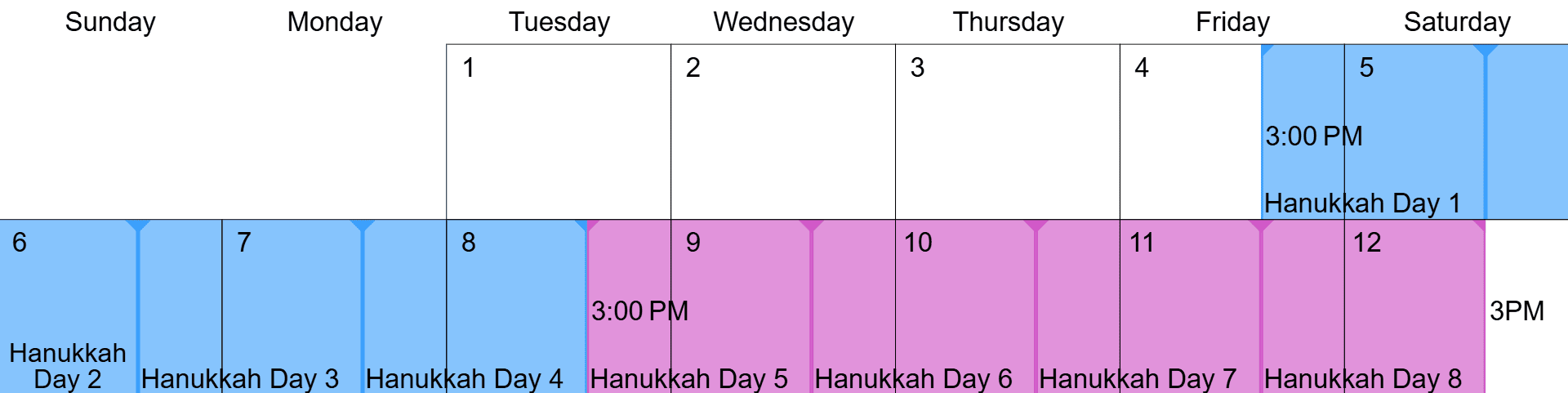 Try this with Custody X Change.
2. Give one parent a night that's important to them
One parent may get the first and last nights while the other parent gets the other six.
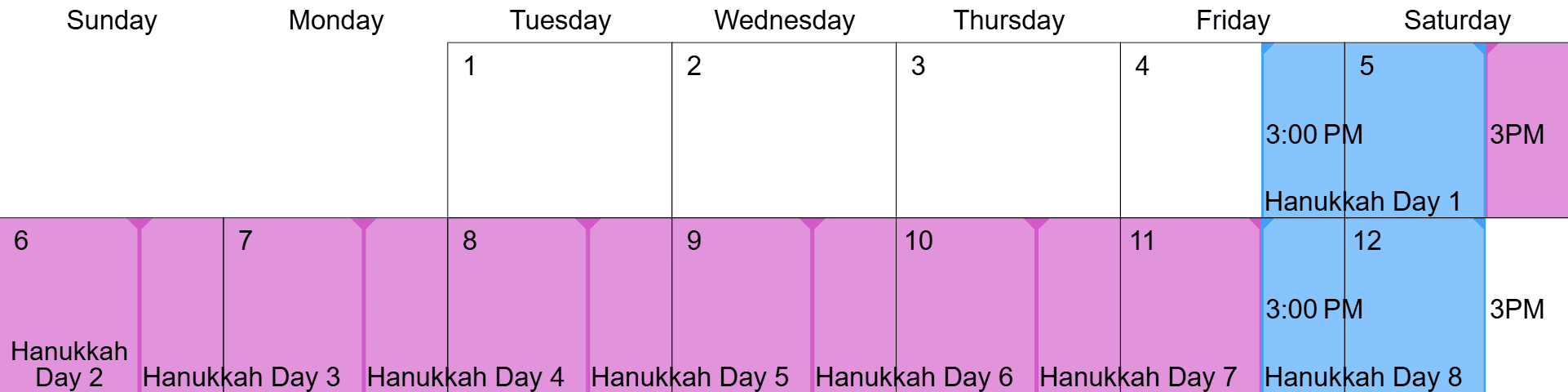
3. Follow your regular schedule so one parent gets the Hanukkah weekend
Because Hanukkah lasts for eight days, it always includes a weekend. If your regular schedule gives weekdays to one parent and the weekend to the other, you might just stick to your routine.
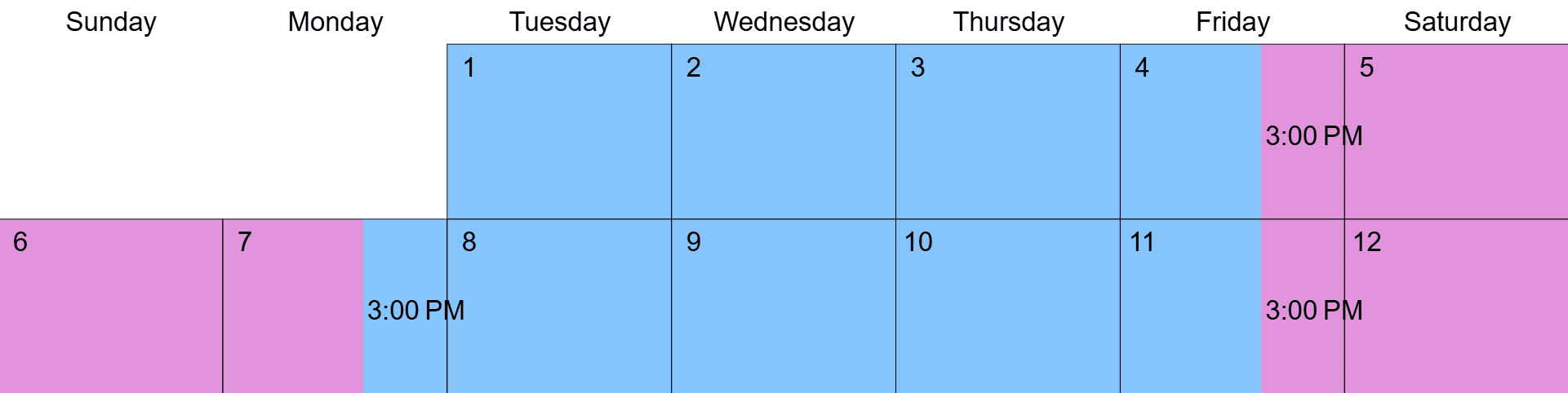
4. Let a parent have evening visits with the child
If the child lives mainly with one parent, you may not want to disrupt the overnight and school routine just for Hanukkah. However, you may want to adjust their evening routine so the other parent can have brief visits. It's a nice opportunity for the child to enjoy gift-giving, singing or cooking and to build happy memories about their tradition.
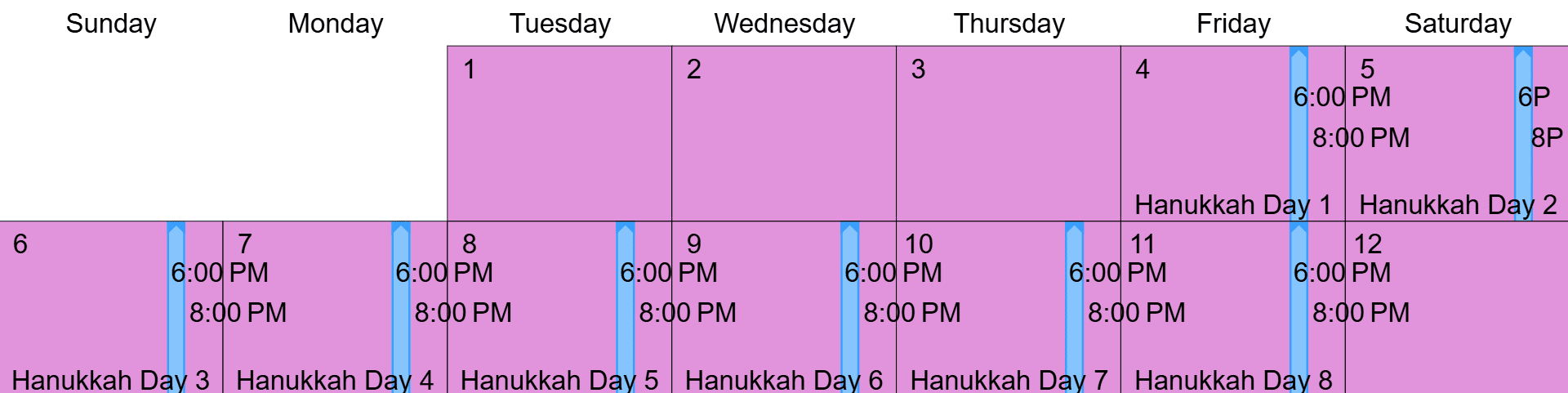
You could specify that a parent who would ordinarily have no time that day is entitled to a brief evening Hanukkah visit.
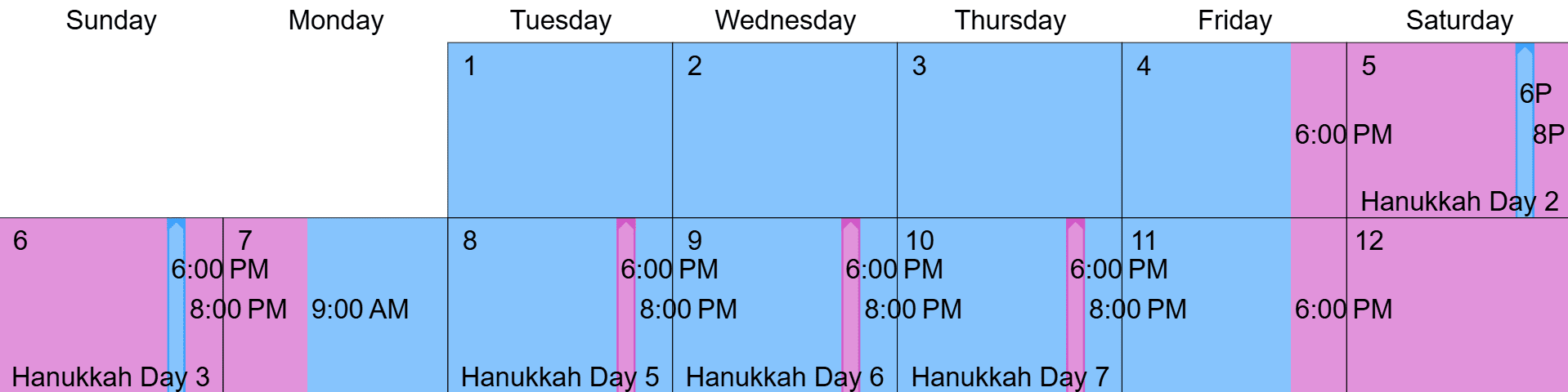
In your parenting plan, you may want to say where the visits will be and who's responsible for pickup and drop-off. If parents are amicable, one might simply stop by the other's house for dinner.
5. Alternate years for who gets certain nights of Hanukkah
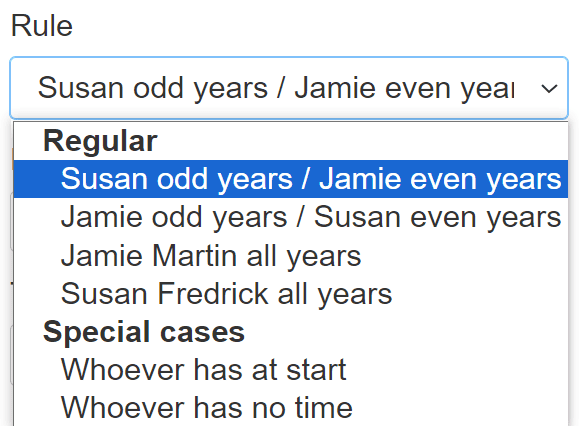
If both parents celebrate Hanukkah but you live far away from each other, one solution is to alternate years for who gets certain Hanukkah nights, e.g., the first night or the last night. For example, the child could stay with the mother for the first night in even years, and with the father in odd years.
For interfaith parents to consider
If one parent wants the child during Hanukkah and the other wants them for Christmas, this is probably easy for you to work into your holiday schedule each year. Just remember to plan for what you'll do when Christmas falls during Hanukkah (as will happen in 2027 and 2030). As you make your holiday schedule, you can use a timeshare calculator to ensure you're giving each parent about the same amount of holiday time.
You may also want to consider writing provisions in your parenting plan about whether the child is allowed to celebrate religious traditions in both homes. For example, a non-Jewish parent may agree to light the menorah (the candle holder) for a small child or to allow a teen to light their own menorah.
Why most schools are open on Hanukkah
Hanukkah is traditionally celebrated by lighting candles at home, just before sunset, after the school day is already out anyway.
Judaism doesn't restrict what a person can do on Hanukkah. During the week of Hanukkah, Jewish children can go to school, and Jewish teachers can teach. (This contrasts with holidays like Yom Kippur when Jews are not supposed to work, write, use electricity or ride in cars.) On Hanukkah, since there's no major religious restriction to accommodate, schools don't need to close.
Nonetheless, some Jewish day schools (private schools) close for a couple days for Hanukkah to encourage families to build festive traditions. These private schools usually have their weeklong winter break in late January, as recommended by the Jewish Education Project.
The easiest way to make a Hanukkah schedule
There's a lot to think about when you build a Hanukkah schedule. You'll want it to give the right amount of time to each parent and work for years to come.
The Custody X Change app makes it easy. Just follow our steps to make a holiday schedule. Be sure to select the Jewish holiday list as described in Step 1.

To make a custody schedule quickly and affordably, turn to Custody X Change. You'll get written and visual versions that meet your family's needs, as well as court standards.
Frequently asked questions
What happens if Hanukkah overlaps our school's winter break?
A holiday schedule overrides your routine. Usually, a co-parenting schedule for a school break is still treated as a regular schedule in the sense that holidays override it. This means, if Hanukkah falls during winter break, the parent who's supposed to get Hanukkah will get that parenting time.
As interfaith parents, can we each expect to get parenting time during our own religious holidays?
That's one possible way to split up holiday time. It depends how important your religious holidays are to you; you may find that you can be flexible about some holidays. Calculate your parenting time with Custody X Change to ensure you're being fair.
How should we handle gift-giving during Hanukkah?
Coordinating can be useful, especially for co-parents who have different budgets. For Hanukkah, you may want to set expectations with your child about whether they'll receive gifts on all eight nights.