
Checklist: How To Change Your Name After a Divorce
You can change your last name as part of your divorce, or by petitioning the court separately from your divorce. Changing your name is optional.
If you change your name, you'll need to update your Social Security card, credit cards and more. Use our printable name-change checklist to make sure you update your name in all the necessary places.
Should I change my name after divorce?
Most people opt not to. Six of ten women choose to keep their name when they divorce or separate, according to research from The Female Quotient.
Consider the following when making a decision.
Your child
The top reason women give for not changing their name is the potential effect on their children, the Female Quotient study found. (Women are most likely to face the decision of changing their name because 8 in 10 take their husband's last name when they marry a man.)
Think about how things may change if you have a different last name than your child:
- Travel: Agents at the airport may question you to ensure you and your child are related. (You can remedy this by bringing a copy of their birth certificate.)
- Familial connection: Your child might feel as though you're cutting ties with them by changing your name. Others may question your relation.
- School: Having a different last name may impact your ability to sign your child up for extracurriculars or give them permission to attend field trips.
On a positive note, changing your name could help your child move on. There will be no question that the marriage is over, and your child won't feel disillusioned when you don't get back together.
If you opt to change your name, explain why so your child doesn't feel responsible. They might also want to change their surname.
Your career
A name change could hurt your name recognition. You may have spent years building a client list and portfolio under your married name. Potential clients may have trouble finding you as it will take time for your new name to show up in web searches.
On the other hand, a name change could benefit your career. "It can create a more neutral professional image, free from any preconceived notions or assumptions, and prevent potential bias," says Attorney Paola Parra Harris of Florida. A rebrand is an opportunity for a fresh start. If you were in business with your spouse, a name change helps you stake out your own territory in the field. You're free to create a personal brand on your own terms.
Your readiness to move on
Changing your name after divorce is an emotionally heavy decision. Your name is an integral part of your identity. It's how people in your life address you and know you. Changing your name might feel like losing a part of yourself.
Some Reddit users said changing their name was empowering, making it easier for them to move on from married life.
It can also help you reconnect with who you were before marriage or even with other people — one woman changed her name to honor her grandfather.
The process
The name-change process takes time. It can be challenging and costly. Many spouses choose to keep the same name so they don't have to jump through all the hoops. But for others, the process is worth it as a way to move forward.
How to ask for a name change
Generally, you can ask to restore your former last name in your initial divorce paperwork. This is the recommended route as it's simpler and quicker than filing for a separate name-change order.

But you'll need to file a separate petition for a name change if:
- Your state doesn't allow you to request a name change as part of divorce.
- You want a last name other than the one you had before marriage (not allowed in every state).
Steps to request a name change separately from your divorce case
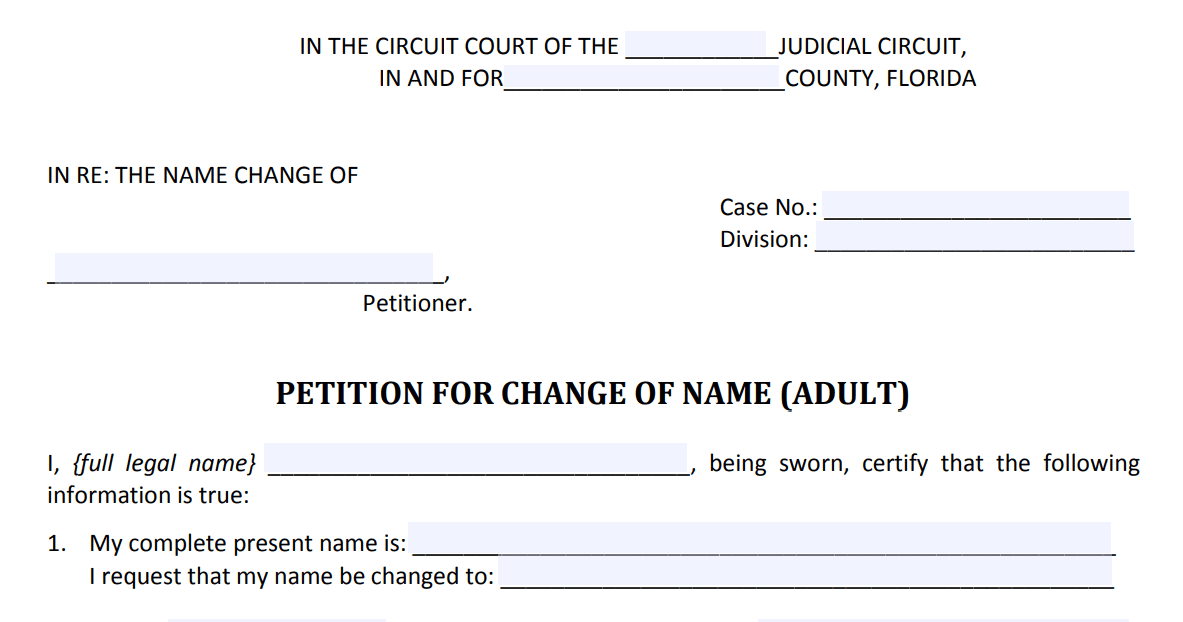
First, consult an attorney. Mistakes make the process longer.
Then, hand in the following to your local court or county clerk's office, whichever handles name changes in your area:
- Name-change petition
- Certified copy of your birth certificate
- Government-issued photo ID
- Proof of your address
- Fingerprint card (required in some states)
- Filing fee waiver (if you cannot afford the filing fee)
Finally, go to a hearing where a judge will determine whether to grant your name-change request.
You need to be a resident of the state where you request the change. (If you were able to get a divorce in the state, then you're a resident.) If you're not a U.S. citizen, consult an immigration attorney.
How to update your name once you have court approval
You should update your name with the Social Security Administration first.
Updating your name in some places, like social media accounts, is as simple as going online and editing your information.
Government agencies and utility companies usually need more information. Generally, you'll need to give them:
- Certified copy of your divorce decree or name-change order
- Certified copy of your birth certificate
- Government-issued ID
A few agencies explain online how to update your name:
- How to update your passport
- How to update your voter registration
- How to update your TSA PreCheck
- Check the website of your state's DMV for how to update your driver's license or non-driver's ID
Change-of-name checklist
Once you've changed your name, make sure to update it in these places. Use our printable name-change checklist to keep track.
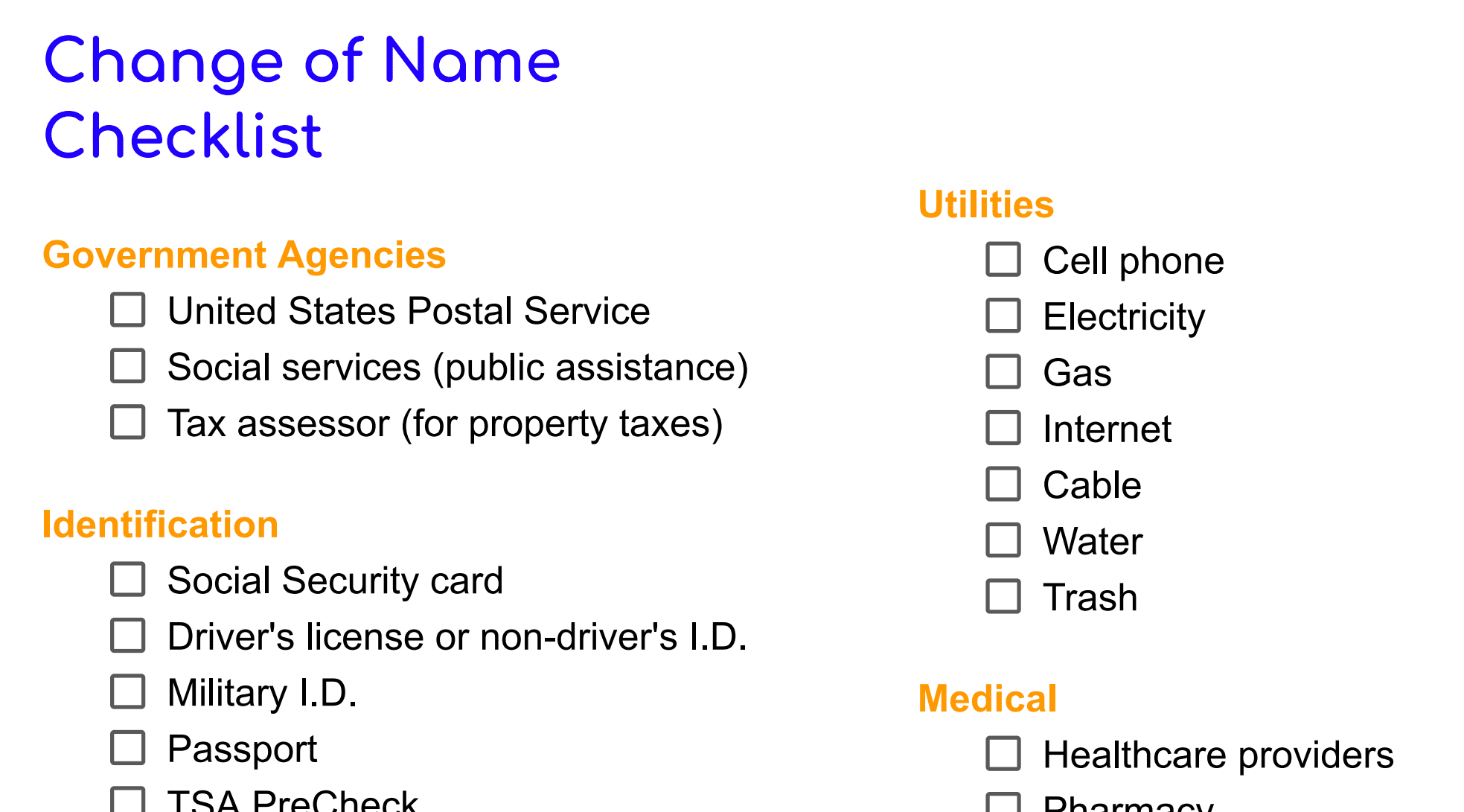
Government agencies
- United States Postal Service
- Social services (public assistance)
- Tax assessor (for property taxes)
Identification
- Social Security card
- Driver's license or non-driver's ID
- Military ID
- Passport
- TSA PreCheck
Home and car
- Vehicle title and registration
- Car insurance
- Home deed or lease
- Home insurance
Finances
- Bank accounts
- Credit cards
- Lenders and loan servicers
- Retirement and investment accounts
- Wills and trusts
- Payment platforms (e.g., PayPal)
Personal
- Voter registration
- Social media
- Email account
- Subscriptions (streaming, etc.)
- Memberships (gym, etc.)
- Library card
- Loyalty cards
- Life insurance
- Church and other organizations
- Family and friends
Utilities
- Cell phone
- Electricity
- Gas
- Internet
- Cable
- Water
- Trash
Medical
- Healthcare providers
- Pharmacy
- Health insurance
- Vision insurance
- Dental insurance
Child-related
- Your child's school or daycare
- Your child's healthcare providers
- Your child's extracurricular leaders
- Child support agency
Career
- Payroll
- Work ID
- Business cards
- Business website
- Professional licenses
- Alumni associations
How much does it cost to change your name?
If you change your name as part of your divorce, you'll only need to pay $15 to $30 for a certified copy of your birth certificate to prove your identity.
But if you change your name separately from the divorce, it generally costs a few hundred dollars. In addition to the birth certificate fee, you'll need to pay:
- Filing fee: $65 to $450
- Notice of name change in local newspaper: Less than $100
- Fingerprint card (not always required): $10 to $65
If you cannot afford the filing fee, you can apply for a fee waiver.
Convincing your ex to drop your last name
The best way to convince your ex to drop your last name is to negotiate during the divorce process. Your spouse might be willing to make the change after hearing your reasoning.
There's no way to force your ex to drop your last name.
In most cases, your ex isn't keeping your name because they're still in love with you or because they want to hurt you. Updating accounts and IDs is tedious. Plus, many parents want to have the same last name as their children.
Going through the divorce process as a parent
Preparation is the most important part of the divorce process — especially if you're a parent.
Documents you might file as evidence in a divorce involving custody include:
- A proposed parenting plan
- Proposed parenting time schedules
- A calendar of your child's activities
- A printout of messages exchanged with the other parent
- A log of your child's expenses
- A parenting journal
The Custody X Change online app lets you create all of these in one place. It makes sure you're ready to take on the divorce process step-by-step.
Frequently asked questions
How long does it take to change your name in court?
Usually one to three months. Much of that time is waiting for your hearing date. How soon the hearing happens depends on the court's calendar and your availability. Submitting an incomplete petition or failing to provide supporting forms will delay your case.
Is there a time limit to change your name after divorce?
No. You could even wait years after your marriage ends. Typically, even if your divorce decree permits a name change, you don't have to do it immediately — or ever. Spouses who negotiate a name change as part of a divorce settlement can set a deadline.
Can I pick any name?
No, there are limits. Many states, like New York, only allow you to return to a legal surname you had before your marriage. This can be your maiden name or another you've gone by. Other states let you choose any surname that isn't offensive or misleading (e.g., a celebrity's name). The court will deny your request if you're trying to evade the law, avoid paying child support or avoid repaying a debt.
Can I change my name before my divorce is final?
Yes, you can petition for a name change before, during or after the divorce process. If your petition is approved, you'll get a name-change order you can use to update your name where needed.
Can I change my name if I have a criminal record?
Yes, but the process is a little different. You'll need to tell the court about your criminal record and may have to inform the district attorney's office. In several states, every person asking for a name change must get fingerprinted or have a background check.
Can I change my child's name?
Yes. Parents can agree to change the child's name by including a term in their parenting plan. Otherwise, you can ask the court to decide whether changing the child's name is in the child's best interests.
Do I need to update my birth certificate?
No. Your name at birth — or your child's — doesn't need to be updated.