
Can a Parent Lose Custody for Emotional Abuse? Definitely.
Emotional abuse isn't as easy to spot as physical abuse, but it is no less damaging. It's a pattern of behavior where one person humiliates or creates fear in another to control them. It is a type of abuse in family court.
A parent can lose custody for emotional abuse, as it hurts a child's development, confidence and more. If the other parent has been emotionally abusive to your child, you'll need to prove it in court.
What is considered emotional abuse in court
The court considers a parent emotionally abusive if they regularly engage in behaviors that harm the child's mental health. Emotional abuse includes:
- Name-calling
- Threatening the child
- Telling the child they're not good enough
- Expecting the child to behave like an adult
- Fighting and arguing with others around the child
- Talking the child into doing things that are unsafe or inappropriate
- Manipulating a child to boost a narcissistic ego
It's closely related to emotional neglect.
How a parent can lose custody for emotional abuse — real life examples
Parents don't generally lose custody for one instance of emotional abuse; they lose it for abusive patterns. Due to this, a court might gradually strip away their parental rights. For example, the court might take away legal custody first. If the parent's behavior continues, the court could require supervised visitation. If there's still no change, the court could terminate parental rights.
Here are real life examples of parents losing custody due to emotional abuse:
- A Washington mother did not get primary care of her daughter because she repeatedly disparaged her.
- A Pennsylvania father was limited to visits with his daughter after coaching her to lie that her mother was physically abusing her.
- An Iowa mother lost custody for not protecting her daughter from the stepfather's emotional and physical abuse. The mother's failure to complete an emotional training program was also a factor.
How to prove emotional abuse in court
A parent can lose custody for emotional abuse only if the evidence is strong enough to prove it. The best way to prove emotional abuse in family court is to hire an experienced attorney. They'll know if what your child is experiencing constitutes emotional abuse in the eyes of the court, and they'll help you gather evidence.
Common evidence of emotional abuse includes:
- Text messages, emails and social media posts
- Audio and video recordings (if accepted by the court)
- Psychological and custody evaluations
- Witness statements and testimony
- Parenting journals
- Police reports
Judges generally don't like to put kids on the stand at trial. However, a child could give testimony in a private meeting with the judge. The court may assign a guardian ad litem to attend the hearing and represent the child's best interests in court. The guardian may also prepare a report about the family.
How to help an emotionally abused child
Emotionally abused children need support and reassurance to move past abuse.
Children who experience emotional abuse often feel like they don't have a voice. It's important to listen to them, especially when they're opening up about their experiences. Show that you care, and don't pass judgment. Also, don't try to force information out of them. That can do further damage.
Hiring a professional therapist for your child can help. A therapist will know the proper methods to get the child to open up without doing more harm. Play therapy is often used to help emotionally abused children who can't verbally relay their experiences.
Emotional abuse may cause a child to withdraw from school and social life. Help the child with their homework and school projects, take them out to dinner with their closest friends. Gently encourage them to get back to living their life.
Emotional abuse tarnishes a child's worldview. Be the bright spot they need to know that they can form healthy bonds with others.
Documenting emotional abuse for court
Since its effects aren't always obvious right away, emotional abuse can be hard to prove in court. You need to promptly document what happens so you don't forget little details that may prove essential to your case.
With the Custody X Change app, you can start a paper trail of the other parent's emotional abuse.
In your parenting journal, write down the details of abuse you witness. Information you hear from someone else — even from your child — probably won't be accepted as evidence, but you can note it as background information for yourself or your lawyer. Attach social media posts, photos or documents to support your journal entries.
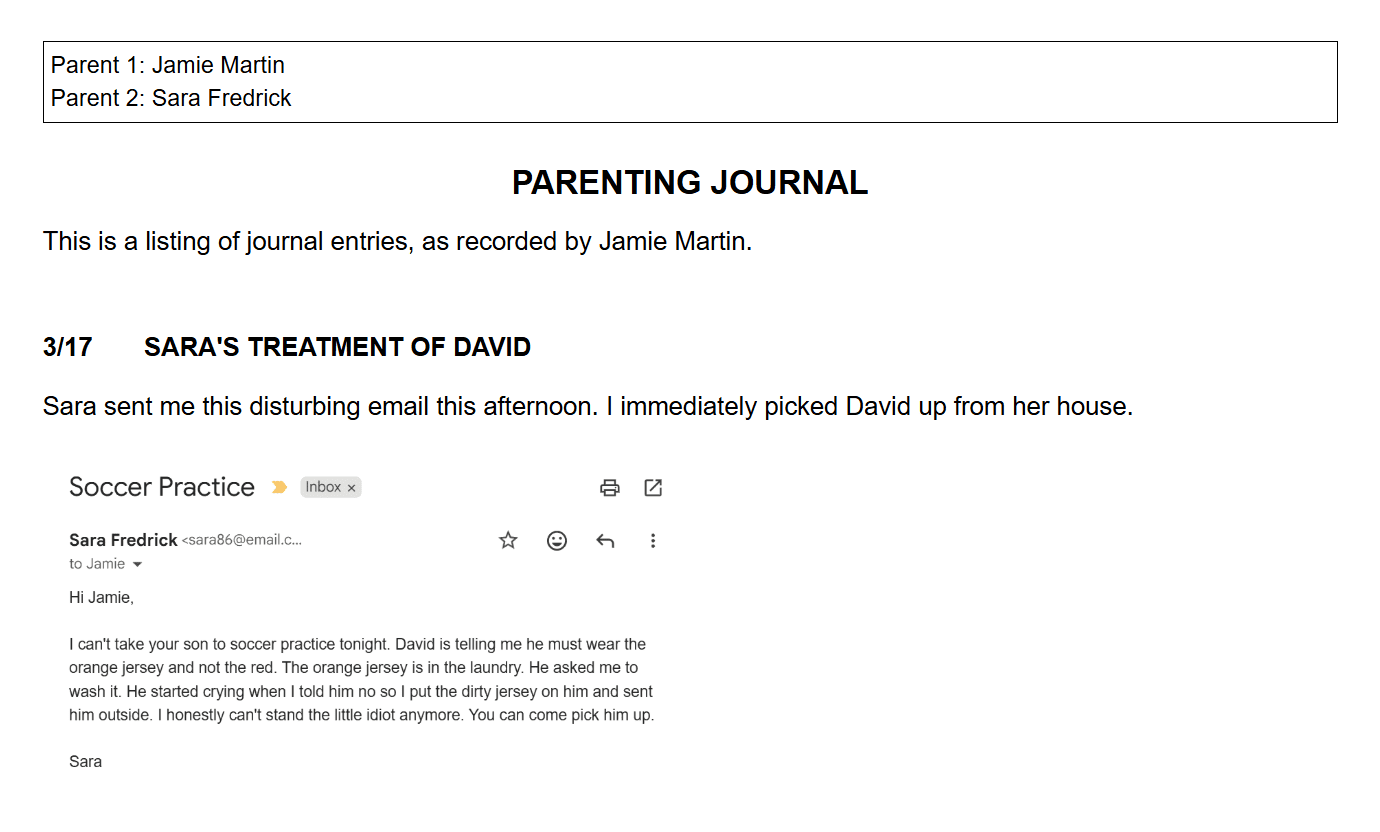 Try this with Custody X Change.
Message your co-parent on Custody X Change so you can organize conversations you may want to use in court. For example, you could label a conversation "emotional abuse" and "threats" without the other parent knowing. When you print or export messages, the hostility monitor makes it easy to see when a parent used harmful words about your child.
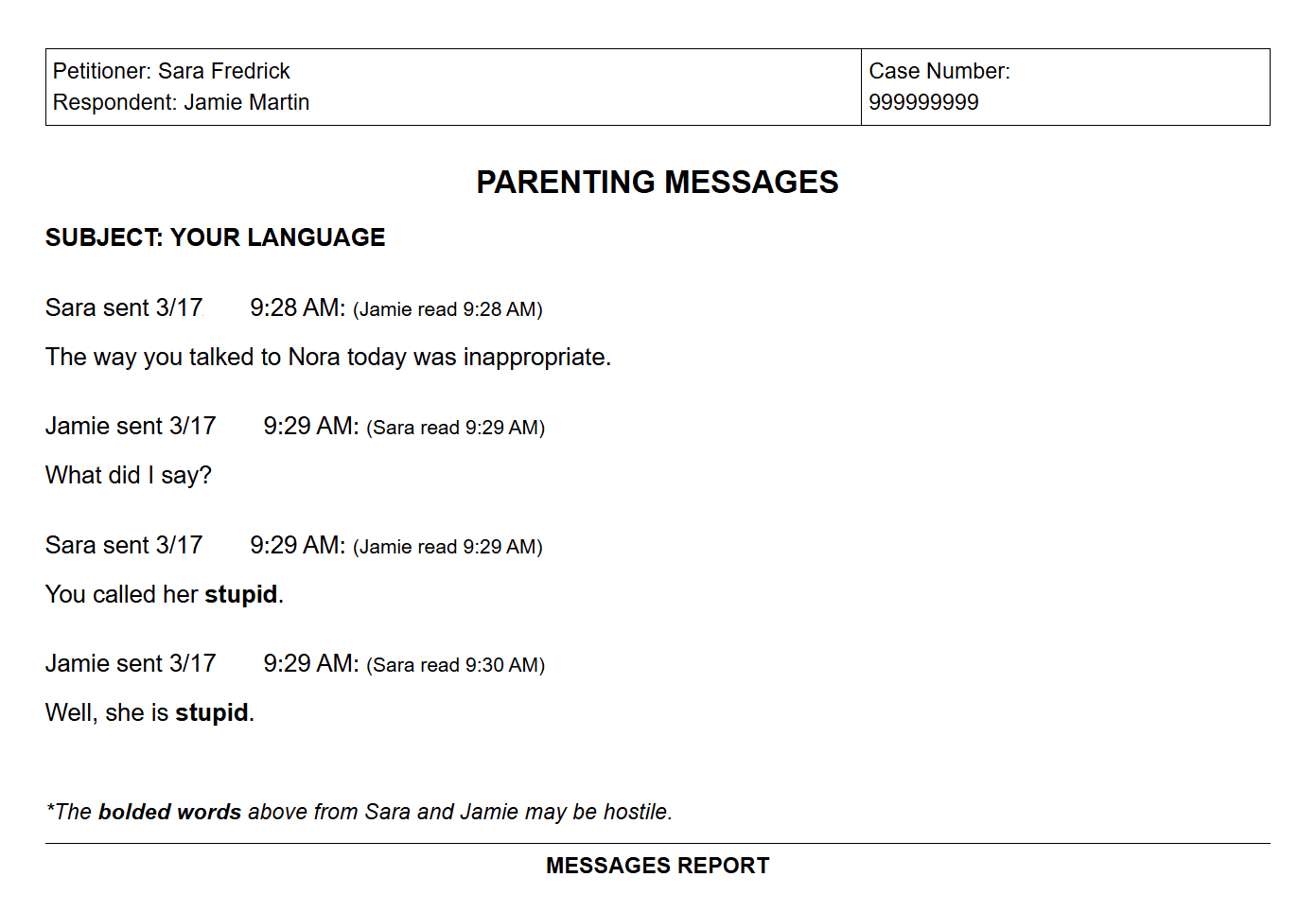
Let Custody X Change help you gather the evidence you need to protect your child.