
Military Visitation Schedules
If a parent is in the military, you'll need a schedule that anticipates possible deployment, relocation and more.
You can have a lawyer create your schedule. Or you can create a schedule yourself (independently or with the other parent).
How military visitation schedules are the same as other visitation schedules
Any child visitation schedule should have three basic components:
- A regular schedule that says when the child will spend time with each parent normally
- A holiday schedule that gives the child time with the parents on special occasions
- A vacation schedule (or rules for when parents can vacation with the child)
How visitation schedules are different for military families
When a parent is in the military, scheduling is a little more complicated. You will still need to create the three basic types of schedules, but you'll also need provisions in your parenting plan to accommodate the unique lifestyle of the military.
 Try this with Custody X Change.
Accommodating work schedule changes
Civilians generally have set work schedules, but military personnel often don't.
Start with a visitation schedule that works for the military parent now. If you know their work schedule will change, you can address this ahead of time in your custody agreement.
You might say the parents will agree on a new schedule when necessary and go to mediation if they can't agree. You may also want to set a minimum amount of visitation time for the military parent, e.g., three overnights per week.
Communicating with your child during deployment
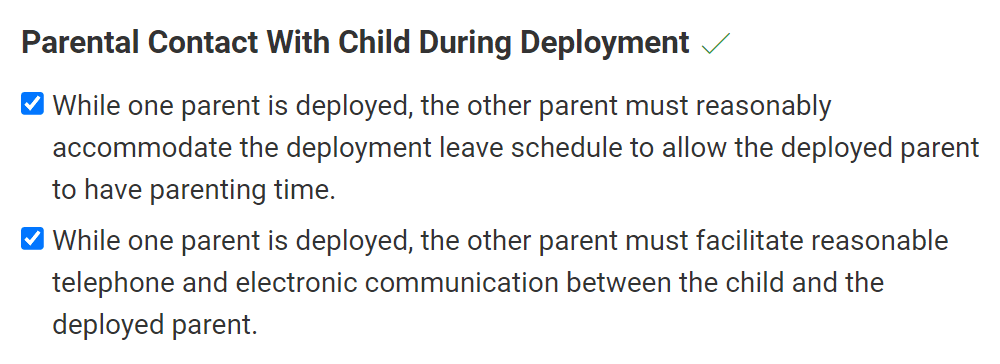
Deployment is often part of being in the military. Whether the deployment is for two weeks or a year, make sure your child has frequent contact with the deployed parent during that time. You may hear this called virtual visitation.
You can address this in your custody agreement. You can set a schedule for contact or keep it flexible.
Choose communication methods that work for your child's age. Older children can email and text. Kids that can't read can still talk on the phone and dictate messages to the deployed parent.
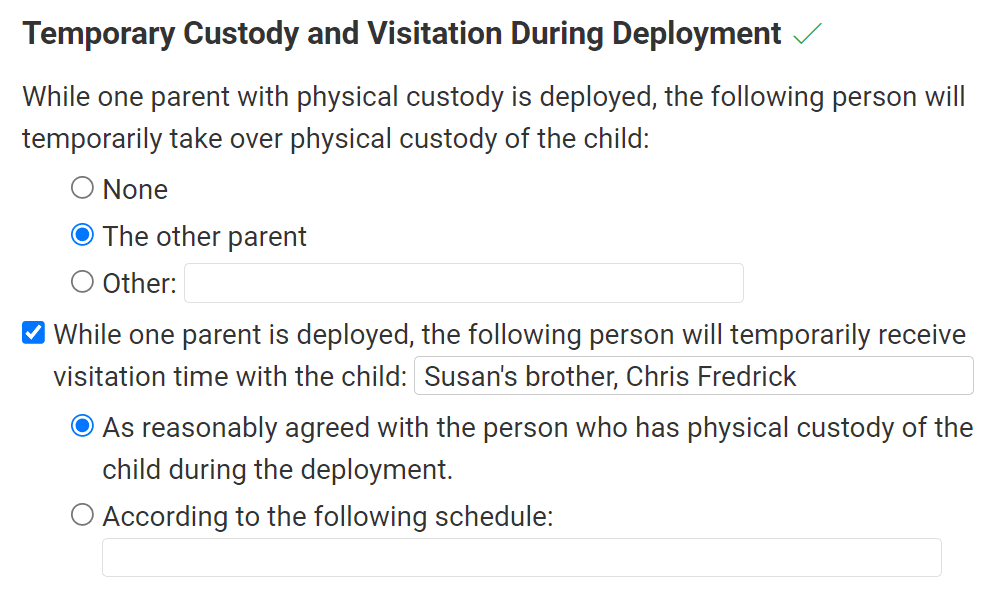
Can someone else visit the child during the deployment as a sub?
Yes, you can name someone else in your parenting plan who can visit with your child when you're deployed. This could be a grandparent, a stepparent, an older sibling, etc.
Choosing someone to stand in helps your child feel close to the military parent while they're away. It also allows your child to keep the routine they're used to (though you may need to adjust the schedule for the new person).
If the military parent gets transferred out of the state or country
If the military parent is likely to be transferred, make plans for a long-distance visitation schedule now so it'll be part of your custody order.
When parents live in different states or countries, children typically visit the distance parent during summer and other long breaks from school.
Suggesting a long-distance schedule ahead of time helps prevent future conflict and shows the judge you are forward-thinking.
The easiest way to make a military visitation schedule
Creating a schedule on your own can feel overwhelming. You have to be sure to use airtight legal language and can't omit any required information.
The Custody X Change app takes the guesswork out of the equation by helping you build a schedule piece by piece.
Try this with Custody X Change.
As a result, you get a written schedule and a visual calendar. They meet your family's needs, as well as the court's standards.
For quick, reliable and affordable help making a visitation schedule, turn to Custody X Change.