
Filing for Custody in Delaware
Filing for child custody means you're asking for a court order about how you and your ex will raise your child. The child must have lived in Delaware for at least six months, or since birth if they're less than six months old.
The parent requesting the order is the petitioner. The other parent is the respondent.
Paperwork you'll need
You can find family court forms online. After you fill them out, make two copies of each.
 Try this with Custody X Change.
You'll need to fill out the following forms:
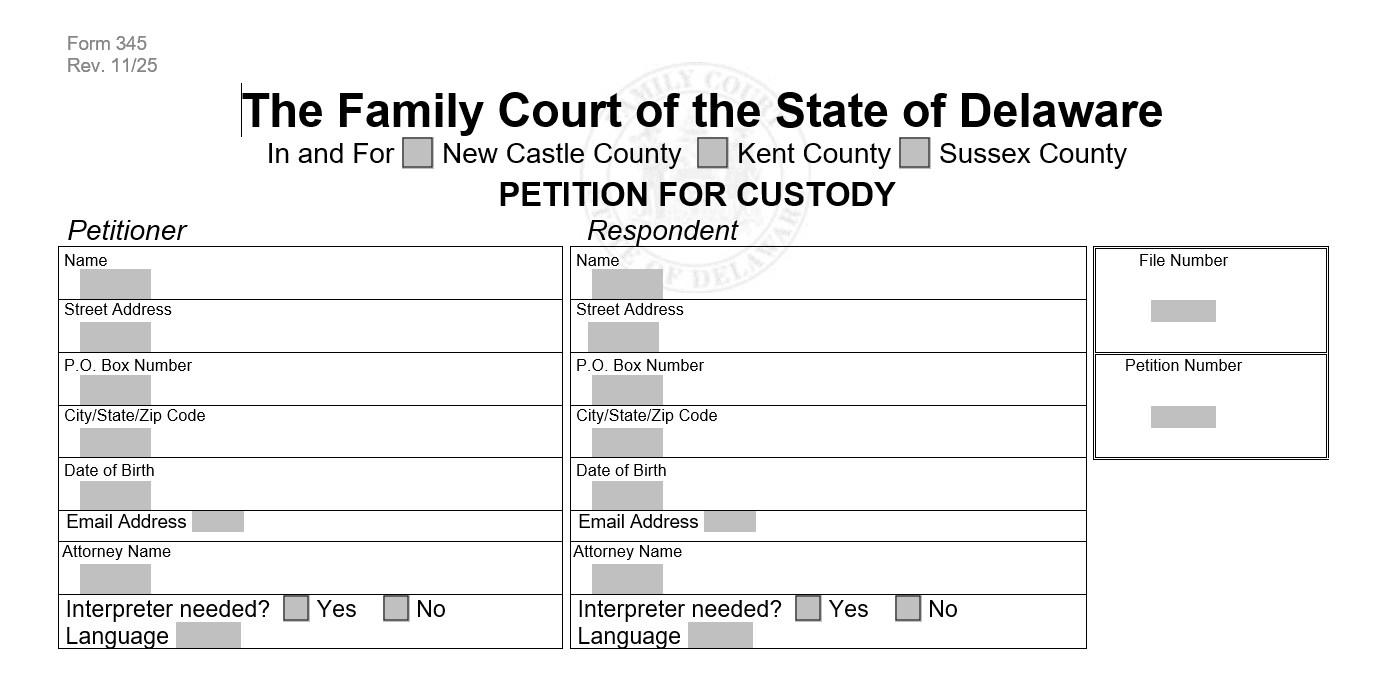
- Petition for Custody
- Information Sheet form
- Custody Separate Statement
- Custody, Visitation and Guardianship Disclosure Report (to be filed before the first court appearance)
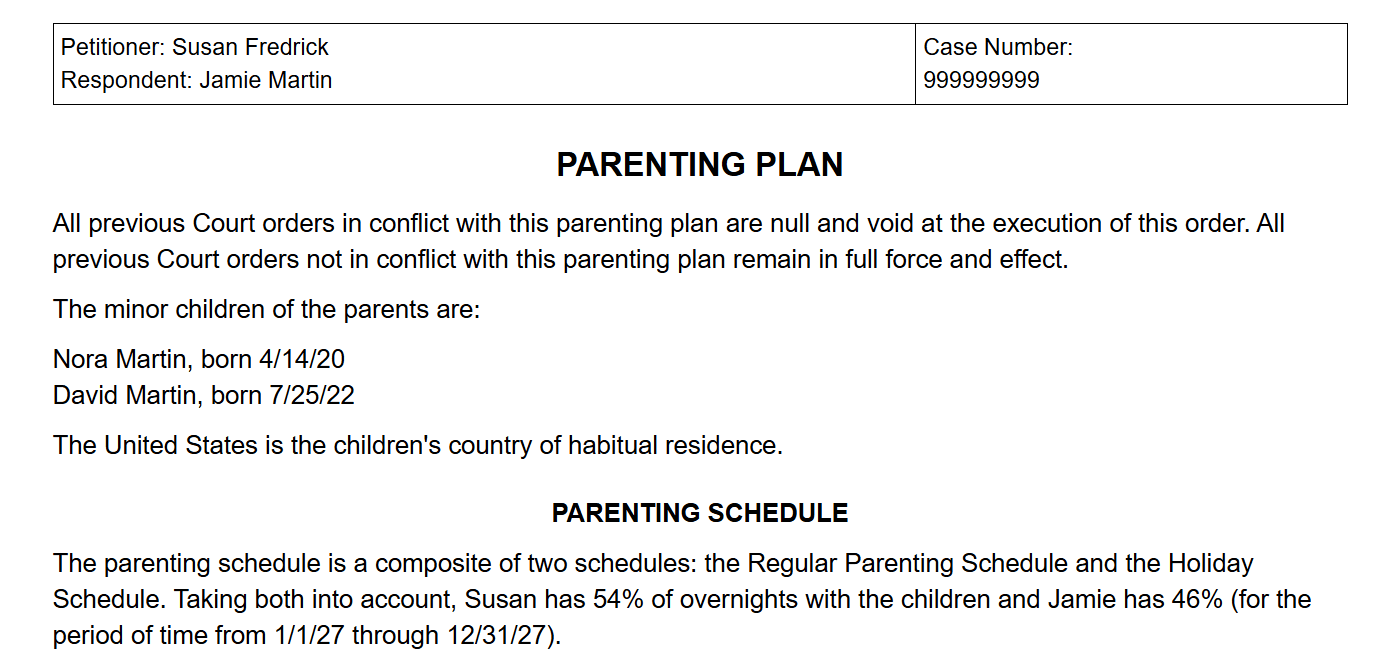
You will have the opportunity to specify the custody and visitation arrangement you desire in your petition and disclosure report. You may attach a parenting plan to add more detail.
Depending on your case, you might also need the following:
- Consent Order for Custody or Visitation (if you've reached an agreement)
- Waiver of Rights Under the Servicemembers' Civil Relief Act (if you're active duty military and want the case to move without delay; note that the court can enter a default judgment if you sign this and then fail to respond on time)
If you are not both legally recognized as the child's parents, you may also need to file an Affidavit of Parentage (if both parties agree on parentage) or a Petition for Parentage Determination (if there is a disagreement about parentage).
Keep in mind that if you want to end your marriage, filing for divorce requires additional paperwork. Divorce is a separate process in Delaware.
Handing in your forms
Bring the originals and two copies of your forms to a Family Court location. The court will keep the original and one copy and return a timestamped copy to you to keep for your records. Filing via email is another option.
You can file in any county. The court will transfer your forms to the county where the child lives if it's different from where you filed.
You'll need to pay a filing fee. These change, so check the court's list of filing fees. To request a fee waiver, fill out an Affidavit in Support of Application to Proceed In Forma Pauperis.
Notifying the other parent
The respondent becomes aware of the case through a process called service. This is when they're given copies of the forms you filed with the court.
If the respondent lives in Delaware, the court's process server will serve them with a copy of your petition. If you want to expedite service, you may hire a private process server with the court's permission. If the respondent lives outside of Delaware, the court will send the forms by certified mail.
If you don't know where the respondent lives or works, or if mail service fails, you can ask the court for permission to serve the respondent by publishing on a legal notices website or in a newspaper. To do this, you must complete an Affidavit That a Party's Address is Unknown.
The respondent has 20 days to respond after receiving service.
Preparing for your case
After filing, the next step is generally mediation. Prepare for it — and the rest of your co-parenting journey — with Custody X Change.
The Custody X Change online app offers a parenting plan template, custom custody calendars, parent-to-parent messaging, an expense tracker and more. You can use it to put together proposals for the other parent, negotiate, prepare settlement paperwork or organize evidence.
Be prepared for your hearing and every step of your case with Custody X Change.
Resources
We thank the following attorneys for their help:
- Alfred Cave of Maven Law in Hockessin
- Sharon Eppes of the Family Law Advice Center in Wilmington
- Thomas Gay of the Law Offices of Phillips & Gay in Georgetown
For more guidance, look to: