
Shared Custody Schedules for Newborns
A shared custody schedule divides the newborn's time between parents in a way that's developmentally appropriate.
You and the other parent can make the schedule on your own, hire a lawyer to write it, or try an alternative dispute resolution method for help reaching an agreement.
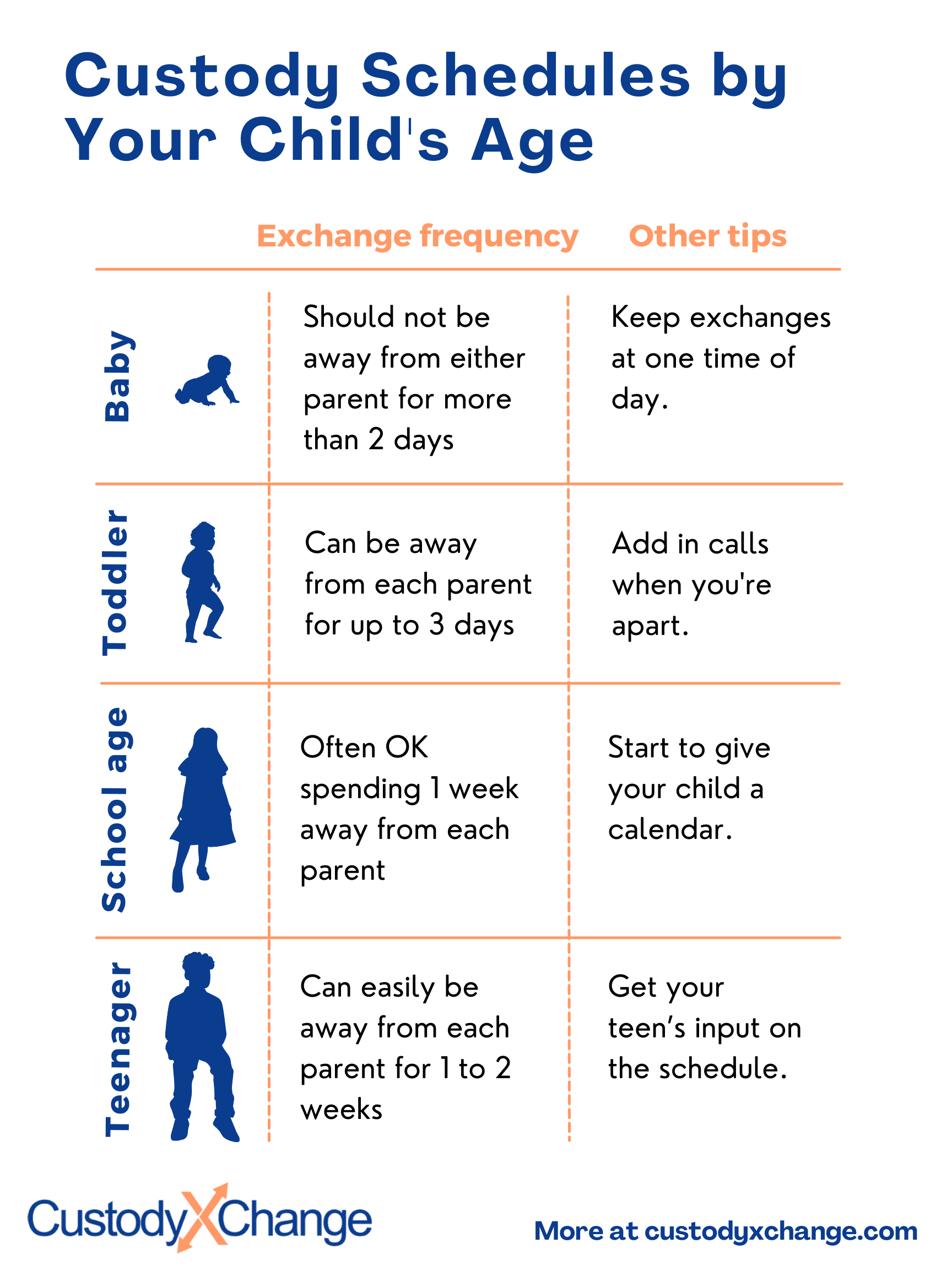
Creating your schedule
Keep typical newborn behavior in mind as you explore schedule ideas.
- Newborns bond with their parents when they are held, played with, fed, soothed, diapered and bathed.
- Newborns generally don't follow a predictable schedule of sleeping, eating and waking.
- Newborns can experience stress from significant disruptions in their daily routine.
- Newborns need to have short, frequent visits with both parents rather than long absences from either parent.
Your schedule should focus on what will be least stressful for your baby. While it may not be ideal for you, accommodating your baby should always be the first priority. You can make modifications as your child ages, and you can even write future adjustments into your parenting plan now.
Ensuring your newborn's healthy development
A shared schedule tailored to your baby's needs will not hinder their development. In fact, it can help your newborn build healthy attachments to both parents.
However, don't insist on splitting time exactly down the middle. "Giving an infant half of the mother and half of the father does not necessarily make for a secure attachment with either of them," said neuropsychologist Allan Schore in an interview for Family Court Review.
To ensure your baby's comfort, your schedule should be consistent and predictable.
- Establish one home as the newborn's primary residence, but allow the baby to visit the other parent in their home.
- Hold visits where both parents can provide major caretaking tasks.
- Allow short trips outside the home with either parent.
- Introduce any changes slowly. For example, you could try out overnight visits and monitor your baby's reaction before you commit to them.
The early months of your baby's life should focus on providing love and care so they develop trust.
Adding feeding time to your schedule
Your newborn should have a feeding and sleeping schedule, but know that it'll take several months for the baby to fall into a predictable pattern. In the first three to four months, try to find a balance so you have a flexible routine.
If your newborn is exclusively breastfeeding, you'll need to accommodate for this in your schedule. If the other parent is going to give the baby bottles, you'll have more flexibility, but make sure your baby is comfortable moving between breast and bottle before you commit to a schedule that requires this. Specify in your parenting plan and custody schedule when and if the baby should be given a bottle.
Newborns need to be fed every three to five hours. If you choose exclusive breastfeeding, avoid a schedule that takes the baby away from the mother for more than a couple hours. You can make adjustments to your schedule as your infant moves toward a less frequent feeding schedule and begins eating solid food.
Determining your schedule's effectiveness
You'll know that your schedule is working when there's minimal conflict with the other parent and your baby isn't showing signs of stress.
Here are some signs that your shared custody schedule needs adjusting:
- There's frequent miscommunication about pickup and drop-off times.
- Neither parent has a clear understanding of the schedule.
- You or the other parent miss key caretaking opportunities with your newborn, such as bathing or feeding.
- You or the other parent constantly rearrange your visitation times.
- Your newborn's naps or feedings are often delayed to accommodate the schedule.
- Your newborn seems stressed, with excessive crying and flexing.
The custody schedule should put your newborn's needs first. When you and the other parent make adjustments, discuss ways you can reduce your baby's stress level and provide the care he or she needs to thrive.
Revising your schedule
Consider revising your schedule when your baby reaches six months old. At that age, infants begin to eat solid food, follow a more predictable napping schedule and go longer between feedings.
Introduce changes gradually to reduce frustration in your infant. For example, before adding overnights to your schedule, consider allowing the other parent to spend an evening at the primary home every once in a while. This lets the other parent do plenty of feeding, bathing and comforting so the infant feels comfortable with them and ready to transition to overnights at their home.
Other aspects of the schedule that may need revision as your newborn ages include:
- The length of the newborn's outings
- Visits with third-party family members like grandparents
- Day care options
- The infant's diet
- When to reexamine your parenting plan and schedule
Tracking the details of your schedule
Keep a parenting journal specifically for making notes about co-parenting issues. You can do this on your own or simplify the process with a Custody X Change journal. With the Custody X Change web app, you can attach photos and documents, add tags, share with your lawyer and print or export.
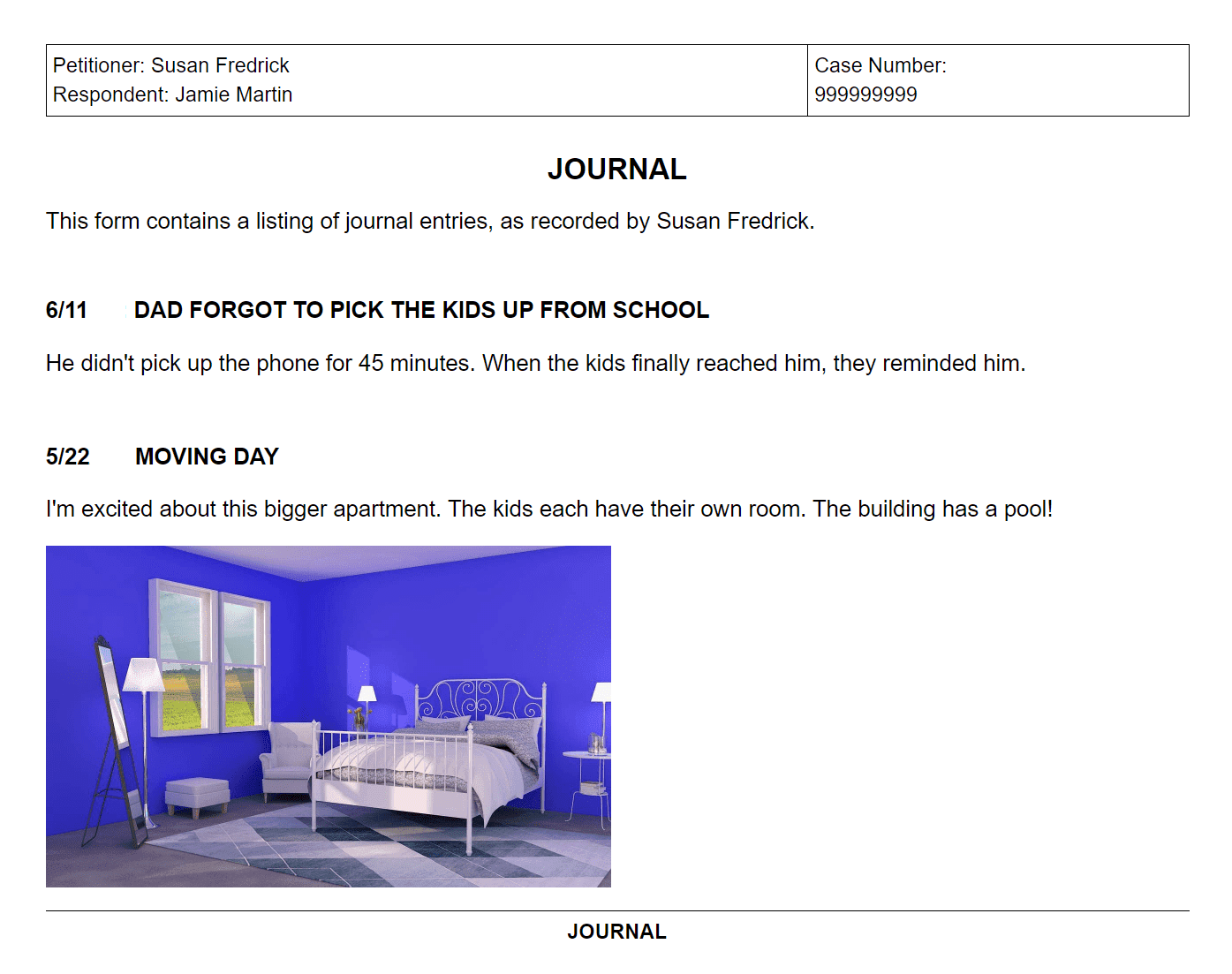 Try this with Custody X Change.
A parenting journal helps you figure out what is working in your schedule and what is not. When you want to implement some kind of change, it's helpful to have documentation that backs up your position.
Some things to keep track of in your parenting journal include:
- Any unusual behavior your newborn exhibits
- When the other parent is late or misses a visit
- When you are late or miss a visit and why
- Attempts at communicating with the other parent
- Your newborn's major developmental milestones
- Any symptoms of illness shown by your newborn
- Any medications given to your newborn, including time and dosage
A parenting journal helps you monitor the events surrounding your newborn's life and helps you back up your position should you have a disagreement with the other parent. If you end up in court again, a detailed parenting journal can strengthen your case for a formal change to the schedule or custody arrangement.
The easiest way to make a shared custody schedule for newborns
Creating a newborn schedule on your own can feel overwhelming. You have to be sure to use airtight legal language and can't omit any required information.
The Custody X Change app takes the guesswork out of the equation by helping you build a schedule piece by piece.
Try this with Custody X Change.
As a result, you get a written schedule and a visual calendar. They meet your family's needs, as well as the court's standards.
For quick, reliable and affordable help making a custody schedule, turn to Custody X Change.