
Ontario Parenting Time Arrangements & Schedules
A parenting time arrangement describes broadly how separated or divorced parents will divide time with their child. All parents who divorce or legally separate while their child is under 18 will have an arrangement. It helps determine child support. A parenting time schedule (formerly known as an access schedule), on the other hand, specifies exactly when a child will be in the care of each parent. Most parents of minors will have one after parting ways. It helps to ensure stability in their child's life.
Ideally, you agree with the other parent on an arrangement and schedule to include in your parenting plan. After you agree, you can keep the agreement as a private contract, register it with the court or use it to settle your case. If you cannot agree, a judge will have to decide for you at a trial.
Parenting time arrangements
Before you think about specific parenting schedules, consider what broad arrangements you prefer.
Shared parenting time versus majority parenting time
With shared parenting time, each parent has the child in their care for at least 40% of the year. Parents with shared time often try to enforce similar rules and routines in their households. Courts prefer this arrangement since it keeps both parents actively involved in their child's life.
With majority parenting time, which is less common, one parent cares for the child for more than 60% of the year.
In your parenting plan, along with a parenting arrangement, you'll specify the child's primary residence. If you have shared parenting time, you may choose to instead say that the child has a shared residence since they live in each parent's home for near equal time.
Note that each of these arrangements affects the child support calculation differently.
Fixed parenting time versus reasonable parenting time
On top of shared or majority time, you'll have either a fixed or reasonable arrangement.
Fixed parenting time is when parents follow a detailed schedule (more below). Choosing this arrangement means the child and parents always know what to expect.
Reasonable parenting time forgoes a specific schedule for a general description. For example, the parenting plan might say, "Mom will have two overnights with the child each week." It's very rare for a judge to order reasonable parenting time. Usually parents must agree to it.
Supervised parenting time
Supervised parenting time is a temporary arrangement to keep the child safe from a parent until the parent improves their behavior. It requires a third party's presence whenever that parent is with the child. The court may order this if:
- A parent has substance abuse issues
- A parent is proven to have abused the child or the other parent
- A parent threatened or tried to take the child away
- Parents agree to it
Supervised parenting time almost always requires a fixed, majority parenting time arrangement.
Nonparent visits
Occasionally, a parenting time schedule includes periods the child spends with a nonparent, either because parents agree to this or because the nonparent has a contact order.
Fixed parenting time schedules
If you choose a fixed parenting time arrangement, you'll follow a specific schedule. Here are some of the most popular options. A written schedule is required in your parenting plan, and you can include a visual calendar for easier comprehension.
2-2-3 schedule
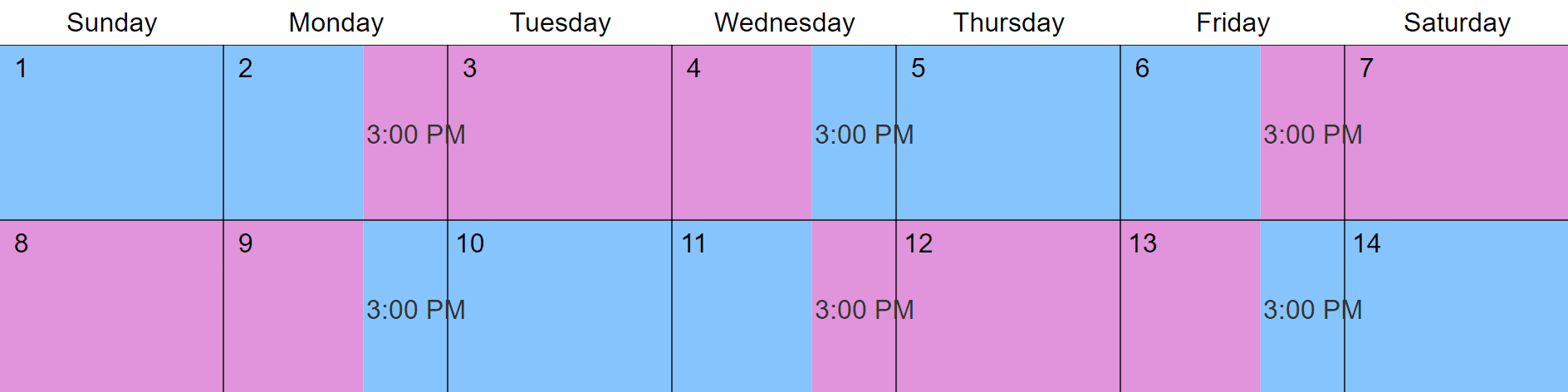
In the 2-2-3 schedule, a shared parenting schedule, the child starts the week spending two days with one parent. Then they switch to the other parent's home for the next two days. Then they go back to the first parent for three days.
The following week, the start parent switches to even out the parenting time.
If you start this schedule on a Monday, the parents end up alternating weekends.
This is a good schedule for children 12 and under because of the frequent contact with each parent.
 Try this with Custody X Change.
Alternating weeks schedule
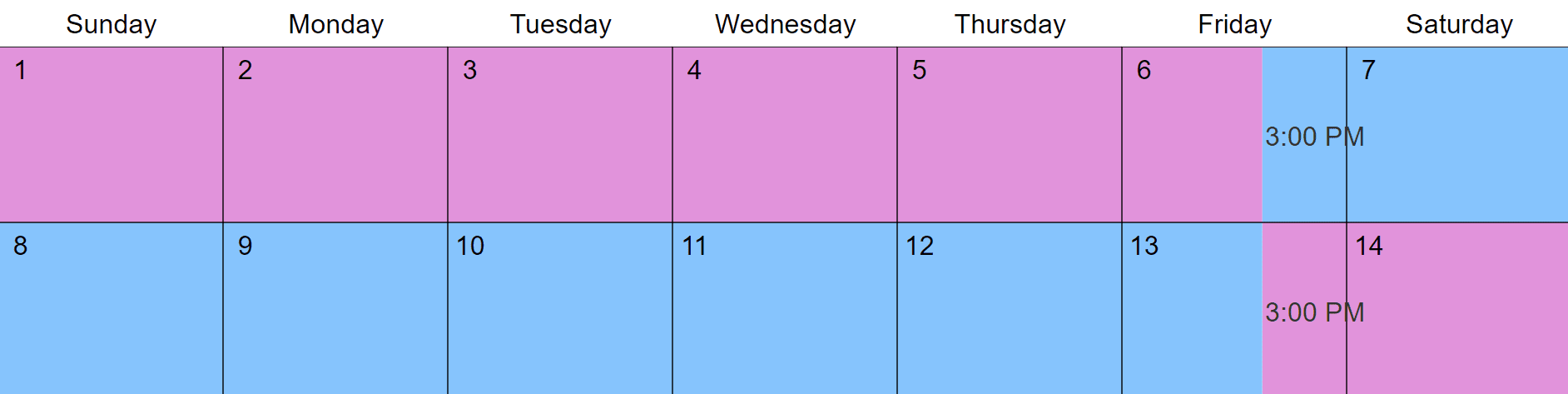
Another schedule for shared parenting, the alternating weeks schedule means the child switches households every seven days. You can set transitions (when the child goes from one parent to the other) to any day of the week.
This schedule is good for teenagers since they can handle being away from their parents for longer.
Alternating weekends schedule
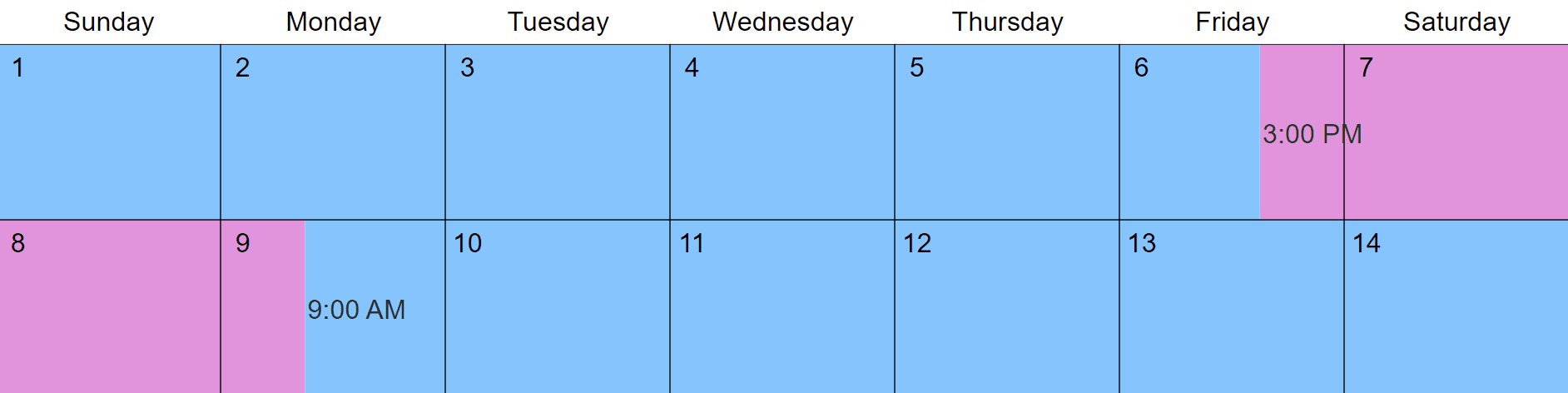
The alternating weekends schedule gives one parent time with the child every other weekend. They end up with about 20% of parenting time, making this a majority parenting time schedule.
It's common for the parent with less time to add in one weekday visit with the child per week, which could give that parent closer to 25% of the time.
1st, 3rd and 5th weekends schedule
This is a less common option for majority parenting time arrangements.
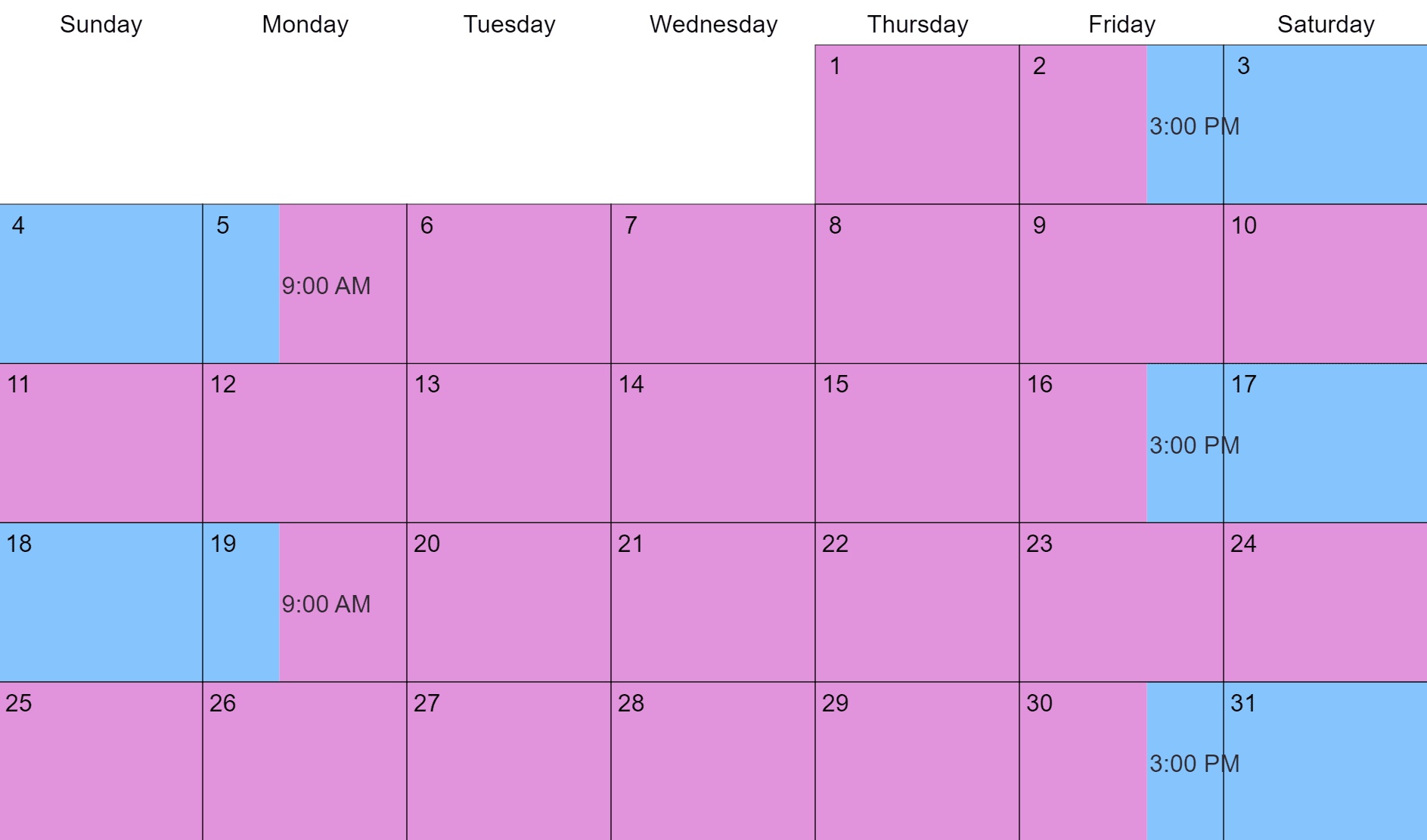
The 1st, 3rd and 5th weekends schedule has your child live with one parent and spend the first, third and fifth weekends of a month with the other parent. When a month has no fifth weekend, the parent with less time only sees the child twice that month.
Holidays and vacations
Regardless of their share of parenting time, parents usually get roughly the same number of holidays in a year. They might alternate holidays to keep things simple. For example, if one parent gets Christmas, the other has Boxing Day.
Longer holidays like winter and summer break are generally split in half or allotted to the parent whom the child doesn't see as often.
However, parents are free to agree on a different setup.
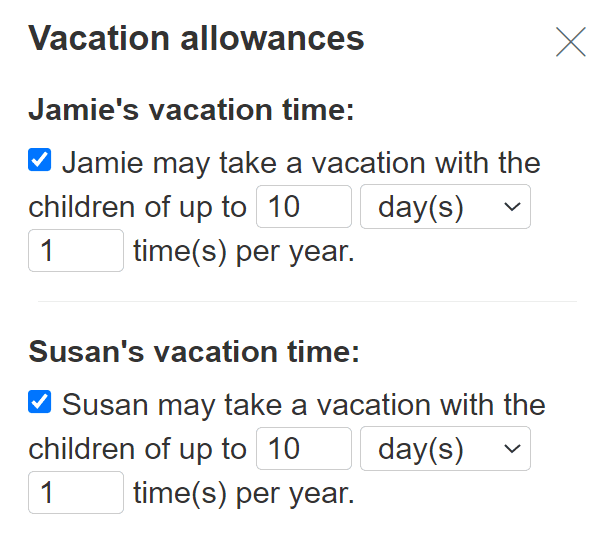
You'll also want to account for vacations. Your parenting plan could set specific dates when each parent can take the child on vacation or simply allow each parent a certain number of annual vacation days.
Tips for successful parenting time
- Allow the child to spend weekday and weekend time with each parent so long as it's good for the child.
- Consider having most transitions at the child's school, daycare or another neutral location.
- Choose a schedule based on your child's age and needs, as well as the availability of each parent.
The easiest way to make a schedule
If you're like most parents, creating a parenting time schedule will feel daunting. How do you address holidays, school breaks and birthdays while ensuring the schedule will work in the years to come?
The Custody X Change app makes it easy. First, click and drag in your colour-coded calendar.
Try this with Custody X Change.
Then watch as your choices automatically apply to future years and a full description appears in your parenting plan.
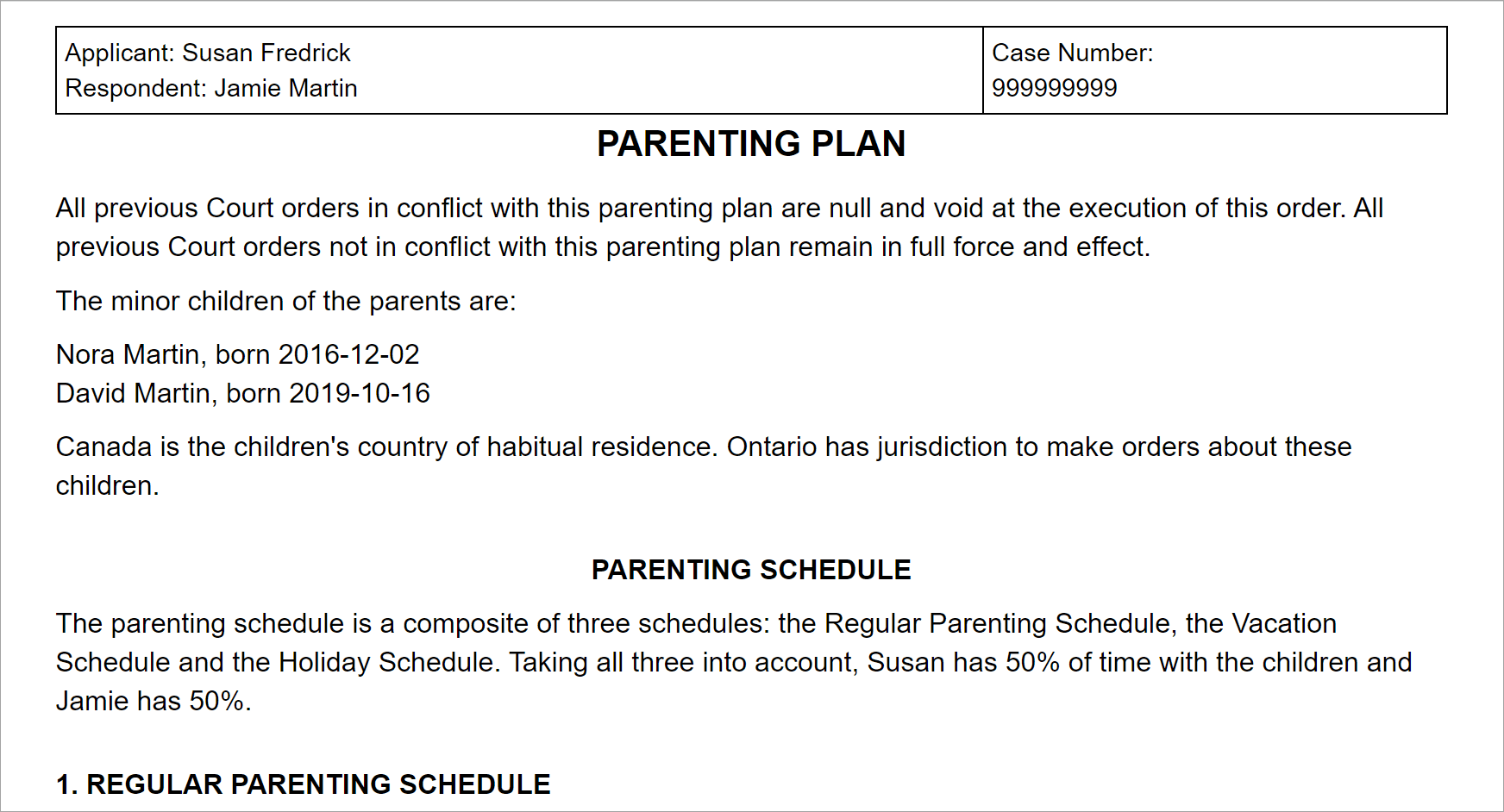
The combination of a visual and written schedule means your family will have no problem knowing who has the child when. Take advantage of Custody X Change to make your schedule as clear and thorough as can be.