
Ontario Parenting Plans (Custody Agreements)
A parenting plan serves as a guide for how parents will raise their child after they separate. Some people informally call the document a custody agreement. Parents create a parenting plan on their own, with lawyers or with an alternative dispute resolution professional.
After you agree on a parenting plan, you can keep it as a private agreement, register it with the court or use it to settle your case. When you turn it in as a settlement, the plan becomes part of your parenting or contact order, so long as it's in the best interest of the child. Parents who can't agree on a plan go to trial. Then each parent has the option to submit a proposed plan to support their case.
Parenting plan templates
Ontario courts don't require a specific parenting plan template. You can use the government's parenting plan tool to create your plan or draft a plan on your own. Or you can use the Custody X Change parenting plan template (pictured below) to create a more detailed plan, which helps prevent disputes over your child in the future.
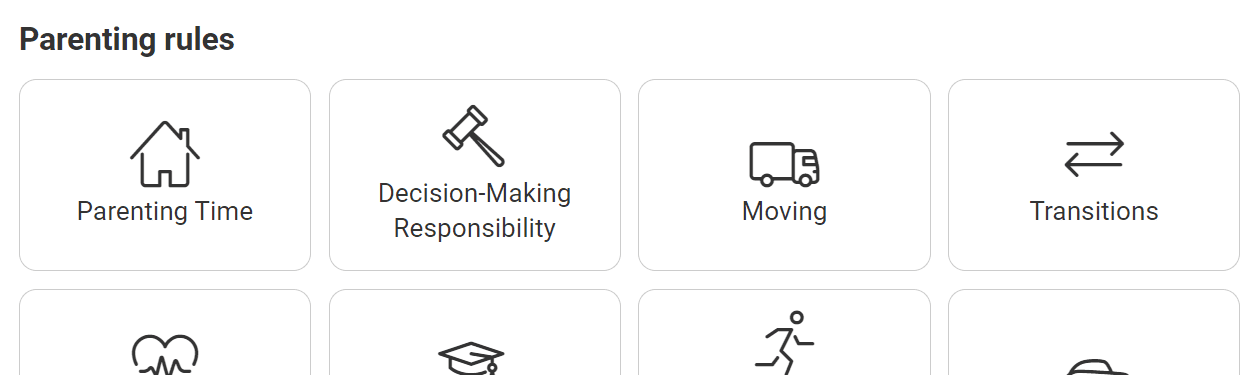 You can customize this with Custody X Change.
Whichever route you go, try to write a plan that will continue to work as your child grows. Especially if you work without a template, make sure none of the content contradicts itself, and use clear, specific wording to avoid any misinterpretation.
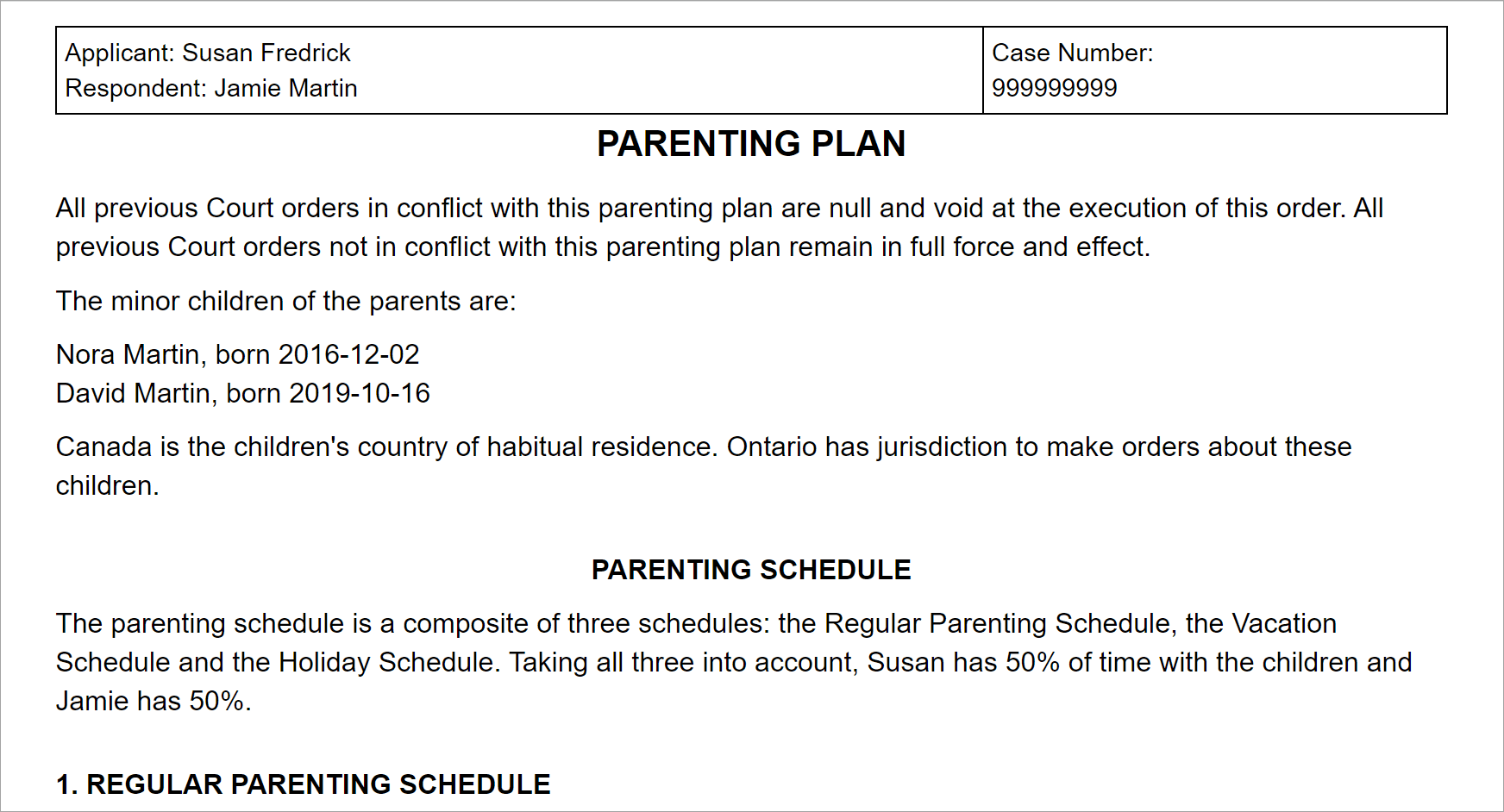 You can customize this with Custody X Change.
Information required in your plan
At a minimum, your plan must cover the following.
Decision-making responsibility
Decision-making responsibility gives a parent the right to make choices about their child's welfare, schooling and health, among other things. State whether parents will make major child-related decisions together or one parent will make all the major decisions.
Parenting time and residence
Parenting time gives a parent the right to spend time with their child.
With shared parenting time, each parent has the child in their care for at least 40 percent of the year. With majority parenting time, which is rare, one parent cares for the child for more than 60 percent of the year. In this case, you can require the parent with less time to have supervision while with the child; explain the details in your plan.
Once you choose one of these parenting time arrangements, write out a schedule. You can have a fixed parenting schedule or just state one broadly (e.g., "Mom will have at least 10 overnights each month.") A fixed schedule is highly recommended because it helps prevent confusion and disagreement. It should cover holidays and school breaks in addition to regular days.
Also, specify the child's primary residence. If you have shared parenting time, you may choose to instead say that the child has shared residence, living in each home for near equal time. Residence can affect things like where the child may enroll in school.
Sharing information about the child
A parent who has parenting time also has the right to get information about their child's health, education and welfare (though they might not have the right to make decisions about those things).
You should specify how you'll exchange this information with the other parent. Will calling and texting be allowed? Will you communicate through a parenting app?
Personal information
Include the names of each parent and child. You might want to put contact information like addresses. If your case involves domestic violence, you can just include a general description of locations.
Suggested information to consider including
You should add other provisions to your plan to get ahead of parenting questions that may arise down the line. For ideas, see the government's parenting plan checklist, and consider the following provisions as well.
Communication with the child
Specify how parents will get in touch with the child during the other parent's time. You may want to put limits on how often or at what times the contact can happen.
Resolving disagreements
If you're going to share decision-making responsibility, figure out what you'll do when you're at odds over a child-related decision. This could mean consulting with a dispute resolution professional like a mediator or a mutual friend.
Counselling
Separation is hard on parents and kids. State whether you or your child will attend counselling to help make the transition a little easier.
Discipline
Have a plan in place for how you will discipline the child when they misbehave, what time their curfew will be, etc.
Relationships with other people
Extended family can play an important role in your child's upbringing. State whether you'll allow grandparents, aunts, uncles and family friends to be regular parts of your child's life. You can also specify whom you don't want having contact with your child.
Dietary restrictions
Specify the child's food allergies and whether they should follow a special diet like veganism.
Using the other parent as a babysitter
What will happen when one parent needs someone to look after the child for a significant amount of time? Stipulate whether they must ask the other parent to watch the child first.
Travel
Include terms for how parents will handle taking the child outside of the province. This could cover how much advance notice parents must give, restrictions on how far they can travel and who will be in charge of getting the child a passport.
Transportation
Make it clear how the child will travel between each parent's home, to school and anywhere else they need to go. Can anyone besides parents transport the kid? Must the child use a safety seat? Will they ride the school bus?
Making sure you don't overlook anything
You have the freedom to tailor your parenting plan to your family's circumstances. To ensure your child's needs are fully addressed, make sure you build a thorough plan.
Custody X Change enables you to do this easily. In the app, you can choose from over 140 popular provisions, as well as enter rules unique to your family.
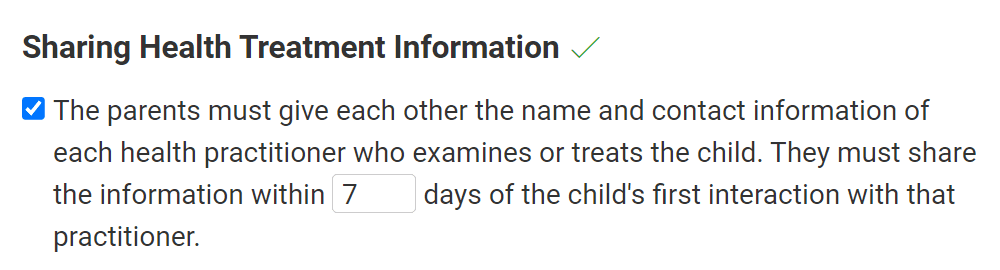 You can customize this with Custody X Change.
This creates a document you can attach to a different template or use on its own.
In the end, you'll be glad you made a thorough plan that will work for you and your child for years to come.