
Oklahoma Parenting Time Schedules (Visitation)
A parenting time schedule details when the child will be with each parent daily and during holidays, vacations and school breaks.
Your schedule is part of your parenting plan. If you don't have a parenting plan, your schedule is spelled out directly in your custody order or divorce decree.
It's common to have a temporary schedule during your case that is replaced by a permanent schedule once your case ends.
Choosing the right schedule
Parents are free to agree to any schedule, but the judge won't approve it if it is not in the child's best interests.
Parents who get along well may choose not to have a schedule and decide when to exchange the children as they go, but this is not recommended.
When choosing a schedule, consider the following:
- Your child's age
- Any special needs your child has
- Your work schedules
- Your child's school and extracurricular schedules
- Distance between parents' homes
- Child care arrangements
There isn't a statewide standard visitation schedule. The schedules below and Oklahoma State Courts Network's advisory visitation schedules can help guide you.
Supervised visitation
Supervised visitation means a third party must be present during all visits between the child and noncustodial parent. This arrangement is usually temporary.
It is most common when it's unsafe for the child to be alone with a parent. However, a court may order supervised visits to help a child adjust to spending time with a parent or so that someone can help a parent take care of their infant child.
Parenting time schedule examples
Parenting time can impact child support amounts. If the noncustodial parent has fewer than 121 overnights a year, they pay the full support amount. If they have 121 or more overnights, they qualify for a shared parenting discount.
You'll need to know how many overnights your chosen schedule gives the noncustodial parent. Consider the following schedules.
To give one parent fewer than 121 overnights a year
The most common schedule ordered is the alternating weekends schedule. It gives the noncustodial parent 52 to 78 overnights in most years.
The weekend may go from Friday afternoon to Sunday at noon or from Friday afternoon until Monday morning.
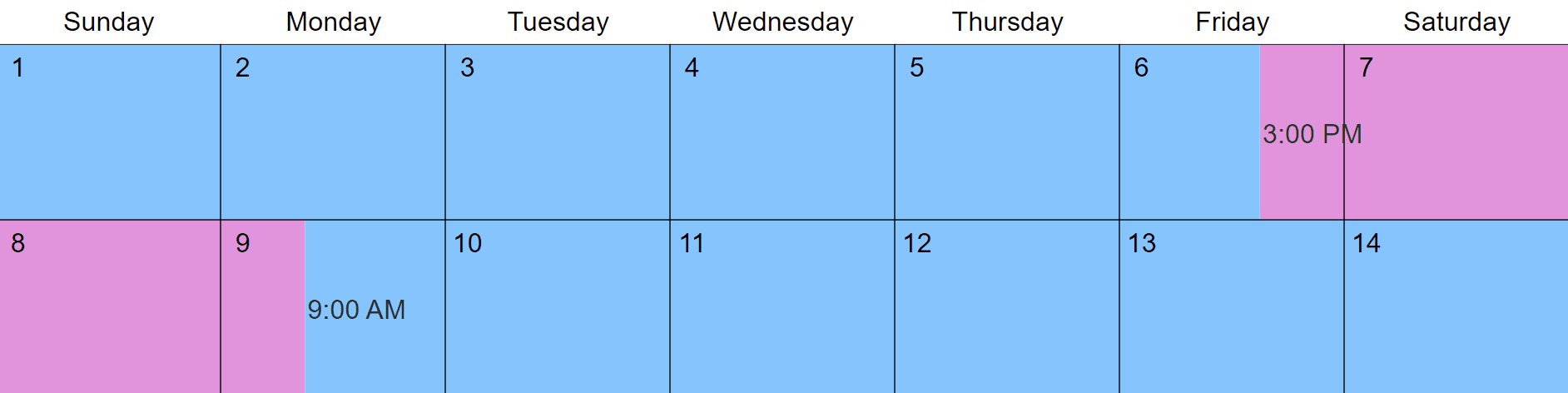 You can customize this with Custody X Change.
Adding a biweekly overnight visit gives the noncustodial parent 105 overnights in a typical year.
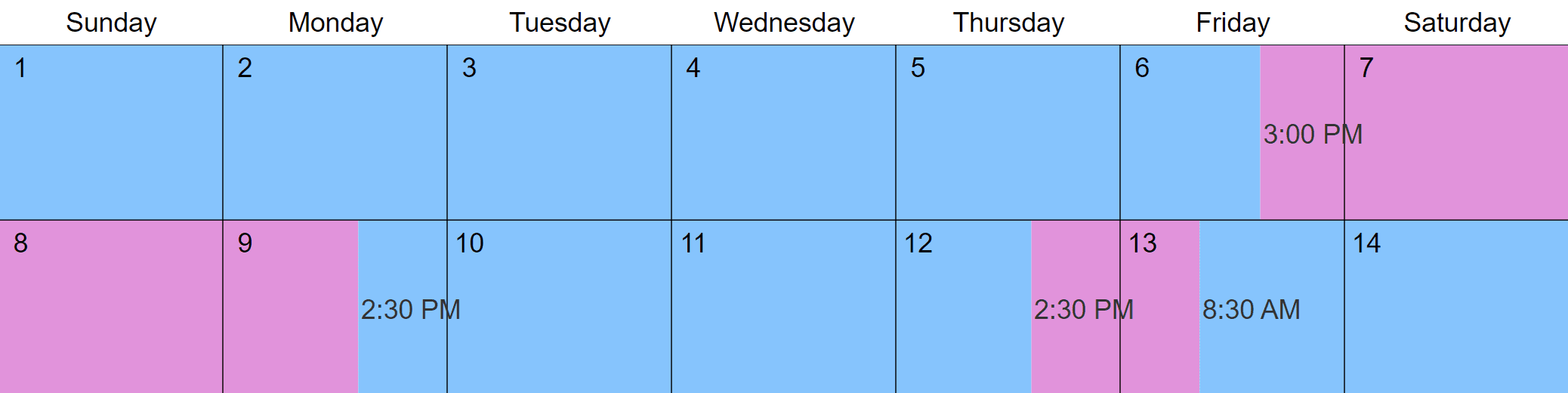 You can customize this with Custody X Change.
To give both parents more than 121 overnights a year
Parenting experts say a child should spend ample time with both parents in most cases. During the court process, courts often order a temporary schedule that gives both parents over 121 annual nights to see if it could work long-term.
In the schedules below, parents have roughly equal time with their child (over 180 overnights each).
With an alternating weeks schedule, the child lives with one parent for one week, then spends a week in the other parent's home.
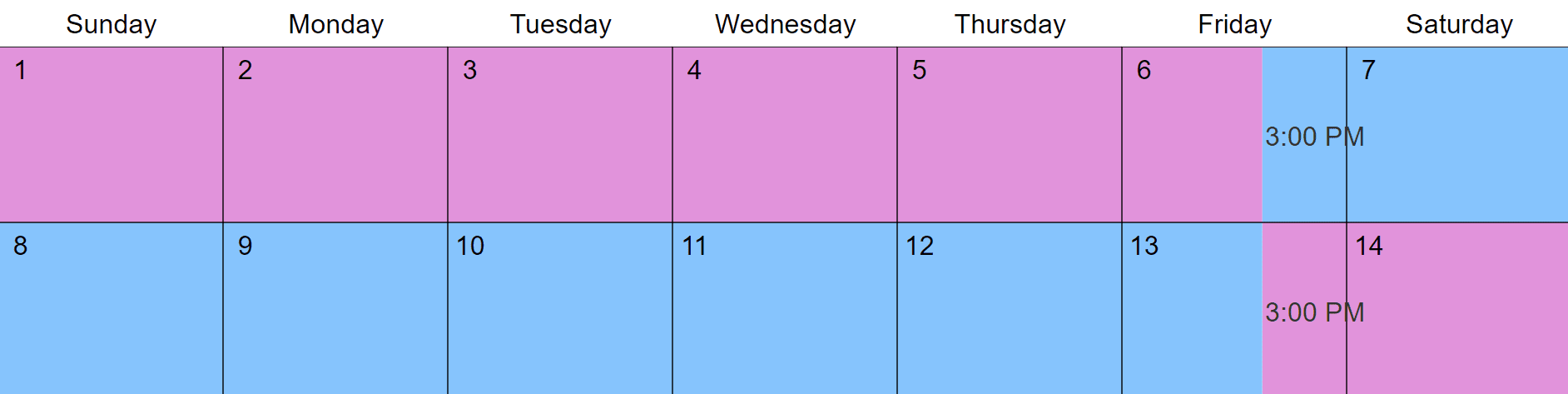 You can customize this with Custody X Change.
The 2-2-5-5 schedule places your child in one parent's home for two days, then in the other parent's home for two days before the child spends five days in each parent's home.
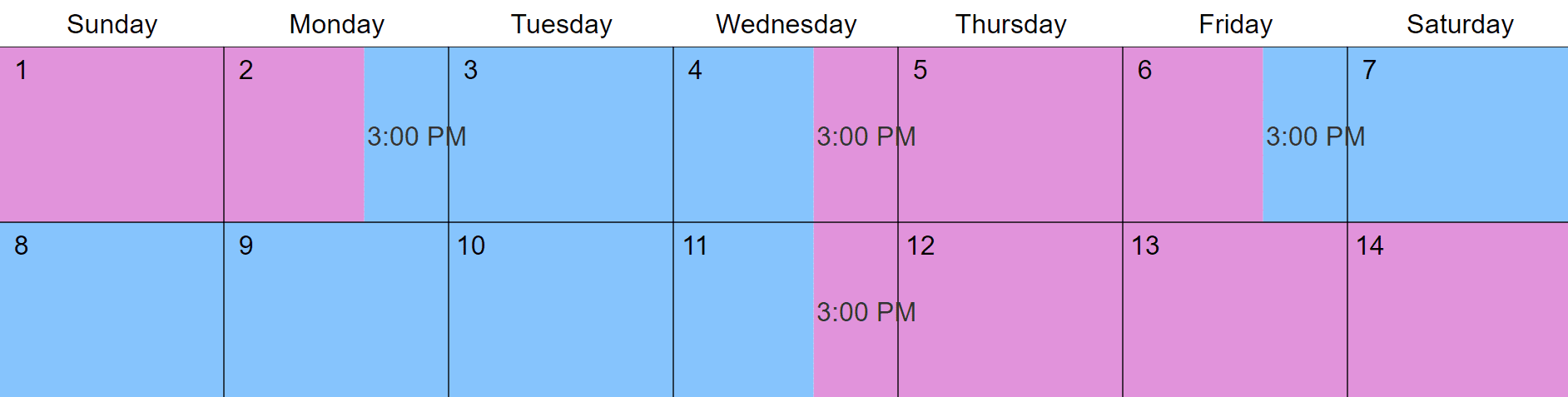 You can customize this with Custody X Change.
Holidays
Parents often disagree about who will spend holiday time with the children. Create a holiday schedule so you always know what to expect.
Oklahoma parents typically alternate holidays annually. If the child spends Christmas Eve with one parent this year, they'll spend it with the other parent next year.
 You can customize this with Custody X Change.
You can also alternate holidays within a year. For instance, if you get the child on the first holiday of the year, your co-parent can have the child for the next holiday.
Take a look at holiday schedule examples for inspiration.
Summer break
Unless they already have nearly as much parenting time as the custodial parent, the noncustodial parent usually gets extended visitation time during the summer.
They can have one or more long visitation periods during the summer months of June, July and August.
In your parenting plan, you can specify when your summer break schedule begins and ends. If you use the Custody X Change online app, you can create a summer schedule and a regular schedule and set when each one takes effect.
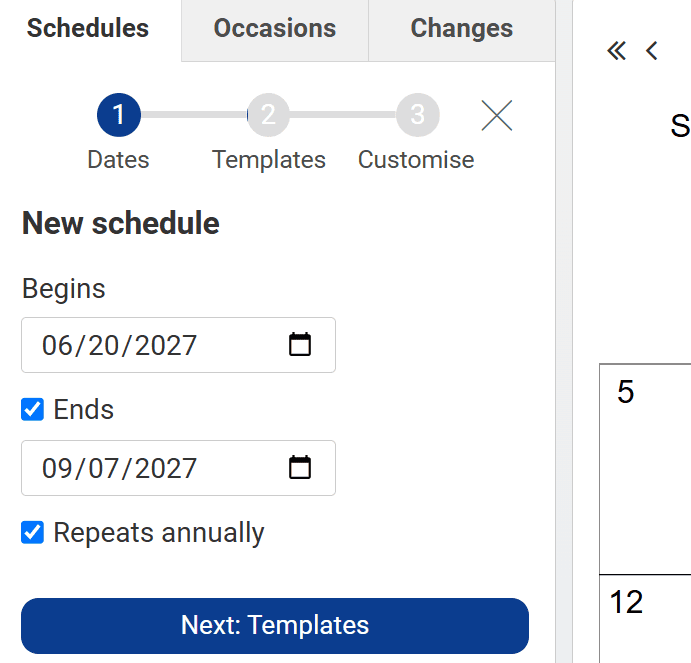 You can customize this with Custody X Change.
Grandparent visitation
A court can award grandparents visitation if it determines that grandparent visitation is in the child's best interests and the situation meets certain criteria. But the child's parents and grandparents can often agree on visitation without going to court.
The court gets involved if the grandparent files a petition for visitation. Then it's up to the court.
The easiest way to make a schedule
If you're like most parents, creating a custody and visitation schedule will feel daunting. How do you write something that meets legal requirements and doesn't leave any loose ends?
The Custody X Change app makes it easy. Either customize a schedule template, or click and drag in your custody calendar to make a schedule from scratch.
Try this with Custody X Change.
Then watch a full description appear in your custom parenting plan.
Try this with Custody X Change.
The combination of a visual and written schedule means your family will have no problem knowing who has the child when. Take advantage of Custody X Change to make your schedule as clear and thorough as can be.