Louisiana Parenting Plans and Custody Agreements
A parenting plan describes how co-parents must cooperate after divorce or separation. You and your co-parent can propose one separately or together. A parenting plan may seem intimidating to write — but a template can help. A judge will make it an enforceable court order.
It's a good idea to hire an experienced family lawyer. They know what's legal in Louisiana, how to write your parenting plan to prevent misinterpretations down the road and what's a likely outcome from the judge in your parish. They'll also stand up for what's fair for you and best for your child.
How you benefit from reaching agreement
In Louisiana, when you and your co-parent reach agreement on a legal and physical custody arrangement, the judge will review it to determine whether it's in your child's best interests. If it is, the judge has to accept it. Judges tend to trust parents' opinions, so they usually deem agreements as in the child's best interests.
Custody arrangements approved by a judge are turned into a court order that you both have to follow.
Once you agree, your case will move along more quickly. You'll save time, money and stress by not having to prepare for trial. It's therefore to your advantage to work with your co-parent to draft a proposal.
Submitting a plan to your local court
When you file your case, ask the court about submitting a parenting plan, including whether there's a local parenting plan template and when and how to submit it. In general, as soon as you reach agreement, it's good to notify the court so your case can wrap up.
Try this with Custody X Change.
Plans for joint custody
When you create a parenting plan for joint custody, many parishes call it a Joint Custody Implementation Plan (JCIP).
Your Louisiana parish may offer a template with JCIP, stipulation or consent in the name. If your court doesn't have a template, you can use the Custody X Change parenting plan template, draw up your own document or have a lawyer create one.
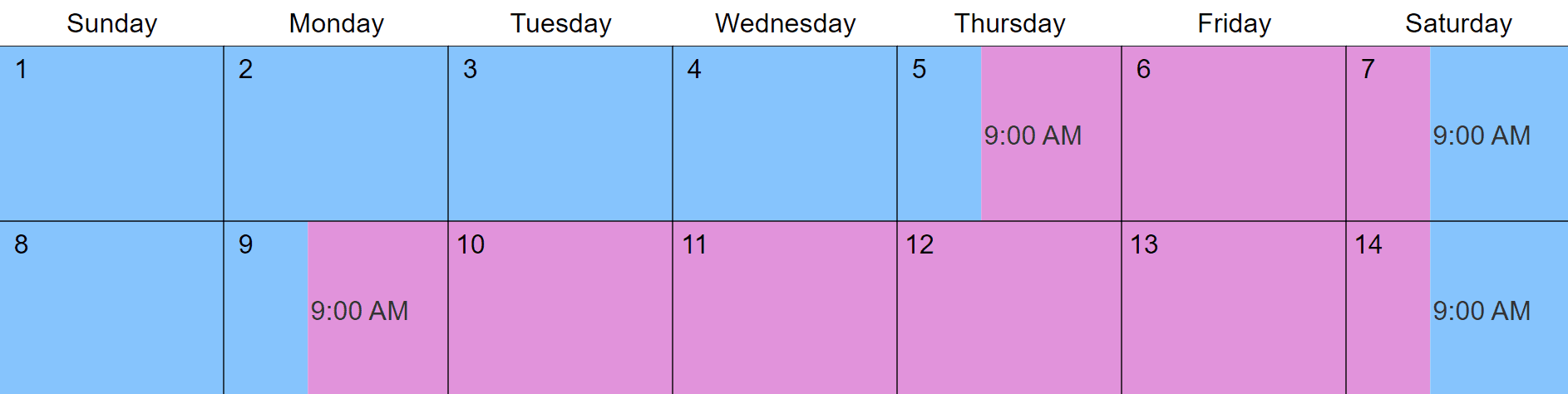
Include a schedule with relatively even custody time for each parent, like the one pictured. Louisiana prefers equal time when possible.
 Try this with Custody X Change.
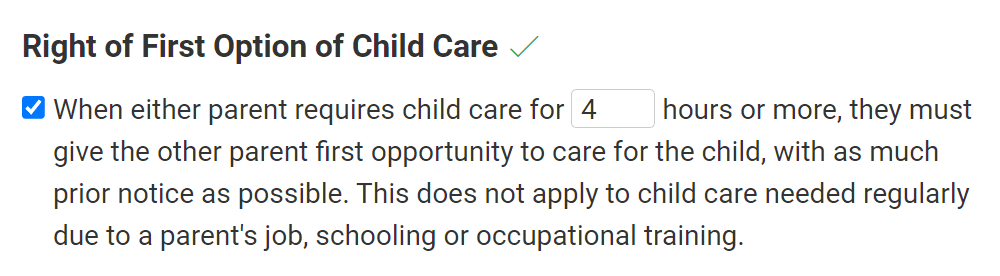
Include rules (i.e., provisions) for parents to follow as well. For example, you might give each other the right of first refusal, which means you'll offer each other parenting time before you call a babysitter. See "typical provisions" below for more ideas.
In addition, spell out your decision-making responsibilities; say whether you'll consult on all major decisions about the child or allocate certain decisions to one parent.
In most cases, the judge will want you to designate one parent as the domiciliary parent — the person who takes charge when there's disagreement over a shared decision. For co-parents who have unequal parenting time, it's usually the parent who has more time.
The role of domiciliary parent becomes relevant if parents return to court. The nondomiciliary parent must prove to the judge that the domiciliary parent isn't acting in the child's best interests. Otherwise, the judge sides with the domiciliary parent by default.
Plans for sole custody
In Louisiana, sole custody is rarely ordered. It may be ordered if one parent is unfit or mostly absent or if they agree with the arrangement.
Your court may not offer a parenting plan template for sole custody. Use the Custody X Change parenting plan template, draw up your own document or have a lawyer create one.
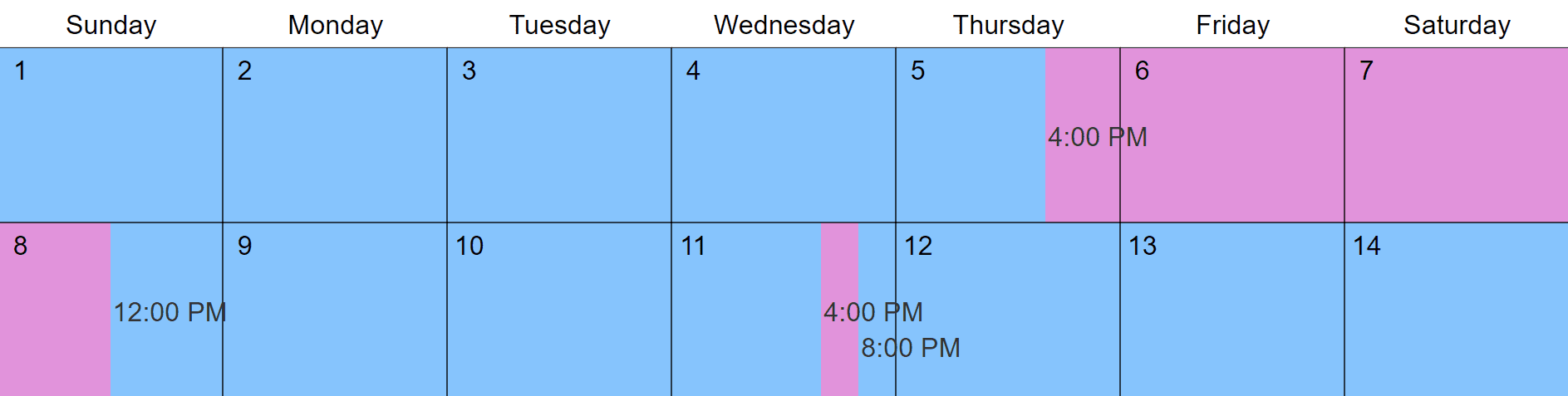
If the other parent is at all involved in your child's life, include a visitation schedule. Louisiana wants a child to have frequent and continuing contact with both parents.
Be sure to include other parenting rules (e.g., when the other parent can phone the child) in your proposed plan. See ideas for more provisions in the next section.
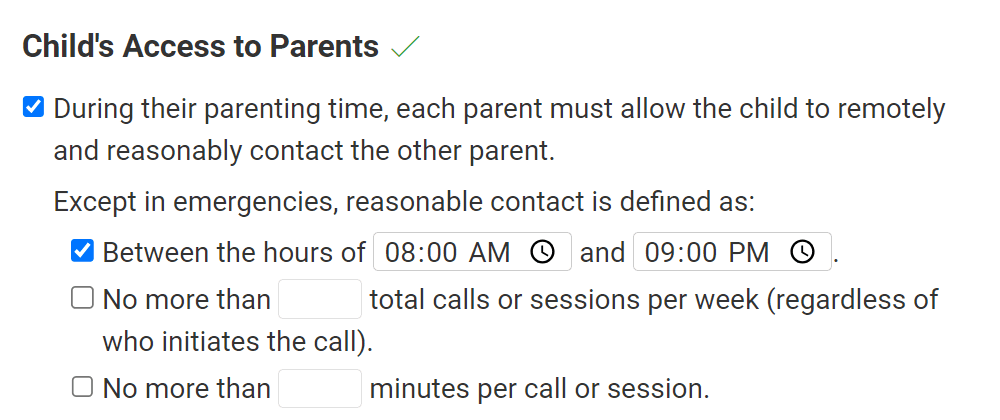
Typical provisions
A provision describes a parenting rule. Especially if you and your co-parent tend to have conflict, more detail is better. Include as many provisions as you need, and customize them for your child's benefit.
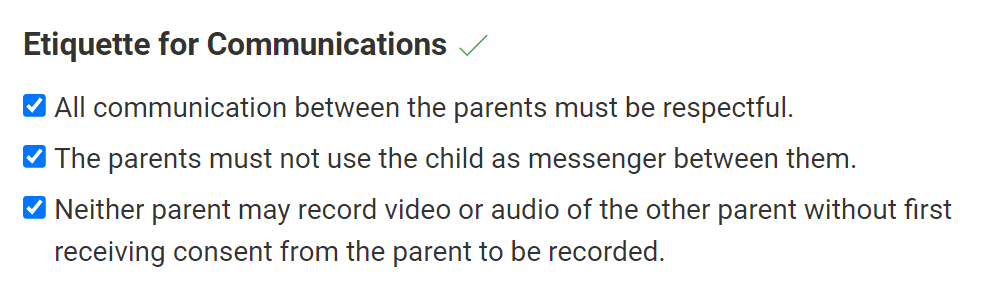
A typical provision is that parents won't use the child as a messenger.
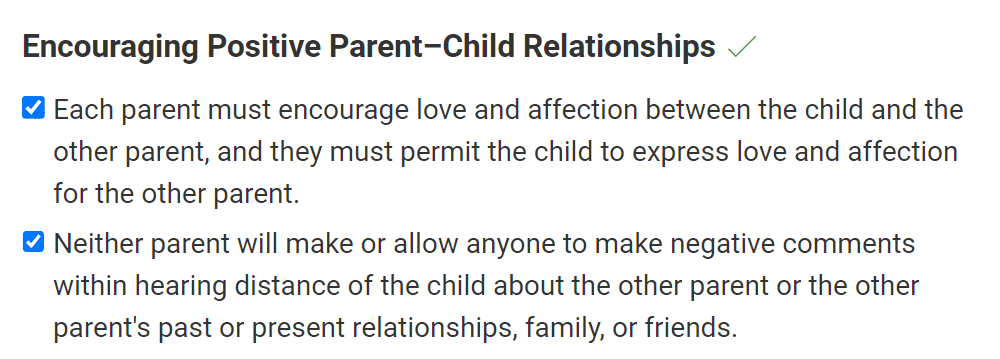
Another is that parents won't disparage each other — nor allow anyone else to disparage the other parent — in front of the child.
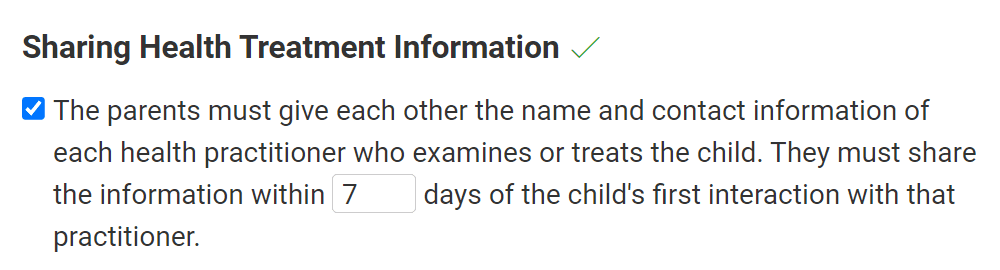
It's also common to plan to inform each other about the child's medical visits.
Consider additional provisions that may be appropriate to your situation, as you reflect on your values or your child's maturity.

Don't exclude an important provision just because you're not sure how to word it, e.g., one about a parent's mental health or substance abuse. You may find a relevant provision in the Custody X Change template that you can adjust or use as is. If not, a lawyer can help you draft a provision that keeps your child safe and cared for.
Try to anticipate some of the changes you'll make as your child grows. Build them into your plan, and you may avoid returning to court when your child is older.
The easiest way to make a parenting plan
When you're writing a parenting plan, it's critical you use airtight language that leaves no room for interpretation. Include all the information the court requires.
If you hire a lawyer or mediator, they'll write up the plan and ensure it meets the court's requirements.
If you write your own plan, use technology to take guesswork out of the equation. The parenting plan template in the Custody X Change online app walks you through each step.