
Florida Time-Sharing Schedule Guidelines
Your time-sharing schedule is the part of your parenting plan that explains when your will children spend time with each parent. In other states, it's sometimes called a visitation schedule.
You can agree on a time-sharing schedule in a settlement. If you can't agree, you'll each submit proposed schedules in a trial, and the judge will order one with nearly even parenting time unless one of you proves it wouldn't be good for the children.
Factors to consider
According to Florida guidelines, schedules should:
- Minimize children's disruption and loss
- Ensure children's security and stability
- Shield children from conflict
- Maximize relationships between children and parents
- Anticipate and plan for changes in circumstances
There are numerous other factors to consider when creating time-sharing schedules, including how parenting time-share affects child support.
Schedules for children of different ages can vary, though parents usually try to find one schedule that works for all their children. You may need to modify your schedules as your children grow and situations evolve.
How parenting plans impact schedules
Parenting plans in Florida fall into four categories.
Basic, long-distance and highly structured plans require a detailed written schedule. This may involve a chart or multiple paragraphs. In addition, a visual calendar is strongly recommended (and required in some counties).
Safety-focused plans, used when one parent's time-sharing must be supervised or otherwise limited, simply list the days and times of visits to the restricted parent. This is because these plans typically don't involve as many visits or exchanges as the other three types of plans. In the rare case that the court orders no parenting time, this is indicated in place of a schedule.
A safety-focused plan must also include rules for visits, such as the details of supervision. If there's risk of harm to a parent or child, the court may order you to exchange your child at a designated "safe zone" at a sheriff's office.
Explaining time-sharing in your parenting plan
Both written and visual schedules should indicate precisely when each parent's time-sharing begins and ends. For example, if children spend weekends with one parent, the schedule must indicate when this parenting time starts and finishes — say, from 4 p.m. Friday to 8 a.m. Monday.
You should also include provisions about how and where children will be exchanged, indicating who will transport the children, what they should bring between homes, and what will happen if a parent arrives late.
In addition, you must calculate how many overnights the children will spend with each parent in a year. Include the numbers in your parenting plan. They must add up to 365 and will be used to determine child support.
Common schedules
You have nearly limitless options for shared parenting schedules. Go with whatever works best for your family; you might adopt a popular schedule as is, make adjustments, or invent your own entirely.
Use the popular schedules below to start brainstorming.
Equal time-sharing schedules (50/50)
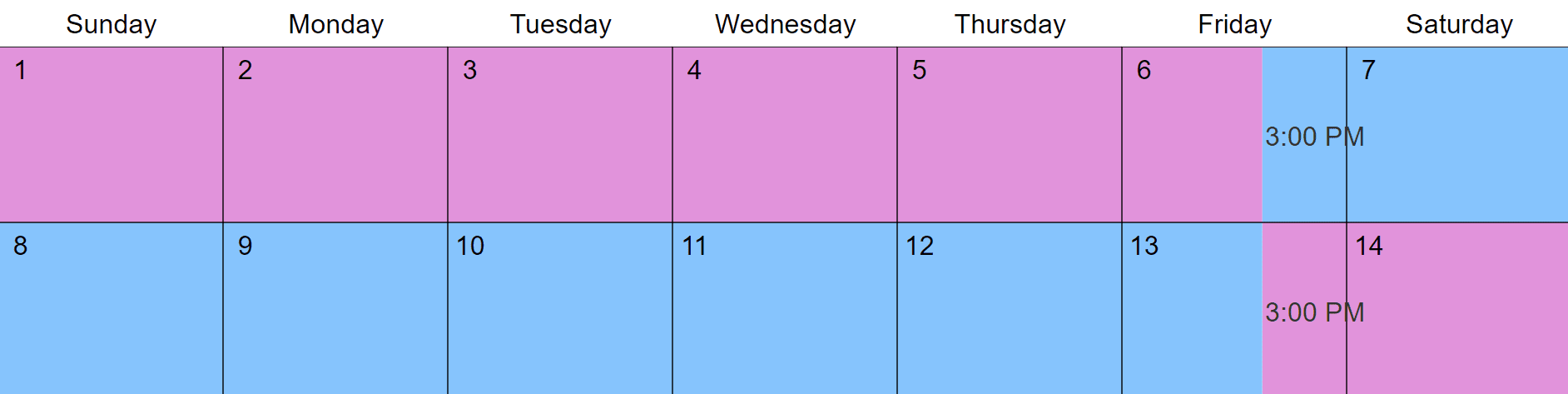
The alternating weeks schedule has children spend seven days with one parent, then seven days with the other.
 Try this with Custody X Change.
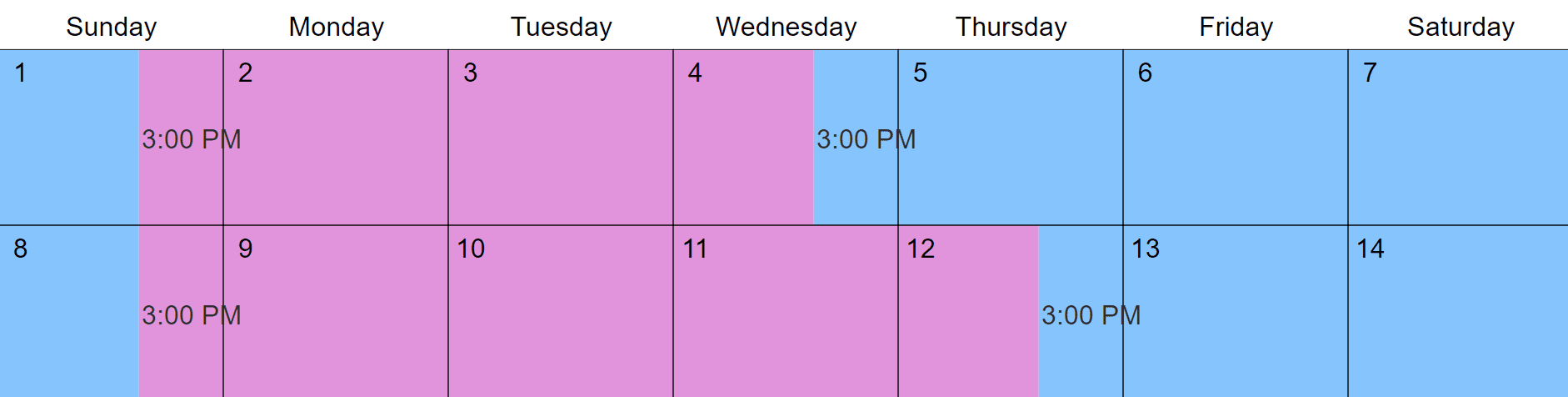
The 3-4-4-3 schedule has children spend three days with one parent, then four days with the other parent. The next week, children spend four days with the first parent, then three days with the other.
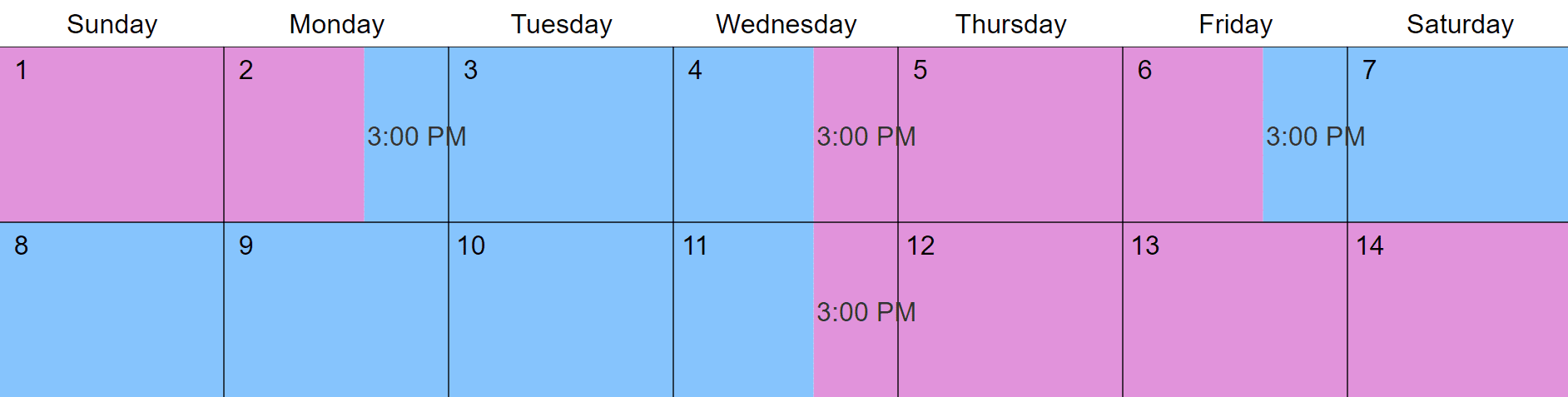
In the 2-2-5-5 schedule, children spend two days with one parent, two days with the other, then five days with the first parent and five days with the second.
Majority/minority time-sharing schedules
The every extended weekend schedule is a 60/40 arrangement that has children spend weekdays with one parent and a long weekend with the other. The extended weekend typically begins when children finish school on Friday and ends when school starts on Monday.

The every weekend schedule is a 70/30 arrangement in which children spend the weekdays with one parent and a two-day weekend with the other.

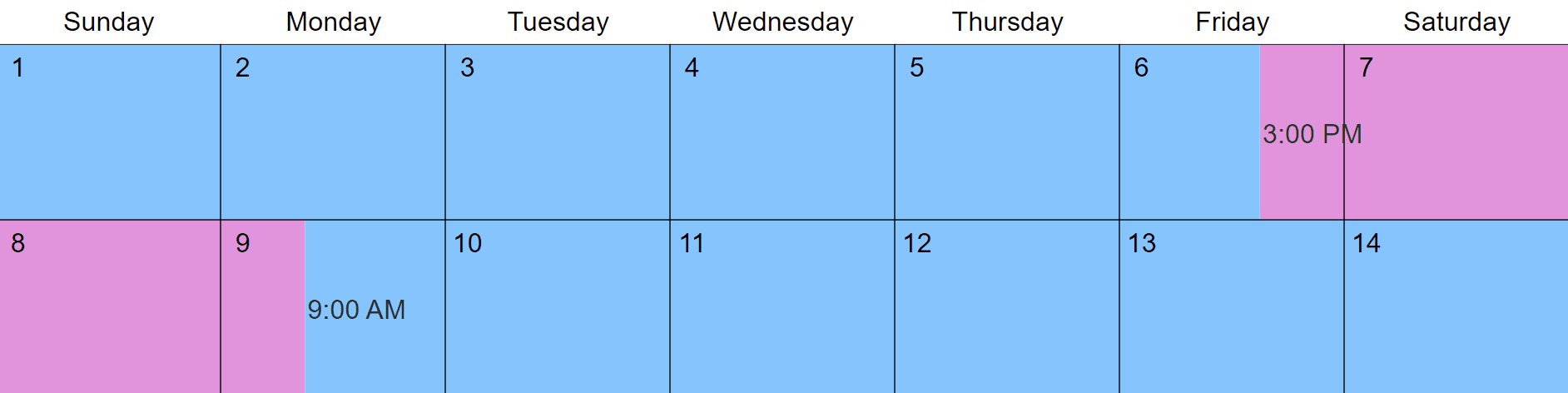
A common 80/20 arrangement, the alternating weekends schedule has children live primarily with one parent and stay with the other parent every other weekend.
Summers, holidays and special occasions
Courts require a separate summer break schedule. If your schedule won't change during the summer, indicate this in your plan.
In addition, courts require an explanation of which holidays and special occasions the children will spend with each parent. Alternating which parent gets a particular holiday each year is a common arrangement.
If you're using a highly structured parenting plan, your holiday schedules must include the day and time of exchanges for each occasion. (A Custody X Change calendar can help you write this up quickly using holiday templates.) A highly structured plan also needs rules for parent–child communication over holidays.
The safety-focused plan is an exception; it does not require summer or holiday schedules because one parent receives limited time regardless of the season.
The easiest way to make a schedule
If you're like most parents, creating a time-sharing schedule will feel daunting. How do you write something that meets legal requirements and doesn't leave any loose ends?
The Custody X Change app makes it easy. Either customize a schedule template, or click and drag in your custody calendar to make a schedule from scratch.
Try this with Custody X Change.
Then watch a full description appear in your parenting plan.
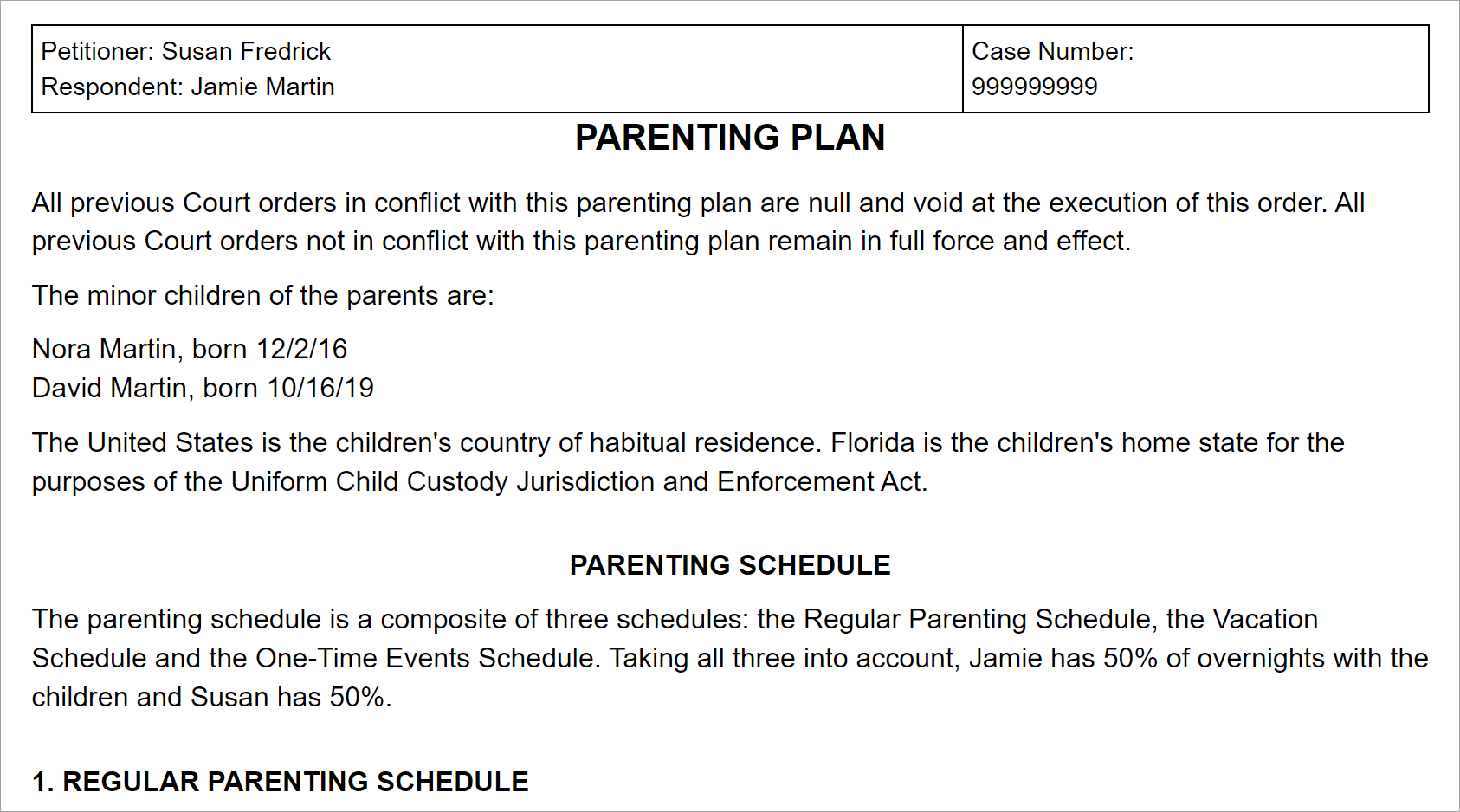
The combination of a visual and written schedule means your family will have no problem knowing who has the children when. Take advantage of Custody X Change to make your schedule as clear and thorough as can be.