
How to Make Your Parenting Plan or Agreement
Your parenting plan or custody agreement outlines how you and the other parent will continue to care and provide for your child after you separate.
Try this with Custody X Change.
An effective plan is personalized to fit the needs of your family and contains the following information.
Physical custody and schedule
Physical custody determines who houses the child. Either parents will share joint physical custody somewhat evenly, or one parent will have sole physical custody and the other significantly less time with the child.
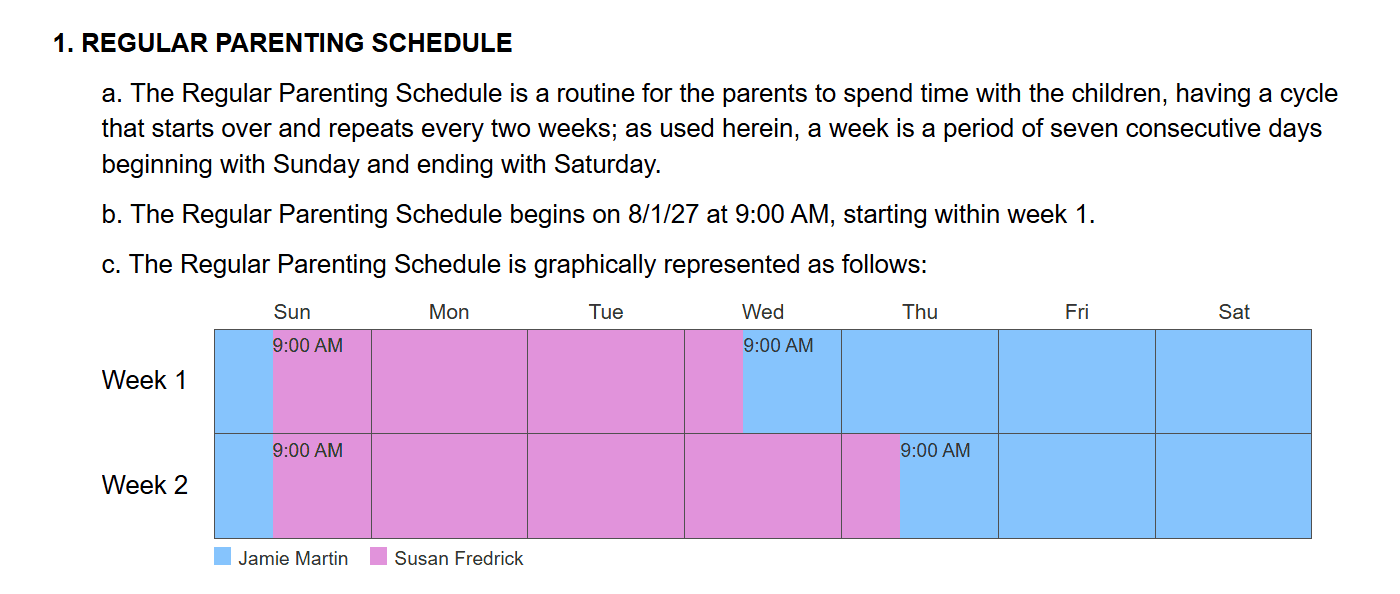
Once you state a type of physical custody in your plan, include a parenting time schedule to explain when your child will be with each parent. Your schedule should include the daily living schedule, holidays and vacation time.
Your plan must describe your schedule clearly in legal terms.
 Try this with Custody X Change.
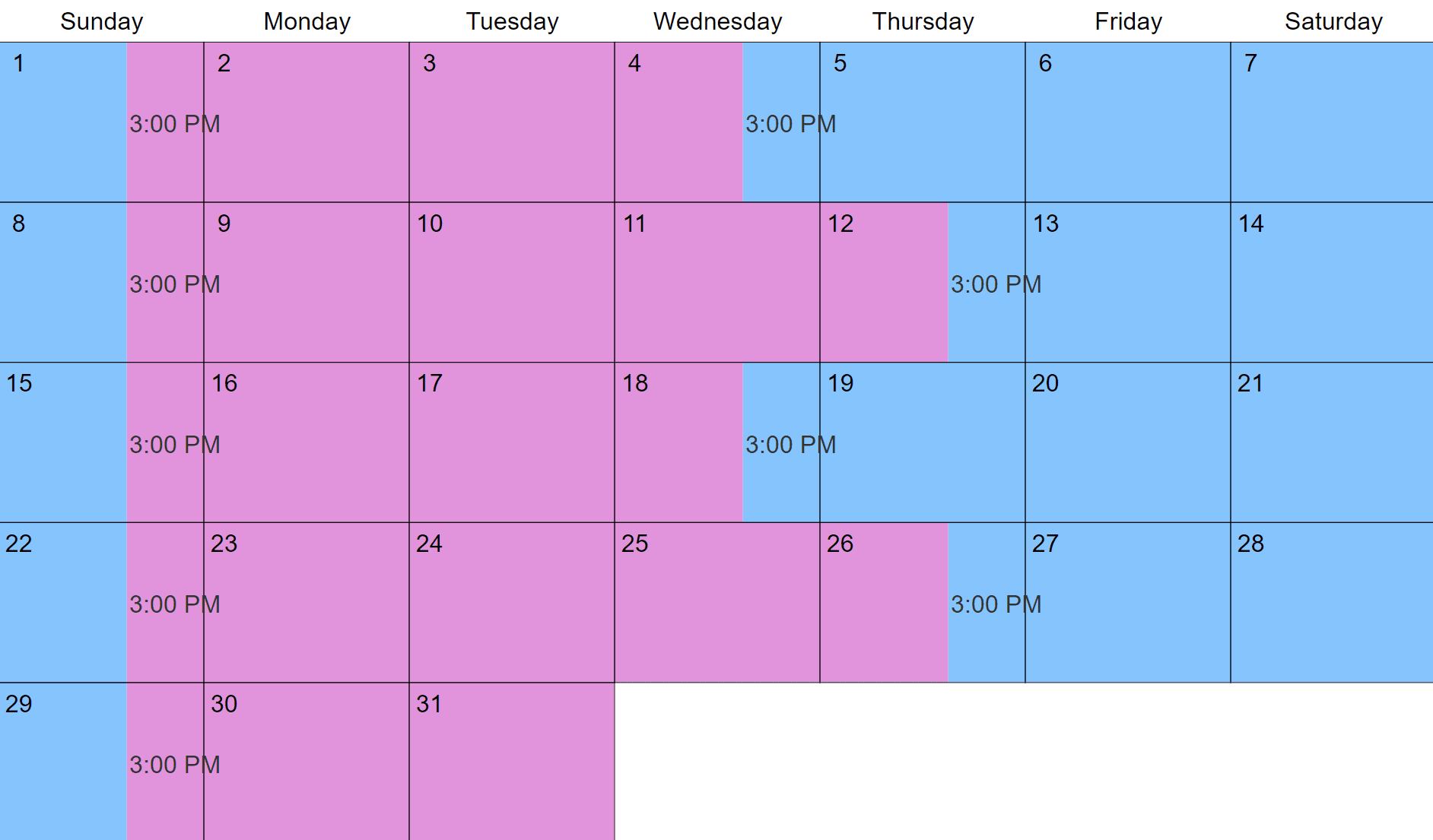
You can also make a calendar and attach it to your plan to show specific months or years in detail.
Legal custody
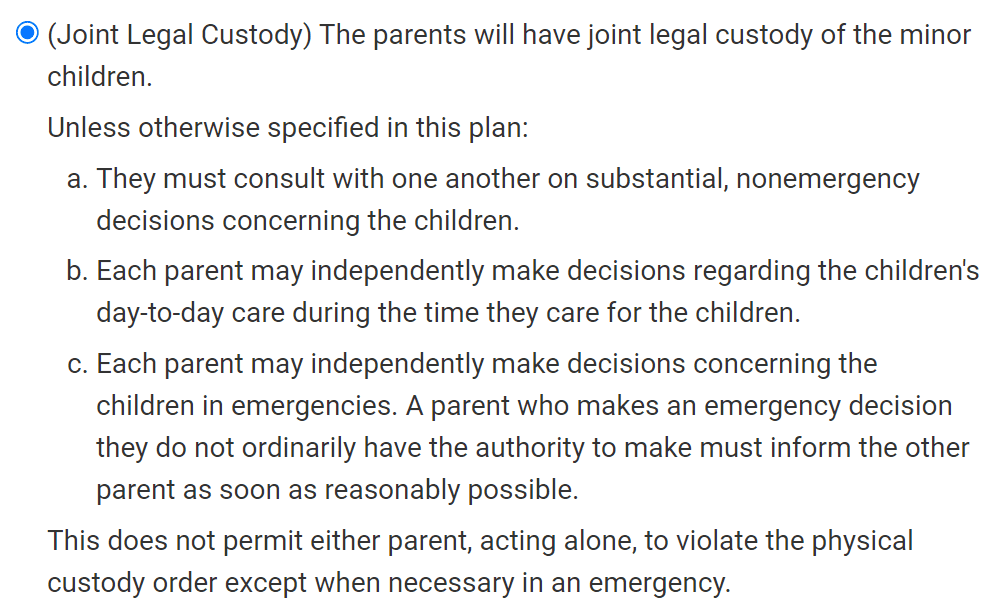
Your plan must designate if one parent will have sole legal custody or if parents will share joint legal custody. This determines who will have the authority to make decisions for and about your child.
Exchanges
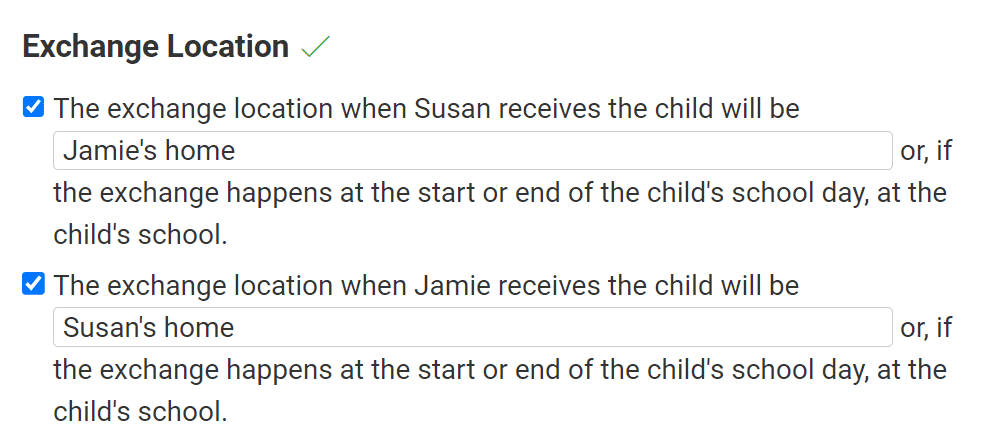
Information about exchanges in your plan helps your schedule run smoothly. You need to decide where and how exchanges will take place.
Your plan can also explain how the parents will communicate about schedule changes and rescheduling parenting time.
Medical and health care
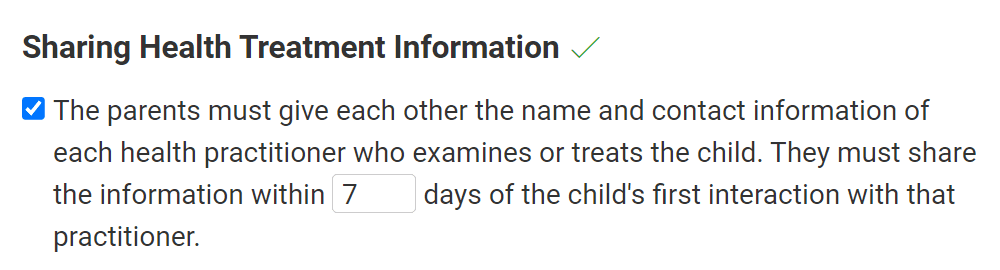
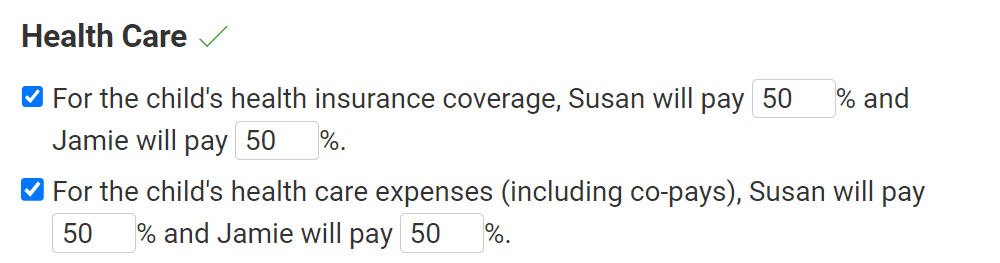
Your plan should contain medical and health care provisions that explain who will take the child to health appointments, whether the child will receive vaccines, what will happen during a pandemic and more.
Education and extracurricular activities
The education information in your plan can include if and where your child will attend summer school, who will serve as an emergency contact for the school, and more.
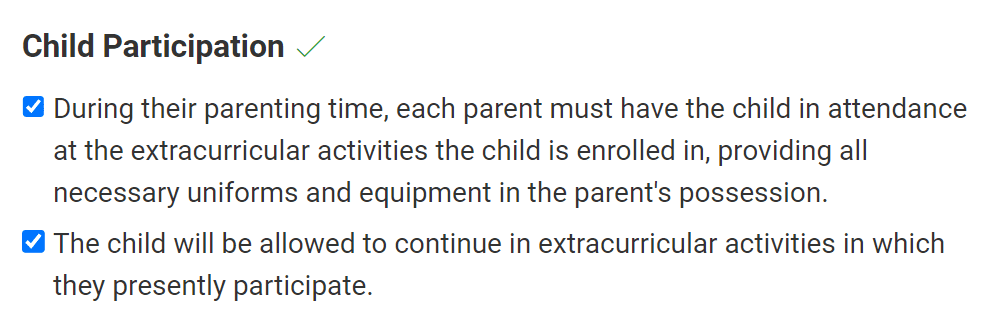
You can also put information about what extracurricular activities your child will participate in and who may attend those activities.
Child care
Your plan can explain when a child is old enough to stay home alone and how the parents will decide on child care for the child.
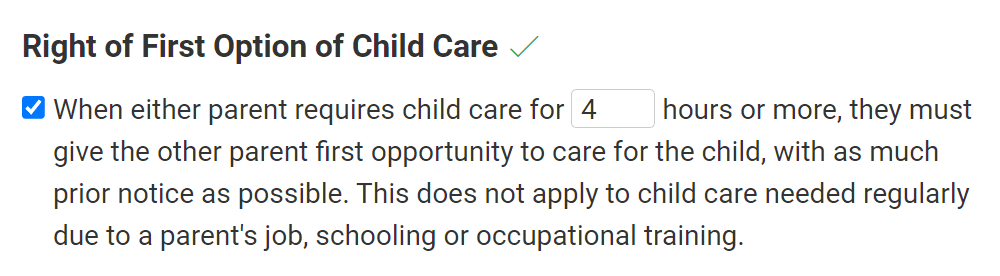
You can also include the right of first option, which says that if a parent isn't available for part of their scheduled parenting time, the other parent will be offered the time.
Parenting guidelines
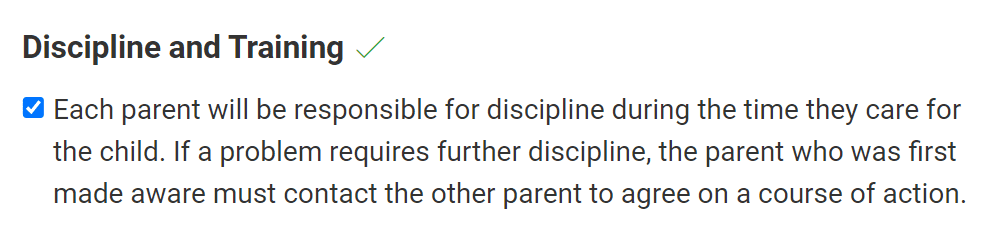
Parenting guidelines are rules in the parenting plan about discipline, diet, living conditions, screen usage and more.
For example, you might set a rule that parents must have a latched gate at the top of any staircase the child can access until the child reaches a certain age.
Parent communication
The information in your plan about parent communication should include what methods the parents will use to communicate and how soon they must respond to each other. You can also set minimums or maximums for how often parents will be in touch.
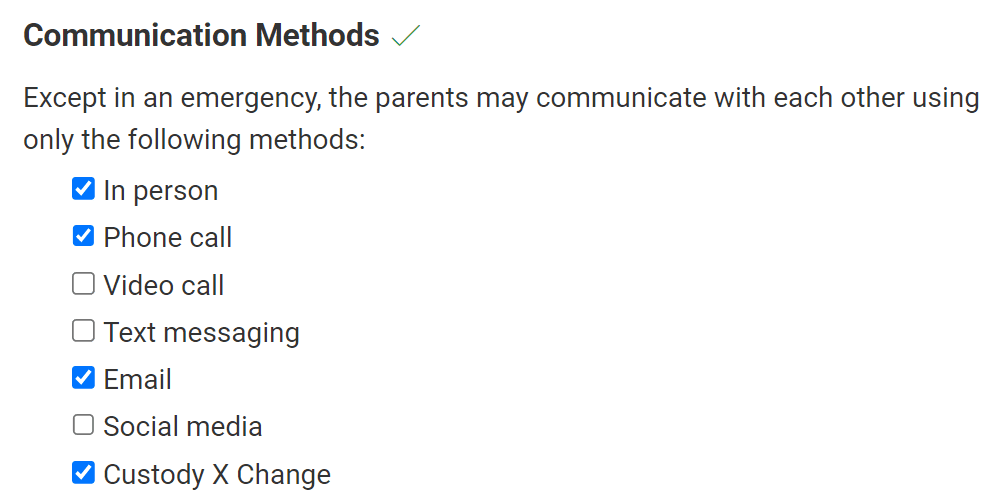
Plans often require parents to keep each other updated with their latest contact information.
Child and parent relationships
Your plan should protect your child's relationships with both parents. You can include information about telephone and video calls and other communication between the child and the parents.
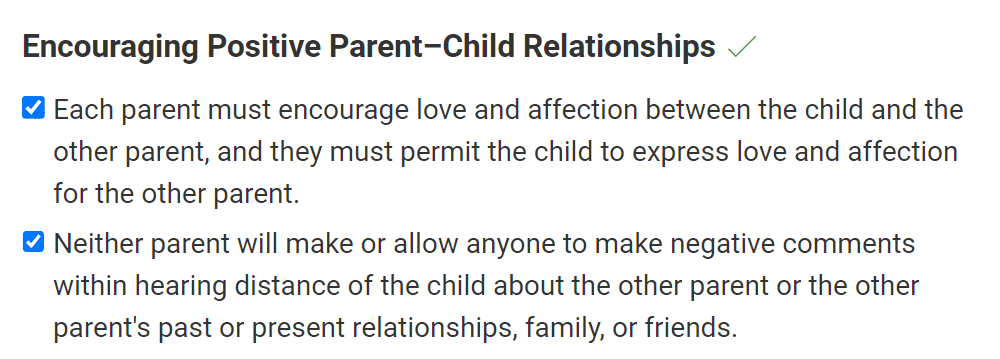
You can also specify that each parent will encourage the child to have a good relationship with the other parent, that neither parent will speak negatively about the other parent in front of the child, and that the parents will not use the child as a messenger.
Traveling and moving with the child
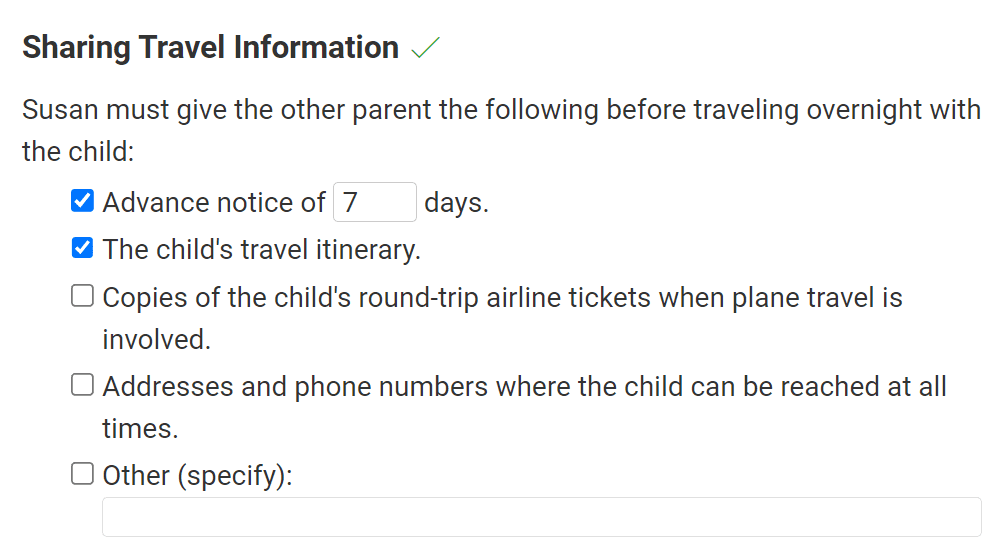
Provisions about traveling and moving with the child could include limits on where the parents can take the child and a requirement to provide an itinerary when traveling with the child.
Moving provisions can include that a parent cannot move the child out of a particular area and that notice must be given a certain number of days before a move.
Money and child support
Your plan will probably cover a wide variety of financial topics, from who will claim the child as a dependent for taxes to how parents will reimburse each other when necessary.
Don't forget to think about government benefits, lawyer fees and the child's money.
You can include a child support agreement in your plan, but be aware that U.S. courts have strict child support rules and might not approve your arrangement.
Disagreements and revising the plan
Your plan must contain information about how you and the other parent will revise the plan as it becomes necessary.
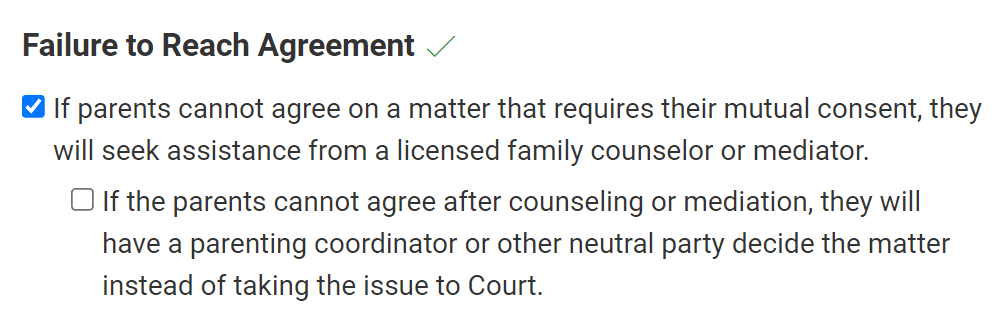
Set a process for reviewing the plan, including a way to resolve disagreements about it.
Special needs of the child
You can include provisions in your plan to address any special considerations for your child or your family. Think about health conditions, learning needs, autism, work schedules, extended family members and beyond. Find a parenting plan tool, like Custody X Change, that lets you enter custom provisions.
Considerations when making your parenting plan
Here are some things to consider as you make your custody plan:
- First and foremost, your child's needs and well-being
- The strengths of each parent
- The child care responsibilities each parent had before the separation
- The involvement of each parent in the child's recreational and extracurricular activities
- How the parents want to share parenting responsibilities
- If you have multiple children, their relationships with each other and whether they need individual time with each parent
- Your child's preferences
- How you and the other parent will put your child's needs above your own
- How you and the other parent will protect your child from your disagreements
Your should also remember that:
- Your plan must comply with your state custody guidelines and laws in order for the court to accept it.
- Your child's age impacts what is appropriate for your plan.
- You can include military provisions in your plan if one or both parents is in the military.
- When parents live in different states, one state has jurisdiction over your plan and you must follow the laws of that state.
- You can include provisions for long-distance travel in your plan when parents live far from each other.
- You can make a temporary parenting plan until you have a permanent custody plan.
- You can modify your plan as your child gets older and their needs change.
- If you have multiple children, you can have a split custody arrangement where each parent has custody of different children.
Get help with your parenting plan or agreement
Creating a parenting plan on your own can feel overwhelming. You have to be sure to use airtight legal language and can't omit any required information.
Use technology to take the guesswork out of the equation. The Custody X Change app walks you through each step of creating a comprehensive parenting plan.
The result is a professional document that demonstrates your competence as a parent and secures your child's future.
The easiest and most reliable way to make a parenting plan is with Custody X Change.