About Us | Sign In | Help
Custody X Change Logo

A Complete Parenting Plan Template


How do I use a template to make my parenting plan?

A parenting plan template is a guide to follow as you make your parenting plan. There are several types of templates you can use. You can write up your plan from suggested ideas, buy and fill out a set of papers with plan information, or use the Custody X Change software.

Custody X Change is software that creates parenting plans. The software gives you a template to follow so you can make each part of your plan, and then you can print professional documents of your completed plan. Download a free 30-day trial and see how it can help you.

You can use Custody X Change to:

  • Negotiate a parenting plan with the other parent
  • Work with your attorney to come up with a plan you like
  • Prepare sample plans for mediation
  • Make an parenting plan to present or submit in court
What is a common parenting plan template to follow?

Here is a parenting plan template that covers the main sections of a parenting plan. You can use this template to write your own plan from scratch or you can use Custody X Change to include all of the following information in your plan.

With each section, you should think about the unique needs of your child and what will work for your situation. This will help you customize each section so you have a plan that will benefit your child and that you feel good about.

Legal custody and decision making

You and the other parent need to decide how you will share the responsibility and authority to make decisions for your children (this refers to big decisions about education, religion, medical care, etc). This authority is called legal custody.

Here are some common ways that parents divide legal custody.

  • Sole legal custody when one parent is given all of the authority to make all decisions for the child.
  • Joint legal custody where the parents share authority to make decisions and the parents must both agree on all big decisions made.
  • Joint legal custody where the parents each have authority to make decisions over certain topics.
  • Joint legal custody where each parent makes the decisions for the child when the child is in the care of the parent.

Your plan should have clear information about legal custody. In Custody X Change, you can choose from several options about legal custody so the decision making authority is shared in the way you want. Your information about legal custody is then included in your plan.

Physical custody and your parenting time schedule

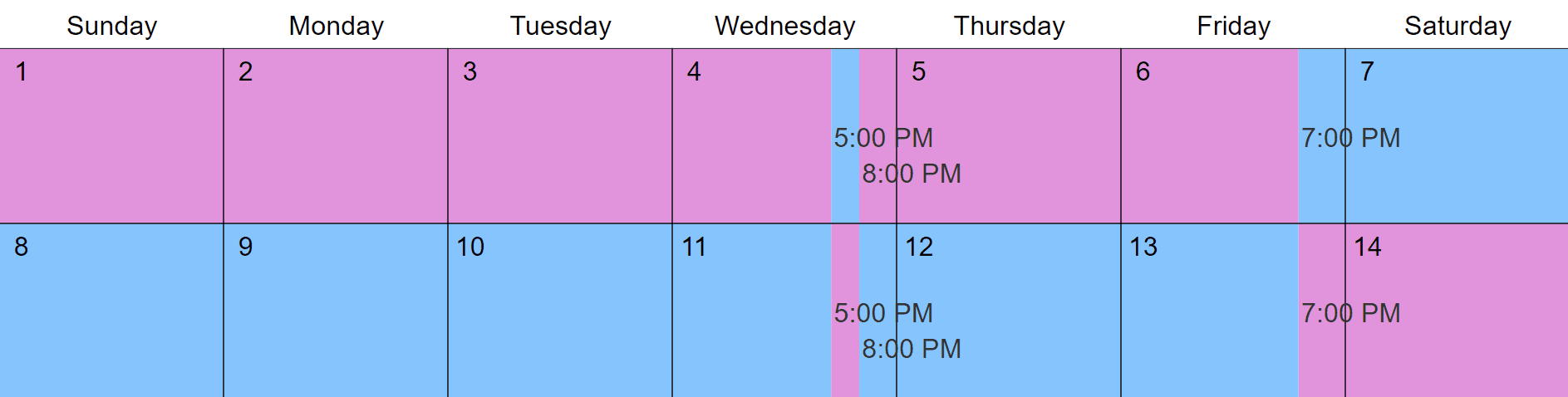
Physical custody refers to the time each parent has the child. Your plan needs to show how you and the other parent will share physical custody. A good way to do this is to make a parenting time schedule.

Your schedule should include the following:

  • A school or everyday schedule that shows where the child is on weekdays and weekends.
  • A holiday or special event schedule that shows where the child will spend holidays and other special events.
  • A vacation schedule that shows where the child will spend school breaks (if different from the school schedule) or vacation time the parents have with the children.

To make your schedule, look at the work schedules of both parents, the school holidays and breaks, and all of the important dates in the year. Then you can divide up the time between the parents by hand on a calendar or you can use Custody X Change to create your schedule.

Creating your schedule with Custody X Change allows you to:

  • Explore different options for your schedule until you find the right one for your child
  • Maximize the parenting time you have with your child
  • Easily make changes to your schedule as circumstances change
  • Sync your custody schedule with your Blackberry, iPhone, Palm/PDA, Outlook, Google Calendar, Yahoo Calendar, Windows Live, etc.
  • Print multiple copies of your schedule so you and the other parent always know what's going on

Guidelines and provisions about physical custody

Along with your schedule of parenting time, your plan should address some of the issues that accompany visitation and exchanges so you can avoid disputes and misunderstandings.

Some areas where you may want to establish visitation guidelines are:

  • Transportation for your children between homes
  • Where you will meet for exchanges, the time for exchanges, what happens when a parent doesn't show up, etc.
  • How to make changes to the schedule
  • A process for resolving disagreements or disputes
  • Child care when you or the other parent isn't able to take the children during your time

Think about some rules that could help your custody arrangements work better, and put those in your plan. Custody X Change lets you add provisions about parenting time by choosing from a list or by making your own provisions.

Medical and Dental Care

You and the other parent need to have information in your plan about how you will provide the necessary medical and dental care for your child. This includes who will provide insurance for the child, what doctors the child will go to, who is responsible for taking the children to the doctor, who will pay for extra medical bills, etc.

Education

As your child gets older, you may want to have a section in your parenting plan that lays out your plans for the child's education. Some parents will need to make decisions about the school the child attends, and other parents will want to discuss ways they will help the child pay for college.

Child support information

Your state child support calculation determines your child support. Usually, child support is based on the parenting timeshare percentage and income of the parents. You can use a visitation timeshare calculator to determine the timeshare percentage of each parent. Generally speaking, if one parent has more time with the children they receive child support from the other parent.

Most states have separate and specific forms to fill out for child support. You should fill out these forms and file them with the court, and you should include copies of them in your plan.

Custody X Change has a visitation timeshare calculator you can use to determine your parenting or overnight timeshare percentage. This helps you put an accurate number into the child support calculation.

Extra expenses and finances

You and the other parent are both financially responsible for your child, and along with child support information, your plan needs to show how you will handle and divide extra expenses.

To figure out how to handle and divide expenses:

  • Keep a record of expenses that come up for your child.
  • Make a list of recurring expenses (like school registration or monthly payments for activities) for your child.
  • Create a system for how you and the other parent will handle recurring expenses.
  • Create a system for handling unexpected expenses (like emergency medical care).
  • Decide how you will handle every day expenses for the children (like how will you provide clothing and food for the children).

Your plan should have some systems for handling finances that work for you and the other parent. You will need to work out the systems for how you will pay for things and how you will reimburse each other.

Communication between the parents

Your plan can contain rules about communication between parents so you can avoid arguments and contention. You should come up with an appropriate system that allows you and the other parent to work together to meet your child's needs.

Ideas for communication include:

  • Scheduling a monthly meeting or phone call where you discuss the child's needs or the upcoming events
  • Developing some kind of email log where you email weekly or monthly about your child and what is going on
  • Keeping a notebook about visitation that you hand off to the other parent when they take the children (do not have the children pass the notebook or use the children as messengers, if you have a notebook you should give it directly to the other parent)

Including information about communication between the parents in your plan helps you avoid using your child as a go-between or messenger. It also reduces the chance for misunderstandings and allows the parents to put the child first.

Changing the plan and resolving disputes

Your plan should have a process for how you will make future changes to the plan and a process for how you and the other parent will resolve disputes. Basically, you and the other parent should talk about how to modify the plan, and you should also discuss a way to handle any problems that come up.

Some parents put in a provision about attending mediation for conflict, and other parents have a set system where each parent gets a turn to have the final say in a dispute. Figure out what will work for you and put it right in the plan.

Additional parenting provisions

You should feel free to include additional rules or guidelines about how you and the other parent will raise the child. This can help you know that your child will have consistency and that your child will be safe with the other parent.

Some extra provisions to think about include:

  • Requiring the child to wear a seat belt whenever they are in either parents' car
  • Neither parent will speak negatively about the other parent in front of the children
  • A parent must notify the other parent if she/he applies for a passport for the child
  • No smoking or drinking alcohol around the child, etc.

You should also discuss any additional parenting responsibilities that come up and decide who will take care of them. This could include deciding which parent will attend school meetings, which parent will pick up the child from school if the child is sick, which parents will attend extra-curricular events, etc.

Custody X Change makes it easy to add parenting provisions to your plan. The software has a list of provisions on all topics that you can choose from, and you can also write your own provisions for the plan.

How do I put my plan together from a template?

When you follow a template to make you plan, you can write each section and then compile it into one document. You can then use your written plan to work with the other parent or to submit to court.

Most states allow you to submit your own written parenting plan to the court, but some states require you fill out specific forms to file your plan with the court. If this is the case where you live, you simply transcribe your parenting plan information to the court forms.

The Custody X Change template allows you to print the following documents:

  • a calendar of the custody schedule
  • a written report of the schedule
  • your plan written in legal terms
  • a detailed timeshare report

In many places you can file the printed documents from Custody X Change with the court. If your state requires specific forms, you can write the information from the software onto the required form. The software also lets you export all of your documents to Word, PDF, and Excel so you can make changes as you need to.

How do I know if my parenting plan is successful?

Your plan is successful if it meets the needs of your child and allows you and the other parent to raise your child with minimum contention.

To know how well your plan is working, you can keep track of your actual parenting time and compare it to the scheduled time. This will let you know if the schedule is being followed, and if you need to make changes to the child support amount.

Many parents like to keep a custody journal where you record information about parenting time and other custody issues. You can use your custody journal to share information with the other parent, or to keep for your personal records.

Custody X Change has a tracking and journaling feature that lets you keep track of actual parenting time and write notes about visits.

As you consider what to put in your parenting plan, remember that everything in the plan should be made in the best interest of your child. If you think about the needs and interests of your child, you will have an effective plan.