
Archive

Archive for the ‘Child Visitation Schedule’ Category

Creating a Reasonable Visitation Schedule

July 1st, 2010 No comments

What is a reasonable visitation schedule? Well, it depends on the situation. A lot of states have laws that it is in the best interest of the child to have reasonable contact with both parents. So, the courts will only accept a reasonable visitation schedule, or one that gives enough time to both parents.

Now, the standard is rather vague. The best way to really make the visitation schedule reasonable is for both parents to sit down and come up with a schedule that they think is in the best interest of the child. Instead of focusing on the amount of time that each parent has with the children, the parents should focus on how both parents can help participate in raising the child. Here are some things that parents can think about that will help them create the best visitation schedule possible.

  • How old is the child? Parents should look at the ages of the children and adapt the schedule accordingly. Children of different ages have different needs from the parents, and the visitation schedule needs to be created so the children have opportunities to connect with both parents.
  • What really benefits the child? Unfortunately, child custody issues come with divorce, and divorce causes a lot of problems and issues between the parents. Too many parents use the visitation schedule as revenge on the other parent–but it really harms the children. Separate the divorce issues from the custody questions.
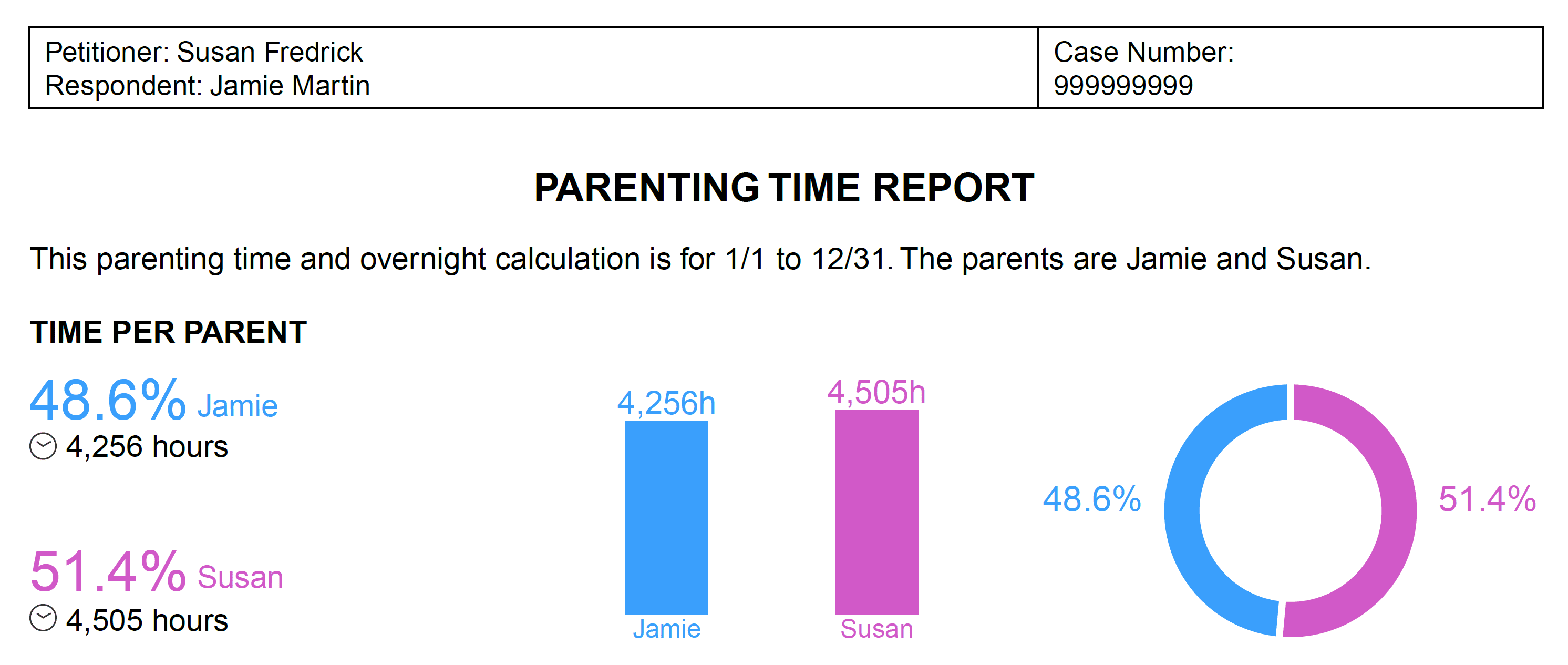
  • Will a visitation timeshare calculator help? A timeshare calculator shows the exact time that each parent has with the children. This can be helpful when creating the visitation schedule, because the parents know exactly how much time they have with the children. Custody X Change offers a calculator that shows parents the timeshare percentage as they create a schedule.
  • How practical is the schedule? Parents must consider the practical issues when making the schedule. How close do the parents live by each other? Is it possible to do frequent exchanges? Do they both live by the child’s school? What is the work schedule of each parent? Does one parent travel frequently? How well does the child adjust to each parents’ home? Thinking about how the schedule will actually work in real life will help make it more reasonable.
  • Does child have special needs? The visitation schedule needs to be made to accommodate those. The special needs could include any health problems, learning disabilities that require after-school attention, etc.
  • What activities does the child participate in? Extra-curricular activities can interrupt the visitation schedule, and parents need to make plans for this. The mother and father can plan visitation around extra activities, or have plans for make-up visitation.

Child Visitation Schedule Template

June 17th, 2010 No comments

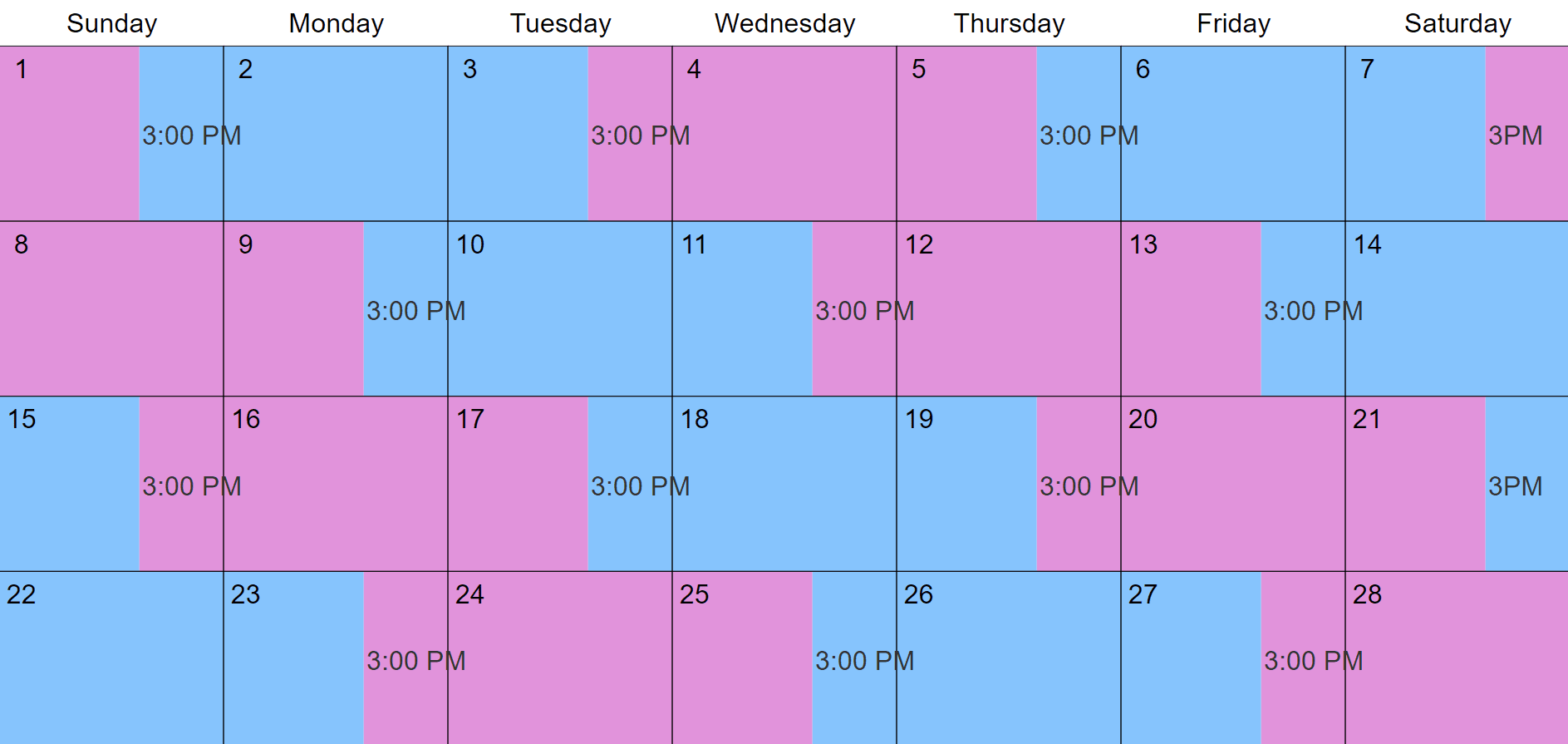
Are you looking for a child visitation schedule template? Here is a basic one to get you started.

The Repeating Cycle of Custody and Visitation

  • Get a blank calendar that has 2-4 weeks.
  • Fill out the basic cycle of custody and visitation.
  • When you have the basic cycle, count the number of weeks.
  • Repeat the weeks of the cycle throughout the calendar year.

A Holiday Schedule

  • Make a list of the holidays you want to include.
  • Decide how you will share the holidays–by splitting the time or alternating the holidays.
  • Assign the holiday time to each parent.
  • Pick a method for how you will figure out holidays each year (alternating the schedule every year, making a new one, etc)

Vacation Time

  • Decide if you want a different schedule of custody and visitation during the child’s vacations and breaks from school.
  • Make a different schedule for vacation time if you want.
  • Decide how many days each parent has to take the children on vacation each year.
  • Assign the dates of the vacation, or allow parents to have unspecified vacations (this means that parents can have so many days with the children for vacation and they can pick the dates later).

Special Events

  • Look at the calendar to see if your child has any special events that will change the custody schedule (like sporting events, concerts, etc.)
  • Reassign the custody as necessary.

Custody X Change is custody software that provides the best visitation schedule template available. With the software, parents can make all of these parts of the visitation schedule, see the exact timeshare percentage that each parent has with the children while setting up the schedule, and explore many different options for the schedule. You can download a free trial of the software and make your visitation schedule today.

A Holiday Custody and Visitation Schedule

June 3rd, 2010 No comments

Setting up the holiday custody and visitation schedule is a very important part of your parenting time schedule. Children have a lot of memories and expectations that go along with holidays, and when parents separate or divorce the children can have great anxiety that their holidays will no longer be any fun. You need to make a schedule and be prepared to discuss it with your children. You should explain to them how the holiday schedule will work and reassure the children that holidays will still be special family time, but the child will celebrate the holiday differently than before. Here are some ideas for preparing your holiday schedule.

You actually have some options when it comes to holidays. First, you and the other parent need to decide how you will share holiday time. You can choose to divide the day of the holiday between both parents, you can alternate important holidays, you can do a combination of both methods, and you can give both parents separate days to celebrate the same holiday. Here are some example holiday custody schedules.

Let’s say you and the other parent want to split the holiday time on the actually holiday. First, you want to make a list of all of the holidays that you want to share. Common shared holidays include Easter, July 4th, Thanksgiving, and Christmas. Then you decide which parent has the child for the first half of the day and which parent has the child the second half of the day. You should also determine how the transportation will work on the holiday.

A slight variation of sharing the holiday is to give both parents a time to celebrate the holiday. For example, one parent can have the child on Christmas Eve, and the other parent has the child on Christmas day. One parent has the child on Thanksgiving day, and the other parent has them for the weekend following Thanksgiving. This can be a nice arrangement for the child because the child has time to settle in and actually enjoy the holiday.

Another holiday visitation schedule option is for you and the other parent to alternate the major holidays. In this case, you should make a list of all of the holidays you want to celebrate. The list can be extensive and include all holidays, or as few holidays as the you want. You and the other parent then go through and divide the holidays. You can agree to swap holidays every year so that they end up with a fair schedule. You can also choose a different method of alternating holidays–some parents create a new holiday schedule every year.

Remember that the holiday schedule should be made according to what is best for the child. Because of this, you may find that a combination of the above methods works best. Some of the holidays can be shared, and other holidays can be alternated. Determine what is best for your child and celebrate the holidays accordingly.

Custody X Change makes it easy to set up a holiday custody schedule. There is a Canadian, Australian, and US version of the software so you can set up a Canadian holiday custody schedule, Australian holiday custody schedule, or US holiday custody schedule. You can download a free trial of the software to see how it can help you assign holiday time.

Out of State Child Custody and Visitation Schedules

May 31st, 2010 No comments

Figuring out the child visitation schedule is tricky for any situation, but when one parent moves out of state it gets even more complicated. However, a parent moving out of state doesn’t mean a schedule can’t be figured out. Parents just need to be more creative in implementing visitation and contact between the children and parents.

Before moving out of state, a parent should assess the custody situation. If the parent who wants to move does not have custody of the children, they should discuss the move with the custodial parent. Determining a schedule will be much easier if both parents are on the same page about visitation. This means that the parent who wants to move needs to explain the necessity of the move to the other parent, along with explaining the desire to continue to see the child. In some cases, the parent may need to get permission from the court before moving. This is a good idea because it ensures that the parent will still have visitation rights.

If a custodial parent wants to move, they must get permission from the court and from the other parent. Because the custodial parent is most likely taking the child away from the parent, this can be more complicated. Again, the mother and father should discuss the necessity of the move and the benefits it will have for the children. The parent who is moving should ensure the other parent that they will still have visitation, and they should work together to make that happen.

Out of state child visitation schedules usually mean that the child visits the non-custodial parent less frequently for longer durations of time. A common arrangement is to have the children live with the custodial parent during the school year and visit the other parent during summers. If this long visit doesn’t work for the children (some children have activities during the summer, and older children sometimes get jobs) than the parents should work out a shorter vacation time to come and visit. Parents can also schedule longer visits during the breaks during the school year–like fall, Christmas, and spring break. This assumes that the child is old enough to travel alone.

Parents who live out of state can also visit the child in the child’s home state. This is a good idea when the parent’s traveling schedule is more flexible than the child’s. If this type of visit occurs, the parents need to work out where the visiting parent will stay, when they will see the children, etc.

Another option is to have the custodial parent and the child visit the state of the non-custodial parent. In this case, the custodial parent can have a vacation or break while the child visits with the other parent.

When determine out of state custody schedules, parents need to talk about how they will handle expenses. The parents need to decide how they will pay for the child to travel, the expense of the parents traveling, etc. This is an important issue to work out before visits start.

Fortunately, the technology of the day allows people to stay connected even when they live far away from each other. A parent who moves out of state should utilize any means to stay in contact with the child. The parent should call regularly–even have a schedule of when to call, communicate over email, send letters, get a computer camera and talk online, send text messages, etc. This way the parent can still be involved with the child.

Making a Child Custody Schedule

September 28th, 2009 No comments

Custody X Change makes it easy to create your personal, customized child custody schedule. With Custody X Change, you can choose from a list of common repeating cycles, or you can create your own. After the schedule is applied to the year, you can look at the time-share percentage that each parent has so you know exactly how your visitation schedule will go in real life. Here is the way to make a custom repeating cycle of custody and visitation in Custody X Change.

If you click on the tab that says Repeating Cycle, this is what the screen looks like.

1

The first step is to pick which parent the child lives with. If you have a joint custody schedule, or if the child spends equal time with both parents, then pick yourself.

Next, choose the cycle type (under the default parenting plans). You can choose how many weeks your repeating cycle lasts. You can choose from one to ten weeks for your schedule. For this example, we’ll pick a a two week schedule with the father as the parent the child lives with.

2

Now, you can choose the start date and the time of exchanges. If you have different exchange times for every visitation, just use the default time and we’ll change it when we put in the visitation.

Next, you can put in any type of custody schedule that you want. You do this by clicking on the day that you want to change the custody and then clicking on the edge of the time to change the times.

3

After you put in the child visitation schedule, you can click on the Calendar tab to see how it looks when it’s applied to the year. You can also see the time-share percentage at the bottom of the screen so you know how much time each parent has with the children.

4

With this schedule, the mother has 50.14% and the father has 49.86%. If you don’t like the percentages, it’s easy to go back to the Repeating Cycle tab and tweak the schedule. You can experiment with as many options as you want until you find the perfect schedule for you and your child.

Back to School!

August 24th, 2009 No comments

Copy of IMG_0167

The end of the summer is approaching, and that means the kids are going back to school. If you have school age children, this can be an exciting time as they get ready for their new school year. The new school year can also bring up some custody and visitation issues that the parents need to work out. As your children get older, it’s important to be flexible with the parenting plan so it can meet the needs of your child.  Here are some suggestions to think about for custody as your kids get ready to go back to school.

Discuss with the other parent about your child’s extra-curricular activities. As children get older–especially as they enter junior high and high school–they become more involved with school activities, clubs, and other things. You need to have a plan with the other parent how you will balance these activities. Is it okay if the child participates in something that interferes with visitation time? Do both parents need to give permission for the child to do something? Who will be responsible for transportation to and from sports and other activities outside of school? Extra-curricular activities can be a great chance for parents to show support for the child. And, parents can see their children more if they attend sporting events and other activities.

Think about any changes that need to be made to the custody and visitation schedule. If you know your child is going to be involved in a sporting event and the practices interfere with the visitation time, come up with a new schedule that fits around these practices. If your child is older, you may want to adopt a visitation schedule that is more flexible for the child. Perhaps they can choose what day of the week they’ll go visit a parent, or maybe it can be a weekly decision that the parent and child work out. As children enter high school, they may want to spend the majority of time at one home to establish their base. They will want to be close to friends and not have to interrupt their social schedule. Be aware of your children’s needs and if they are old enough they can give input to the visitation schedule. However, remember that you’re the parent and ultimately you make the decisions.

Discuss with the other parent how to manage the child’s schoolwork. If you have joint child custody, or your child spends some afternoons with one parent and the others with the other parent, you need to make a plan for keeping track of schoolwork and other school information. When children go back and forth between homes, it is easy for papers and other things to get lost. Consider keeping a folder that the child takes to each house so that each parent can see the important school information. Work with your child to organize the school materials so the child is always prepared for homework at either house. You may want to keep a communication log that your child takes to each parent so both of you know what’s going on.

Divide up school and other expenses between the parents. You and the child’s other parent should come to an agreement about who pays for extra-curricular and school expenses. Come up with a way that the expenses are divided and make that your policy so you don’t have huge arguments every time something comes up. Keep track of expenses so one parent doesn’t feel like they are paying for everything. Work with your children so they know how the expenses work and who they should talk to about the finances.

The school year can be an exciting time for parents and children to grow closer together through outside events and learning. Make the most of this school year with your child, and enjoy your custody and visitation arrangement.

Sample Standard Custody Schedules — Part Four

August 4th, 2009 No comments

This is the final installment about the standard child custody schedule options–although we will have more posts in the future about joint custody schedules and other parenting plans. In fact, if you have a unique custody and visitation schedule that you have set up, let us know about it and we’ll do a post on it. It’d be great to find out any ideas the readers have about suggestions for setting up a schedule. Or, if you’d like to see some calendar views of a particular custody and visitation schedule or want us to look up some information on it let us know and we’ll do a post about it.

We’re going to look at three more examples today. Along with each example, the time-share percentage with each parent is included. Remember that this time-share is only for the repeating cycle and doesn’t take holidays, vacation time, and special events into account.

1. Second, Fourth, and Fifth Weekends. This schedule is set up so the non-custodial parent has the second, fourth, and fifth weekend for visitation. This is a weekend that includes an overnight on Friday and Saturday with the visit ending Sunday evening. Here’s the calendar:

pic4

This schedule gives the custodial parent 84.32% and the non-custodial parent 15.68%. You can add little variations to this schedule if the non-custodial parent wants more visitation time. You could add an evening or overnight visit during the week or extend the weekend for an extra day. Whatever works for you.

2. First, Third and Alternating Fifth weekends. The non-custodial parent has visitation every first and third weekend. The parents then alternate the fifth weekends of any months. Basically this means that the non-custodial parent has the first and third weekend and every now and then gets an additional weekend (not every month has a fifth weekend, and the parent would only get every other one). The calendar looks like this:

pic5

This month the non-custodial parent has visitation on the fifth weekend. The next month with the fifth weekend would show the time going to the custodial parent. The custodial parent has a time-share percentage of 85.48% and the non-custodial has a time-share percentage of 14.52%.

3. Second, Fourth, and Alternating Fifth weekends. This is the same schedule as above, on the weekends change to the second and fourth weekend. This schedule looks like this:

pic6

The time-share percentage for this arrangement is 85.41% for the custodial parent and 14.59% for the non-custodial parent.

This wraps up our posts about the standard custody and visitation schedules. If you want to share a schedule that has worked for you, or if you want us to research and give samples of a schedule you’ve heard about leave a comment and let us know. Hopefully this can help you come up with the best parenting plan for you and your children.

Examples of Common Custody Schedules — Part Three

August 3rd, 2009 1 comment

We’re continuing to show examples and samples of common custody and vistitation schedules that people set up in their custody agreements and parenting plans. Hopefully you can look through these schedules and find one–or a combination of some–that can fit your needs and work for you and your child. Along with each schedule, the time-share percentage that each parent has with the child is provided. This is so you can see the actual time you’d have with the children if you set up your schedule that way. Note: the time-share percentage provided does not account for holiday, vacation, or special event time. It is only the time-share for the basic repeating cycle of custody.

1. Alternating extended weekends and one evening visit per week. The alternating extended weekends means the weekend goes through Monday (or can be started on Thursday night to include all of Friday). The non-custodial gets visitation every other weekend and one evening visit sometime during the week. A month of the schedule looks like this:

pic1

The length of the visit, of course, can be altered. This schedule is set up so the visit during the week is three hours. The weekend visits start on Friday night and go through until Monday evening. The time-share percentage for the custodial parent is 76.85% and the time-share percentage with the non-custodial parent is 23.15%. The great thing about Custody X Change is that you can experiment with different visitation times and lengths and see how that affects the time-share percentage. For example, if I go back to the schedule I just put in, but extend the evening visit for just two hours, the time-share for the non-custodial parent increases by more than a percent (24.34%). This may seem small, but it helps you to know that you’re getting more time with your child.

2. Alternating extended weekends with an overnight visit during the week. In this schedule, the non-custodial parent gets visitation every other weekend (for an extended period of time) and one overnight visit during the week. The calendar looks like this:

pic2

The time-share for the custodial parent is 64.38% and the time-share for the non-custodial parent is 35.62%.

3. First, Third, and Fifth weekends. The non-custodial parent has visitation on the first, third and fifth weekends. The weekend consists of an overnight on Friday and Saturday and an end time Sunday evening. This is the calendar:

pic3

This is more of a sole custody agreement with visitation for the other parent. The custodial parent has 84.38% of the time and the non-custodial parent has 15.62%. This could also be modified to the weekends being extended. If the visits are extended until Monday evening, the time-share changes to 76.71% with the custodial parent and 23.29% for the non-custodial parent.

It’s helpful for many parents to look at different ideas and then create a unique custody schedule that works for their parenting plan. This can allow you to make up an calendar that works for the children and both parents.

Samples of Standard Custody & Visitation Schedules with Time-Share Percentages — Part Two

July 31st, 2009 No comments

Okay, here’s the next part in a series of posts that explore some of the standard custody and visitation schedules that people set up. Hopefully you can look through these and see if any of them, or a combination of any of them, will fit for your parenting plan. I’m putting all of the plans in Custody X Change so we can get a calendar view of how the plan will look and so we can also see the time-share percentage that each parent has with that type of schedule. The time-share percentages that I give are only for the repeating cycle–holidays, vacation time, and special events aren’t taken into consideration. Using holidays, vacation time, and special events can alter your schedule to equal time if you want–so you can think about that for your own schedule if you like one of the schedules but don’t feel the time is equal. We’ll look at three more custody and visitation schedules.

1. Alternating weekends and one evening visit a week. In this schedule, the child lives with custodial parent during the week and visits the non-custodial parent on alternating weekends and for one evening visit during the week. Here’s how the schedule looks when you apply it to a month:

pic1

For this arrangement, the custodial parent has 83.94% of the time with the child and the non-custodial parent has 16.06% of the time. This schedule is a common one for a situation where one parent has sole physical custody and the other parent gets visitation.

2. Alternating weekends and one overnight a week. This is similar to the schedule above, but the evening visit is an overnight visit. The non-custodial parent has visitation every other weekend and one overnight visit a week. It looks like this:

pic2

This gives the non-custodial parent a little more time than the previous schedule. The custodial parent has 71.34% of the time and the non-custodial parent has 28.66%.

3. Alternating extended weekends. In this arrangement the child spends every other weekend with the non-custodial parent but the weekends goes until Monday evening. On the calendar this is what it looks like:

pic3

The time-share percentage for the custodial parent is 78.63% and the time-share for the non-custodial parent is 21.37%.

All of these schedules could start on different days or be adapted to fit your needs. The evening or overnight visit could be on any day of the week. Or, you could add additional visits if you thought that would be best for your child. These basic templates can be helpful to get some ideas for your child custody schedule, but you shouldn’t feel like you have to fit your plan into one of these. One nice thing about Custody X Change is that it makes it really easy to play around with some options to see the various time-share percentage and calendar. Then you can come up with a really great schedule for everyone involved. We’ll look at a few more of the schedules in the next post.

Examples of Standard Custody and Visitation Schedules and the Time-Share Percentages — Part One

July 29th, 2009 3 comments

There are some standard custody schedules that people use when they set up their parenting plans. Many times parents set up these plans and don’t realize the exact amount of time that they will have with their child. To help people get some ideas about how to set up a custody and visitation schedule and also how that schedule will divide the time between the parents, I’ve put some common plans into Custody X Change. This will show us how the plan looks in a calendar and also give us the time-share percentage for each parent. We’ll look at three plans today–this is the first part of a series of post and we’ll contine to look at samples of plans.

1. Custodial Parent has the children during the week, and a Non-Custodial Parent has the children on the weekends. This schedule is usually set up in a custody situation where one parent has custody and the other parent gets visitation. The calendar for this looks like this:

pic1

In this arrangement, the Custodial Parent has 71.51% of time with the child and the Non-Custodial Parent has 28.49% (this is the time-share percentage of the repeating cycle–there are no holidays or special events added). Parents who opt for this schedule, but want more equal time can use holidays, vacations, school breaks, and other special events to even out the time.

2. Alternating weeks of custody. This is a common joint custody agreement. The parents switch weeks of custody with the children. The calendar looks like this:

pic2

As you can see, the time with each parent is pretty even. The Custodial Parent has 50.14% and the Non-Custodial Parent has 49.86%. The differences in time are due to the starting date and the day of the week the schedule starts. Again, this doesn’t account for holidays, vacation or special events.

3. Non-Custodial Parent getting visitation on alternating weekends. This type of visitation schedule is a sole custody arrangement with visitation for the other parent. The parent who doesn’t have custody gets the children every other weekend. Here’s the calendar:

pic3

As you can see, there is a big difference in the amount of time that each parent has with the child. The Custodial Parent has 85.75% and the Non-Custodial Parent has 14.25%. A schedule like this might be set up in the school months when the child needs to spend the majority of time at one home. The summer schedule could be changed so the Non-Custodial Parent ends up with more time.

In the next post, we’ll continue to look at various custody and visitation schedules and the time-share percentages that accompany them. Hopefully this will give you an idea of what kind of arrangement you want to set up.

Increase Time With Your Kids Outside of Your Visitation Schedule

July 22nd, 2009 No comments

Once the parents agree on their parenting plan it is difficult to have it officially changed. If you want to change your child visitation schedule you have to go back to the court and show that the changes are in the best interest of the child. Many times parents want to see their kids more, but don’t necessarily want to change their entire custody agreement. Here are some ideas for increasing communication and time with your children without changing your custody schedule.

  1. Take advantage of technology. You can get some extra time talking with your child over the internet, texting, webcams, etc. Set up some times with your child to chat online or visit over webcam (this is also a good idea if you live far away from your child). You can also send your child text messages through the day–this is a good way to check in with a teenager or tween to see how they’re doing.
  2. Send an email. Depending on the age of your child, email can be a great way to communicate with them. You can send emails back and forth to keep current on the happenings in your child’s life. This lets you be more up to date when you have your visits.
  3. Volunteer at your child’s school. If you have a few hours a week to spare, go volunteer in your child’s classroom. This is a great way to be more involved in your child’s life and to find out what is going on at school. If you have a skill you can teach, you can offer to teach a mini-class once a week (for example, you could teach a foreign language for an hour, music, art, etc). Most teachers will love having you come in, and your child will love it too.
  4. Attend extra-curricular activities. Sometimes parents have their custody agreements set up so that the parents switch attendance to extra-curricular activities. If yours is open, you should attend as many as you can. You don’t have to sit or even talk to the child’s other parent, but you can be there to support your child.
  5. Become the default baby-sitter. You can put a provision in your parenting plan that if the parent who has the child is going to be gone for a certain amount of time (say, four hours) that the other parent gets the chance to take the child before anyone else. Even if you don’t have this in your agreement you can make a deal with the child’s other parent. If you get along, the other parent will probably agree to the idea (provided that you offer the same courtesy to them) and you can get some more time with your child when the other parent has weekend plans. If you don’t get along with the other parent, you may want to see about getting this added to your agreement.

Keeping in touch and having communication with your child is the best way to keep your relationship going. Even if you only get a few visits a month, you can still be involved in your child’s life.