
About Us | Sign In | Help
Custody X Change Logo

The Best Parenting Plans for Toddlers


How do I make a parenting plan for my toddler?

If you don't want to pay the high cost for an attorney to create a parenting plan agreement, you can use Custody X Change. Custody X Change is software that allows you to create parenting plans for children of all ages, including toddlers. With Custody X Change, you can write up your own parenting plan (on your own or with the other parent). It also provides an excellent starting point when you work with an attorney or legal professional to create a plan that works best for your toddler.

You create each part of your agreement, then print professional documents of your parenting plan. Download a free 30-day trial and see how it can help you.

You can use Custody X Change to:

  • Explore options for your parenting plan
  • Negotiate an agreement with the other parent
  • Work with your attorney to come up with a parenting plan you like
  • Prepare sample agreements for mediation
  • Make a plan to present in court
  • Track your plan once it is in place
How can a parenting plan help my toddler adjust?

A parenting plan will help your toddler thrive with a structured routine guided by set rules while he or she is adjusting to the physical and emotional changes that come when parents separate.

When parents separate or divorce, children of all ages experience a sense of significant loss as a result. A comprehensive parenting plan keeps you both on the same page when it comes to parenting your toddler. Smooth transitions and consistent care can help minimize any confusion and frustration your toddler may feel. A good parenting plan helps the toddler feel comfortable and secure with either parent.

As your toddler gets older, both of you can make modifications to the parenting plan that encompass new developments. With Custody X Change, you can easily create a parenting plan that supports your toddler's emotional and physical well-being.

How can I create a parenting plan that ensures healthy development?

Your parenting plan must consider what toddlers need for healthy development, which is a combination of enthusiastic support and firm limits on what they can do as they begin to explore and interact with the world.

Toddlers develop a sense of security and trust when exposed to consistent schedules and frequent interaction with both parents. Toddlers are also temperamental--they may boldly charge ahead into a new situation, then fall back into shyness the very next day. Testing limits comes naturally to toddlers as well. Your parenting plan should help your toddler feel comfortable interacting with different environments in two separate residences.

Some of the social and emotional developments in toddlers include:

  • Expressing independence
  • Indicating preferences, such as a certain food or book over another
  • Wanting to do tasks themselves
  • Preferring a special object, like a blanket or toy
  • Doing things to make others laugh
  • Using tantrums to manipulate others
  • Resisting transitions, such as stopping a game to eat dinner
  • Reacting to the moods and emotions of others
  • Discovering how they are similar and different to other children
What should be covered in my parenting plan for my toddler?

A parenting plan for your toddler must cover all areas of physical and emotional care, so both parents can support your toddler's independence while establishing boundaries on behavior.

When creating a parenting plan for a toddler, discuss in detail the following 10 topics.

  1. Discuss the type of food and meal times that work best for your child. For example, you may decide together that the toddler should not have sugary snacks during the week.
  2. Review your toddler's nap schedule. While there are exceptions, most toddlers follow a fairly predictable waking and sleeping pattern.
  3. Plan for consistent potty training routines, including any reward systems, so that the approach is the same at both of your homes.
  4. Outline discipline procedures for when the toddler misbehaves, such as using the "time out" method.
  5. Agree that the toddler should not stay away from either parent for more than a few days at a time. Experts agree that frequent shorter visits are better developmentally.
  6. Arrange for child care from a third party, if needed, and determine drop-off and pick-up schedules.
  7. Plan for daily telephone contact with the absent parent at a set time, such as right before bedtime. This can reduce anxiety and keep the toddler connected to both parents.
  8. Work out what to do when the toddler is sick, such as which residence the child stays at, who arranges doctor visits and how visitations with the other parent are rescheduled.
  9. Stipulate that there will be no negative interaction or highly emotional exchanges in front of the toddler. Children at this age are highly sensitive to anger and sadness and exposure to fighting parents undermines their sense of security and stability.
  10. Make arrangements for holidays, vacations and special occasions with the toddler's needs and habits in mind.

Because toddlers differ in personality and temperament, you and the other parent can structure certain areas to fit your unique circumstances. Custody X Change software provides a template for a comprehensive parenting plan that covers these topics and many more.

Should I record how the parenting plan is affecting my toddler?

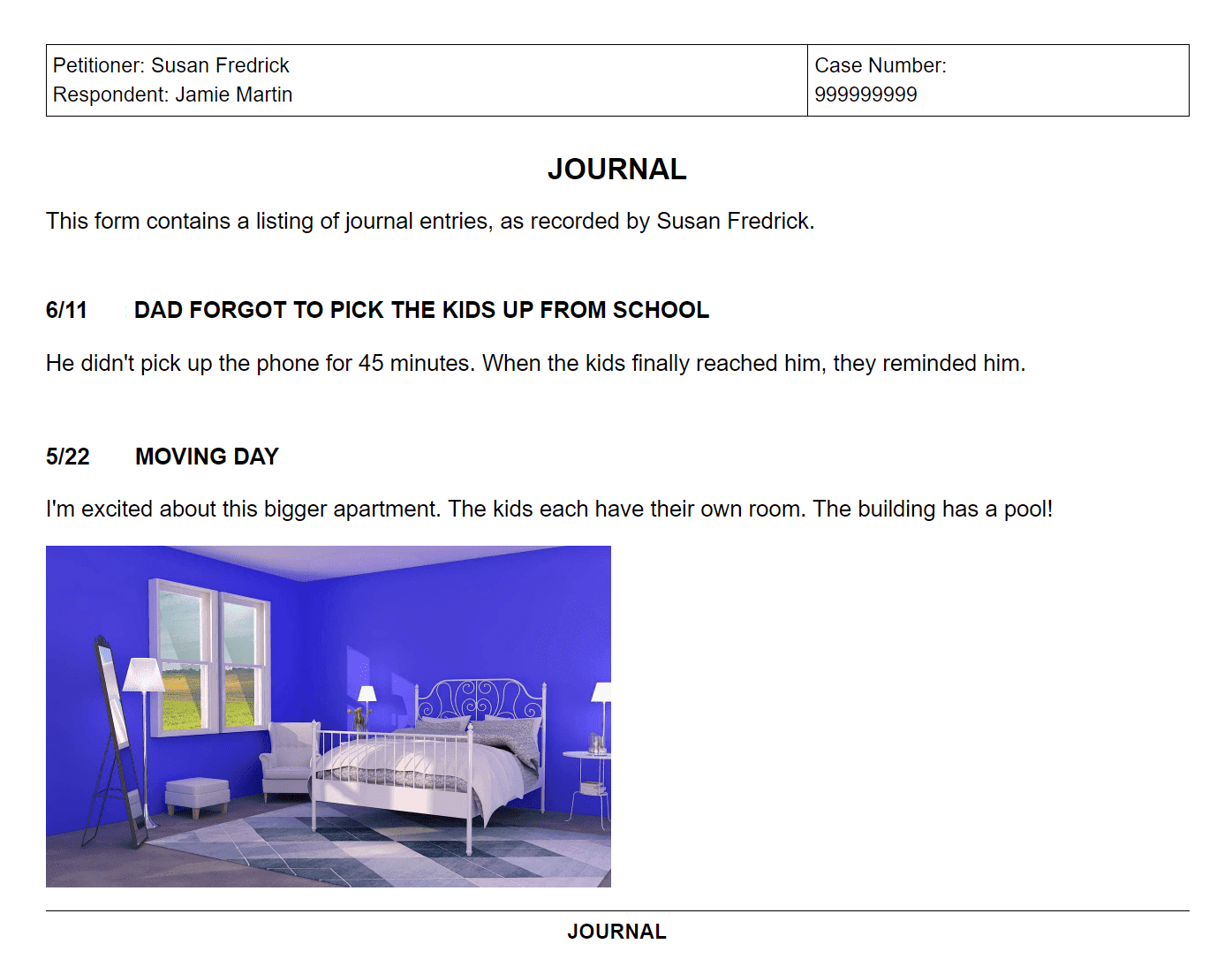
Use a parenting journal to keep track of how your toddler is doing with the current parenting plan. You can record short daily notes on your toddler's health, development and milestones. Custody X Change offers a parenting journal feature that lets you include notes on the calendar and then compiles them into a report you can print out.

Separated parents who have their toddler's best interests in mind must work hard to remain open and communicative with each other. Writing down things that happen while your toddler is in your care keeps the other parent up to date on how your child is doing.

If the toddler is not doing well under the current plan, you can point to specific examples in the parenting journal and look for patterns in an effort to revise the plan to better suit your toddler's needs.

A parenting journal also lets you compare notes on what is working, such as discipline or potty training. When one parent finds success with some aspect of the parenting plan, it's beneficial to share it with the other parent for continued success.

How can a parenting plan reduce stress during visits?

A detailed parenting plan can reduce stress on both the parents and the toddler during visits by establishing common procedures that keep things positive and smooth. Exchanges between parents are perhaps the most difficult times for toddlers, who don't do well with transitions of any kind.

To make the exchange between parents as stress-free for your toddler as possible, follow these tips:

  • Drop the toddler off at the other parent's location rather than the other parent coming to remove the toddler from your place. Same for the reverse exchange.
  • Talk about the transition while on the way to the other parent's house using positive words and emotions.
  • Identify a favorite stuffed toy or blanket that travels between houses to act as a familiar transition object.
  • Verbalize that you will see your child again soon and that you will talk on the phone later that day.
  • Make the exchange short and pleasant. Toddlers often have tantrums during the actual exchange, but soon recover after you leave.
  • Follow up with the promised phone call at the designated time. Be positive and upbeat when communicating by phone.
  • Keep a picture of the absent parent at each location, ideally by the toddler's bed.

Following a consistent, upbeat exchange routine will keep your toddler secure in knowing what to expect. It also starts the new time with the other parent on a positive note, ensuring a smoother, calmer visit. Custody X Change allows you to modify your parenting plan to include the latest information regarding visits with both parents.

What if my actual parenting time isn't matching the parenting plan?

If one parent's actual parenting time is significantly different than what is outlined in the parenting plan, it could be time to modify visitation or custody through the court. In order to prove a discrepancy in actual time versus scheduled time, you must track your parenting hours.

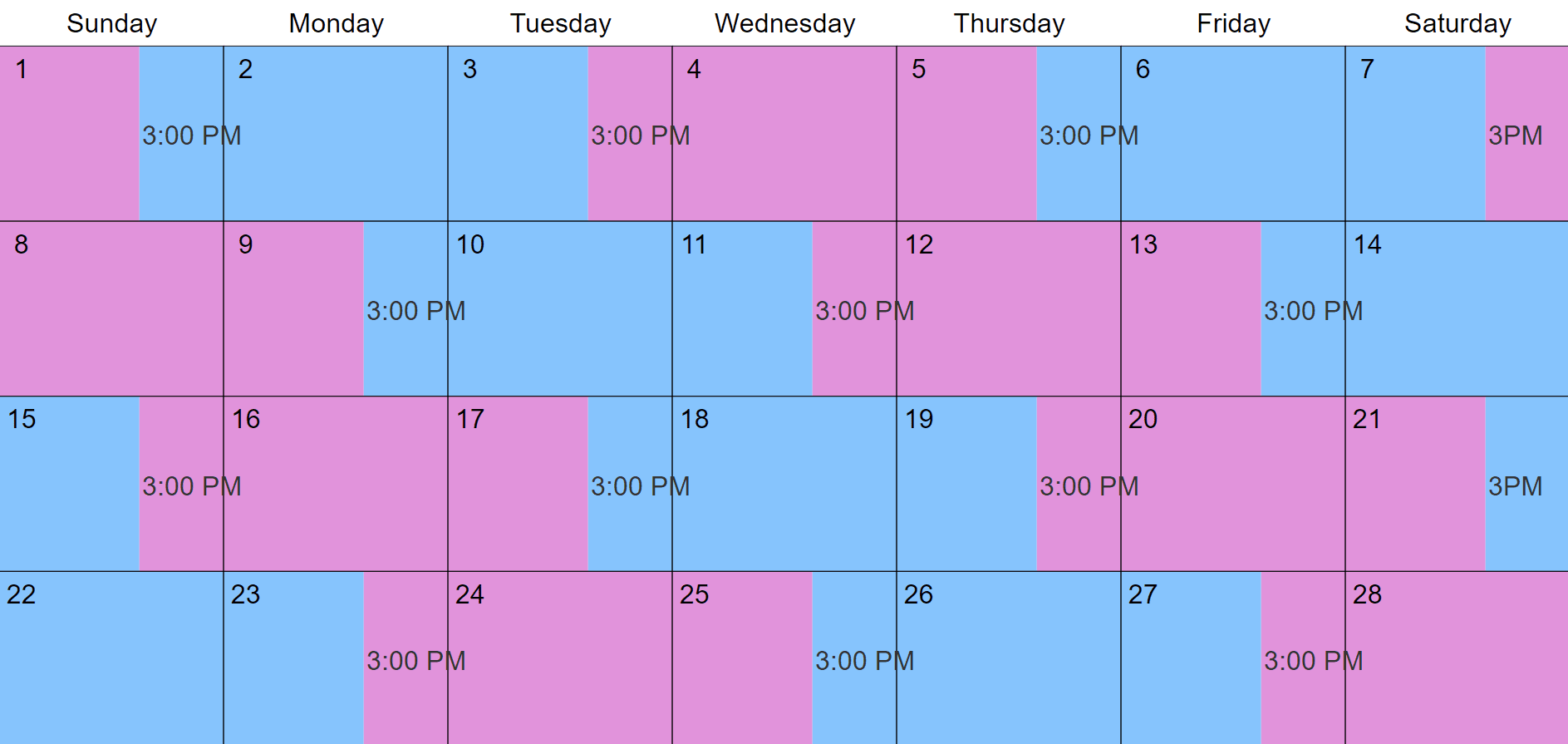
The benefits of tracking your parenting time with your toddler include:

  • Keeping a record of actual hours versus schedule hours
  • Recording times when the other parent fails to follow the schedule
  • Building a list of examples that support your modification request
  • Motivating the other parent to stick to the parenting plan because their actions are being recorded

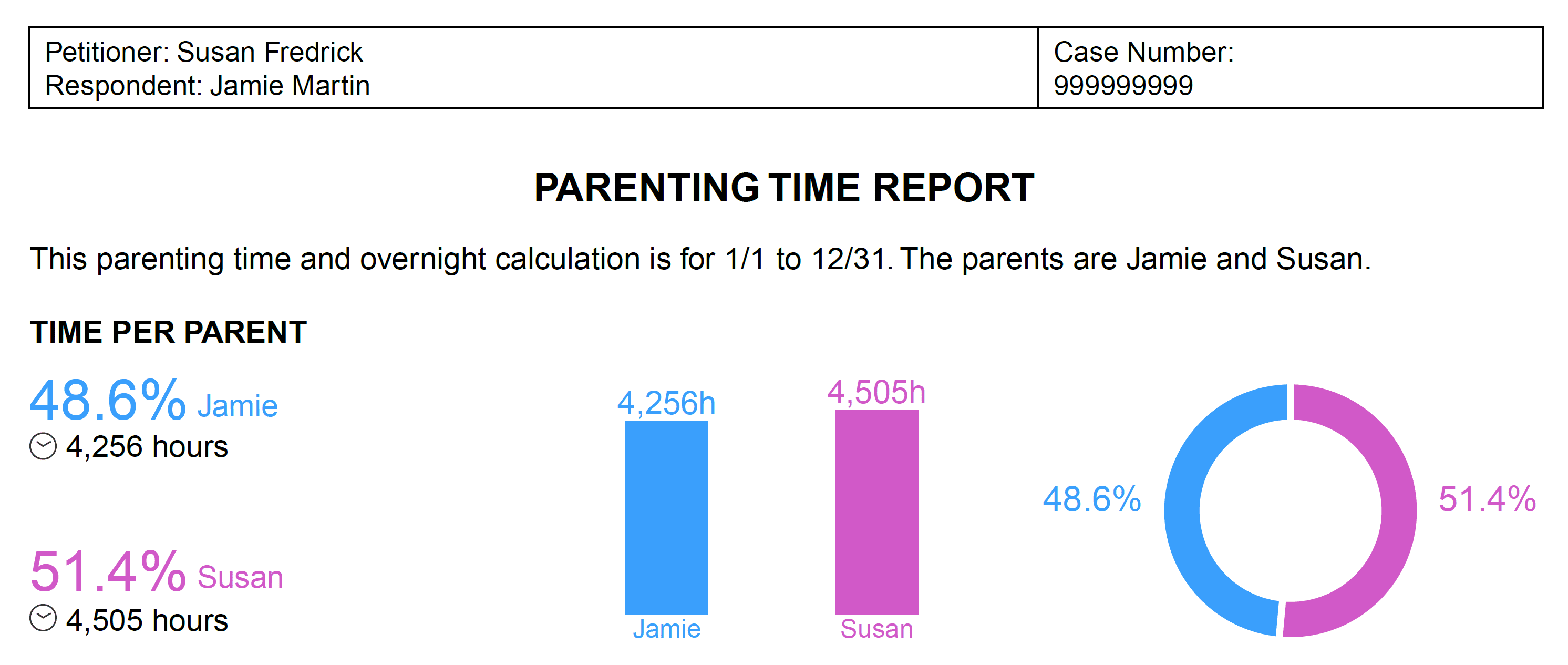
Custody X Change allows you to input actual parenting hours into the software, then generates a report that compares actual versus scheduled. Whether you want to petition the court for a change in custody or a modification of visitation for your toddler, careful and detailed records of what actually transpires can be a credible example of what is best for your child.


See also: