
Oklahoma Parenting Plans (Custody Agreements)
Parenting plans detail how parents who are not in a relationship will handle the major issues involved in raising their children.
Parents who want joint custody must submit a parenting plan — together or individually. The judge will ultimately decide whether joint custody is in the child's best interest. Even if neither parent requests it, the judge may order joint custody and will choose the plan's terms.
Parents who want sole custody can submit a parenting plan for the judge's consideration, but it is not required.
If they agree on custody, both parents must sign the plan in the presence of a notary, signifying their agreement to abide by its terms.
Visualize your schedule. Get a written parenting plan. Calculate your parenting time.
Parenting plan templates
A template provides an organized way to set out parenting rules (called provisions) and a visitation schedule. Your county may have its own template, or you can choose another.
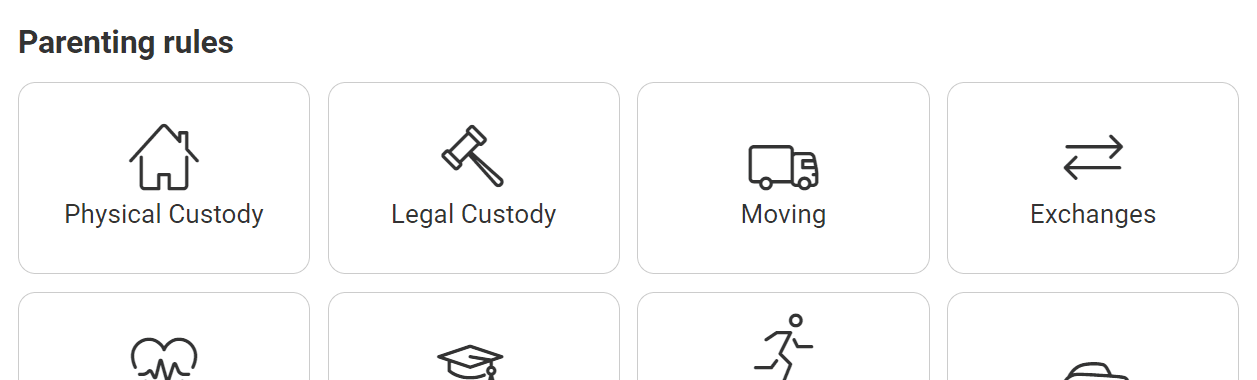
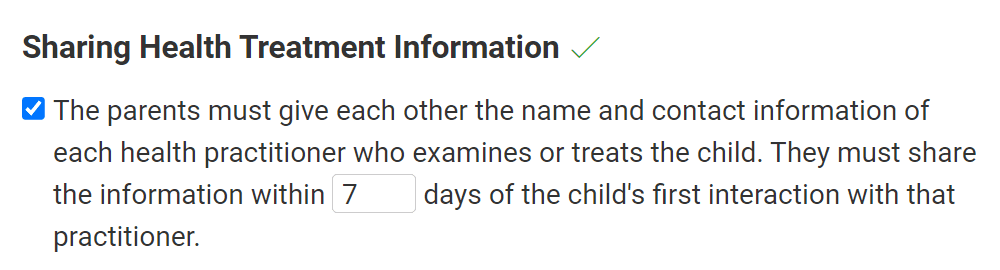
The Custody X Change parenting plan template works for joint and sole custody. With over 140 suggested provisions, it helps you quickly create a thorough plan for parenting apart.
Oklahoma State University's parenting plan template covers the basics of a joint or sole custody agreement.
Required parenting plan provisions
Legal custody
Legal custody defines who has the right to make major child-related decisions.
Sole legal custody gives one parent the right to make all major decisions without the agreement of the other parent.
Joint legal custody gives both parents the right to make decisions. You may name a parent the primary decision-maker, who has the final say when there's a disagreement.
The judge can deny a request for joint custody if the judge feels the request is not in the child's interests.
Parenting time
Parenting time (also called visitation) is when the child is with a parent. Creating a written or visual parenting time schedule with specific days and times is recommended. Some parents agree to not follow a schedule, but this can lead to confusion and disagreements.
School placement
Your plan must state which school your child will attend. You may add information about choosing extracurriculars, attending parent-teacher conferences, managing the child's attendance and more.
Medical and dental care
Detail the child's health care coverage and who will pay costs not covered by insurance. Will one parent be responsible for the total cost, or will you each pay a portion?
When private, employer-provided or other health insurance is unavailable, the child may qualify for state health insurance. If state insurance is provided by one parent, the other parent may have to pay a portion of their child support obligation as "cash medical." Cash medical payments belong to the state and not the parent receiving child support.
Child support
Child support is money the parent who spends less time with the child pays to the other parent to contribute to the child's basic needs.
The child support computation form determines the basic support obligation. You can suggest — or agree to — a different amount if you believe it is more appropriate. The judge will ultimately decide the amount of child support taking into consideration each party's income and other factors.
Optional parenting plan provisions
Add extra provisions to cover other parenting matters that may cause disputes.
Moving
Relocating with the child is often a point of contention — especially if you're moving out of state. In Oklahoma, if you're moving more than 75 miles, you must give written notice to the other parent 60 days before the proposed moving day. In your plan, you can include more specifics, like requiring parents to stay within the child's school zone.
Communication
Set rules for communication between parents and between parents and the child. Can parents call one another, or must they message through a parenting app? How will parents stay in touch with the child when they're not with them?
Exchanges
An exchange is when the child goes from one parent's care to the other's. Detail where you'll exchange the child, whether you'll have supervised exchanges, how you'll handle late pickups and drop-offs and more.
Child care
Include information about the child's day care, including how you'll divide costs. You may also include a provision requiring parents to ask one another to care for the child before contacting a babysitter.
Discipline
Children do best with rules that are enforced consistently in both households. Set clear guidelines for disciplining your child should they misbehave. For example, you might state that if the child loses internet privileges in one home, they lose them in the other as well.
Missed visits
Address what will happen if a parent is unable to pick up your child for a visit. Stipulate whether you'll allow makeup visits and how you'll handle extracurriculars that conflict with parenting time.
Future revisions
Your child's needs will change as they get older. State how often you'll review your parenting plan to make necessary changes. You'll need to have any significant changes approved by the court.
The easiest way to make a parenting plan
When you're writing a parenting plan, it's critical you use airtight language that leaves no room for interpretation.
If you hire a lawyer, they'll write up the plan and ensure it meets the court's requirements.
If you write your own plan, use technology to take guesswork out of the equation. The parenting plan template in the Custody X Change online app walks you through each step.
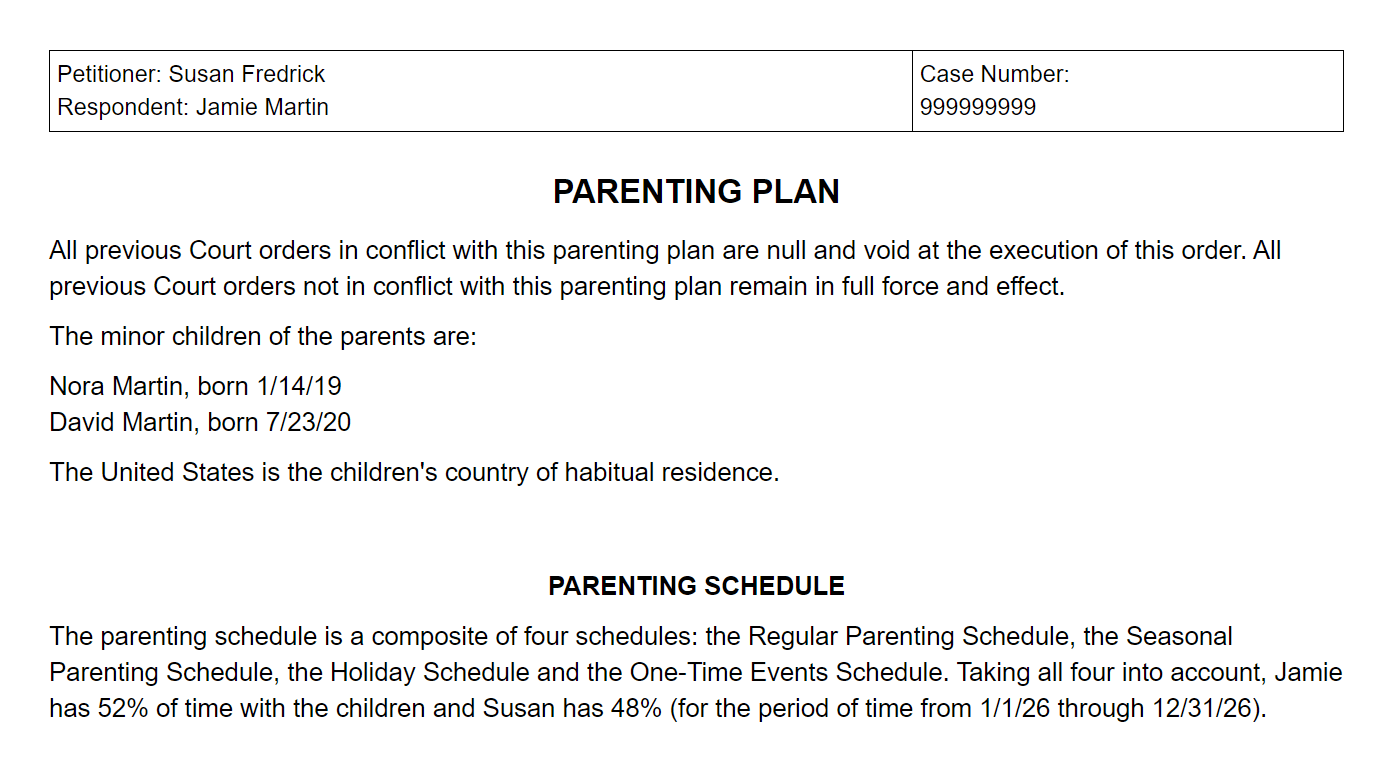
The result is a professional document that demonstrates your competence as a parent from the first glance.
The easiest and most reliable way to make a parenting plan is with Custody X Change.
Visualize your schedule. Get a written parenting plan. Calculate your parenting time.