
Colorado Parenting Time Schedules
A schedule describing when your child lives and spends time with each parent is essential for families in two households. It's part of a parenting plan, which is approved by a judge in a divorce or parenting responsibilities case in Colorado.
Whether you and the other parent make a proposal to the court separately or together, think through your schedule carefully and write it as clearly as possible. Adding a visual calendar can clarify what you want.
Visualize your schedule. Get a written parenting plan. Calculate your parenting time.
How you get a parenting time schedule
If you can't agree on a parenting time schedule, the court decides for you based on your child's needs. The court may appoint a parenting expert to evaluate your situation and make recommendations to the judge.
Most parents are happier when they make their own compromises instead of waiting for the court to choose a schedule. And most parents do reach agreement before their case goes to trial. Mediation can help. You'll still need your agreed-upon schedule approved by a judge.
How to choose the right schedule for your family
Think about how your parenting time can serve your child's needs.
Choose an age-appropriate schedule. Of course, your child's needs will change with time. For an infant, a court might issue a schedule that's valid for 60 days and reassess it after that. A plan for an older child could specify dates when the schedule will automatically change or when the parents will consider a change.
You should not pick a schedule based on how it will affect your child support payment. This motivation won't impress the judge and can cause further conflict. Besides, child support depends on multiple factors.
Equal parenting time schedules
Judges commonly award a 50/50 time split if it works well for the child. This is popular with parents too. You can schedule your time in different ways so it comes out to an equal split, usually over two weeks.
One of the most popular ways to do this is the 2-2-5-5 schedule: two days with one parent, two days with the other, then five days with one, five days with the other.
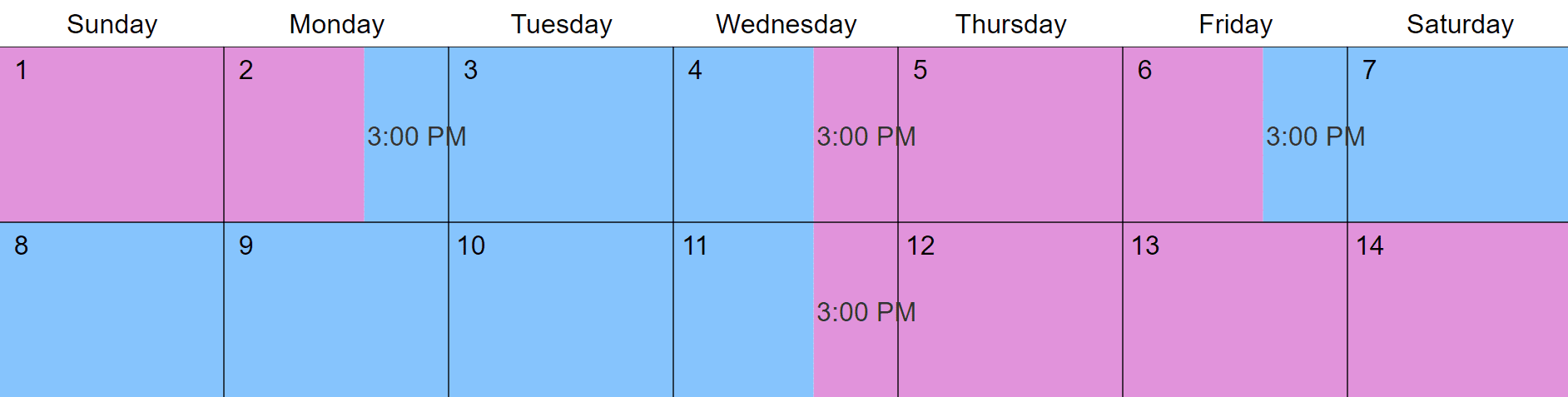
Small children often benefit from frequent exchanges so they don't go too long without seeing either parent. One schedule with frequent exchanges is the 2-2-3 schedule.
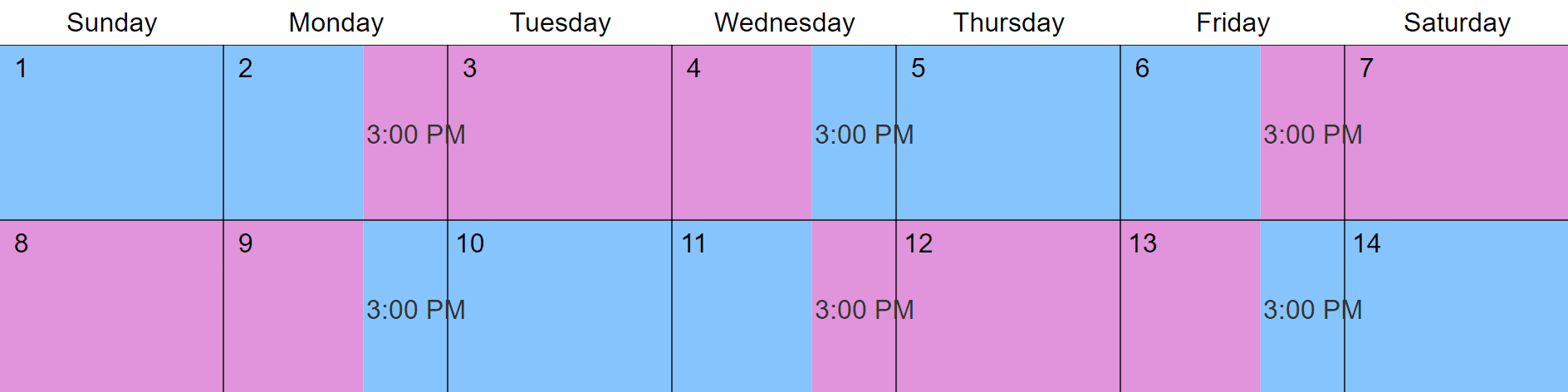
Another is the 3-4-4-3 schedule.

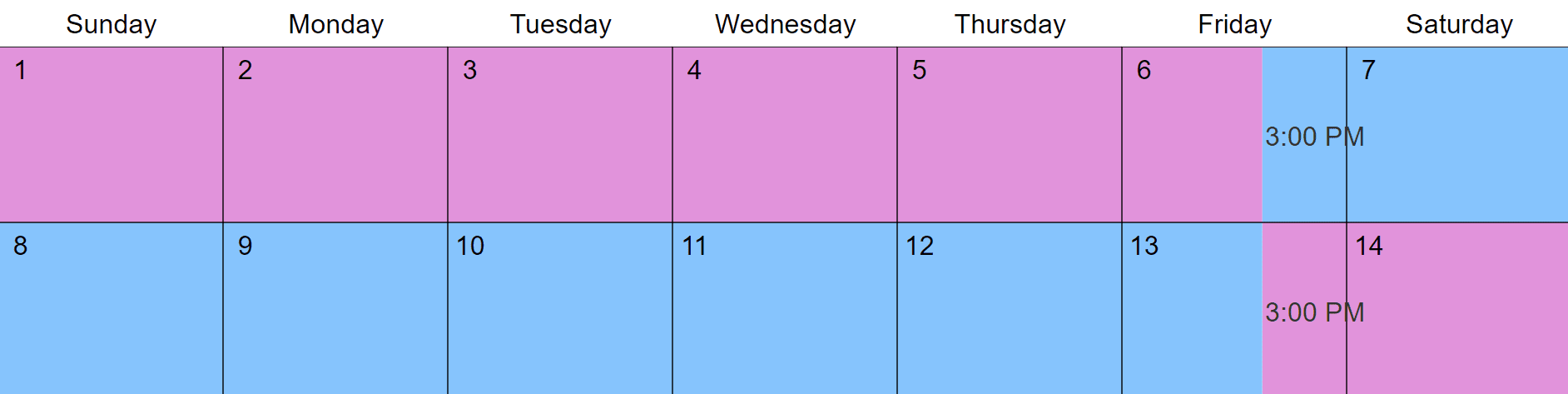
Longer visits can work well for older children. A child may spend one week with one parent, then the next week with the other. The exchange often happens on Friday after the school week ends. This is called alternating weeks.
Unequal parenting time schedules
Colorado judges may award unequal time. Reasons can include:
- The parents live far apart.
- One parent's circumstances or behavior make them less fit to care for the child.
- The parents, or their teenage child, prefer unequal time. (Courts take a mature child's opinion into account.)
For a baby or small child, it's common to have frequent, short visits with the parent they see less. For example, a parent might have three daytime visits with their baby every week. That would give the parents roughly a 90/10 division of time.

Some children live every other weekend with the parent they see less, which is an 80/20 time split. It's also common for them to have a midweek overnight with that parent, which is a 70/30 time split.
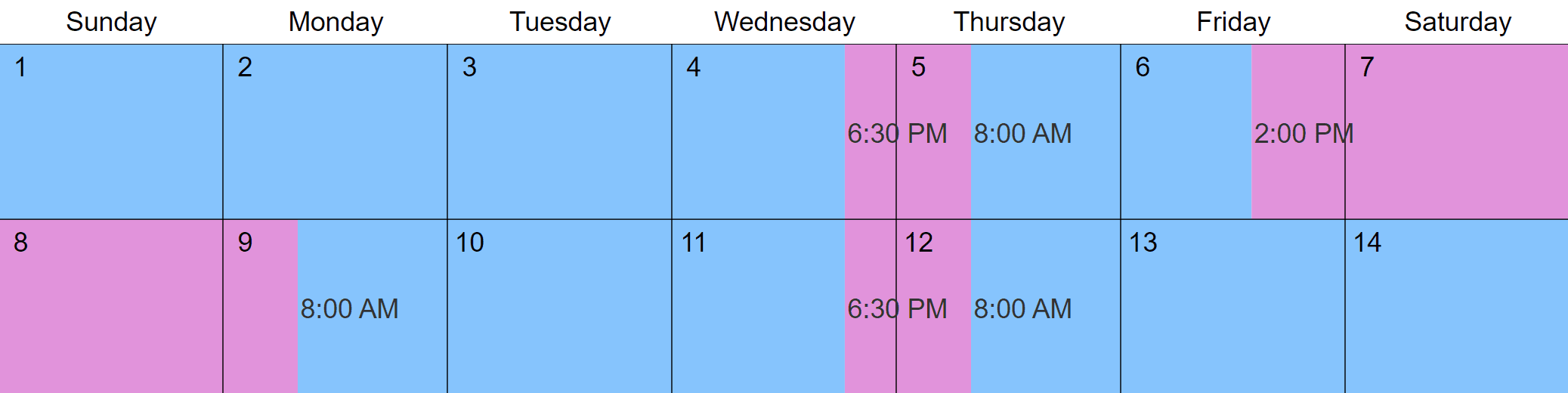
Another approach is the 4-3 schedule, which repeats every week. This is close to a 60/40 time split.

When the parent with less time lives far away, one solution is to have your child go to them for any extended school breaks. This usually gives parents about a 75/25 time split. This can work particularly well if your child attends a year-round school whose breaks are spread out evenly, allowing more frequent visits with the parent who doesn't live nearby.
Putting in details
Describing a schedule may seem easy, but if you don't think it through, later you may wish you'd provided more details.
For example, you may assume that "the first weekend of the month" means something obvious, but what if the month begins on a Sunday? And when Monday's a holiday, which parent sees the child off to school on Tuesday morning? Adding these details can avoid conflict later.
Similarly, if either parent anticipates taking the child on vacations, your plan could specify how much advance notice to give each other — and whether the vacations must take place in a certain time of year.
Remember to anticipate changes in your child's school or school calendar. Enrollment at Colorado public schools often happens in January. Your parenting plan might state that you and the other parent will meet in February to discuss adjusting your parenting schedule if your child will be changing schools.
What to do if a parent doesn't follow the schedule
Both of you have a right to your court-ordered parenting time. Neither parent can stray from the schedule without the other's approval.
If your co-parent isn't following the schedule as ordered, log what happens and track your actual parenting time. You can do both with the Custody X Change online app.
First, use these items to help your co-parent see the problems they're causing. If talking doesn't help, you may need to take your co-parent — and your evidence — to court.
Don't try to rectify the situation by withholding child support payments. You don't have the right to ignore any part of your court order, not even if the other parent isn't complying with their end.
The easiest way to make a schedule
If you're like most parents, creating a parenting time schedule will feel daunting. How do you make something that meets legal requirements and doesn't leave any loose ends?
The Custody X Change app makes it easy. Either customize a schedule template, or click and drag in your custody calendar to make a schedule from scratch.
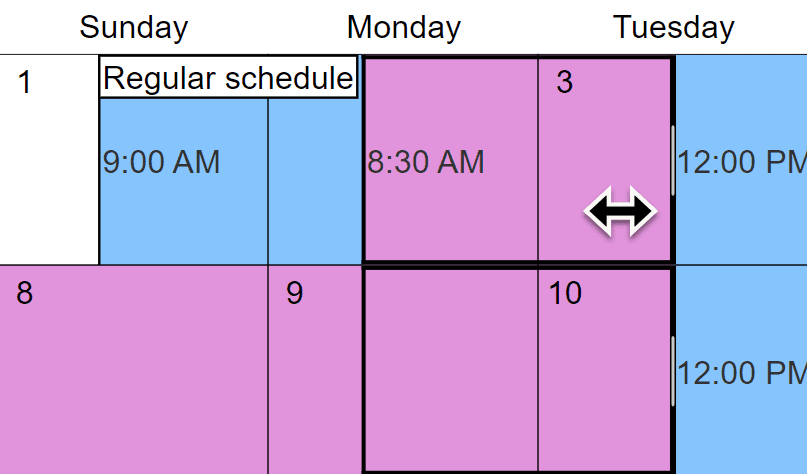
Then watch a full description appear in your parenting plan.
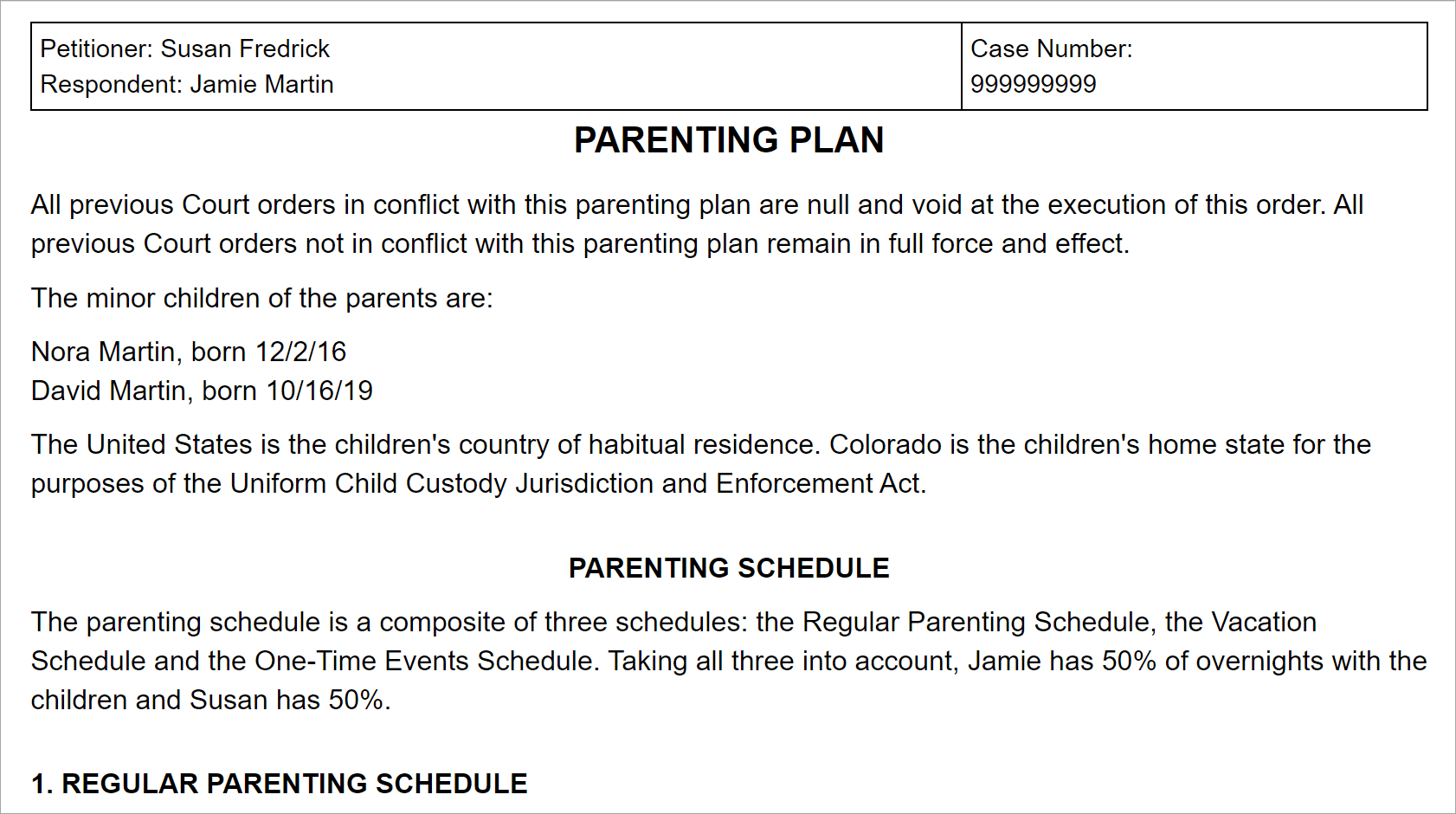
The combination of a visual and written schedule means your family will have no problem knowing who has the child when. Take advantage of Custody X Change to make your schedule as clear and thorough as can be.
Visualize your schedule. Get a written parenting plan. Calculate your parenting time.