
California Parenting Plan and Agreement Guidelines
A parenting plan (sometimes called a custody and visitation agreement) outlines how divorced or separated parents will share the rights and responsibilities of raising their child.
You might use one to negotiate with the other parent, to file for settlement or to present your requests to a judge.
Many uniform aspects of making a parenting plan are the same regardless of your state. Below are guidelines specific to California.
Keep in mind that each child in a family could require a different plan, but this is rare.
Visualize your schedule. Get a written parenting plan. Calculate your parenting time.
Information required in your plan
California parenting plans must contain information about physical and legal custody.
Physical custody is where your child lives and who cares for them. You should specify whether one parent will have sole physical custody or the parents will share joint physical custody. You can include a parenting schedule in written and visual form to show when the child will be with each parent.
Legal custody is the authority to make decisions for and about your child. Your plan must state whether one parent will have sole legal custody or the two parents will share joint legal custody. For joint legal custody, you should specify how the parents will share or divide decision-making.
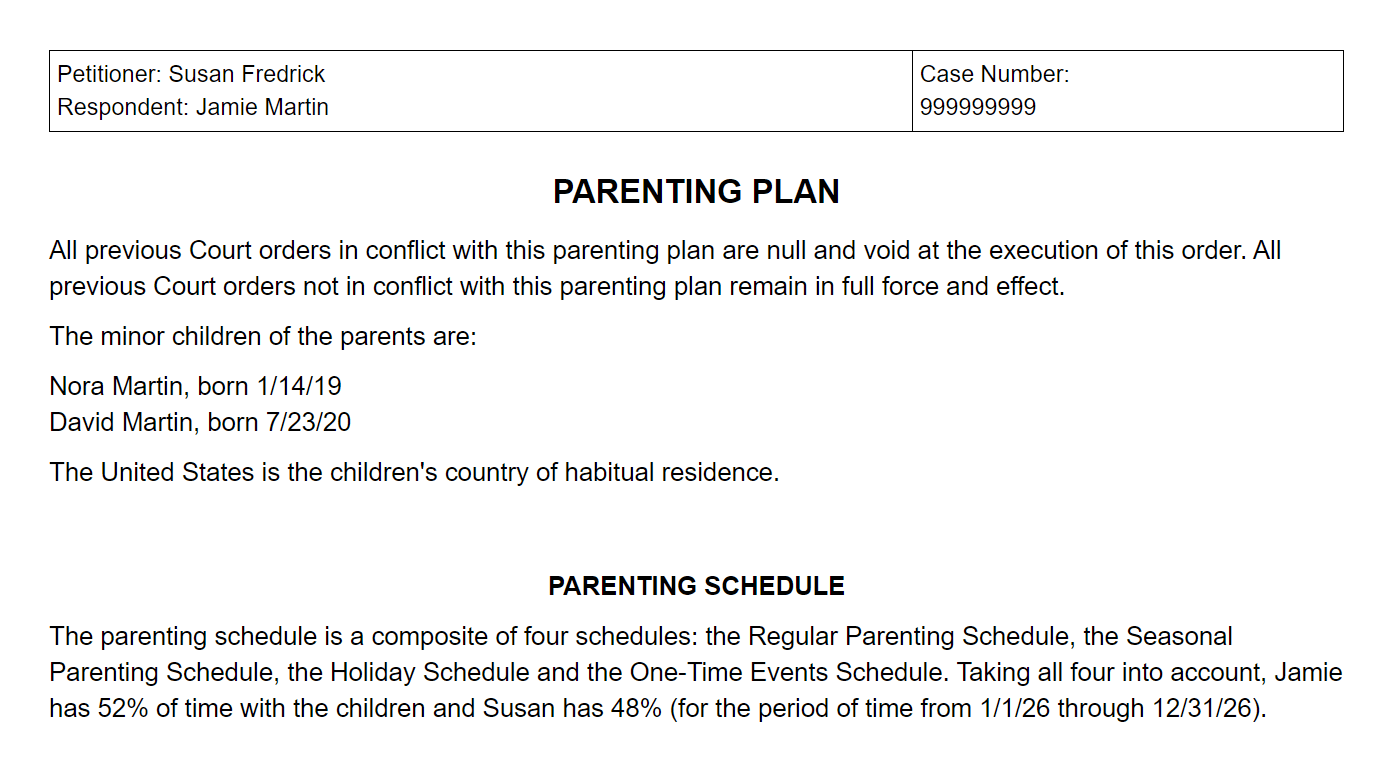
Suggested information to include
You aren't required to have information beyond physical and legal custody in your plan, but courts encourage parents to include as much detail as possible.
To avoid later stress and confusion, try to think of all potential disagreements ahead of time, then stipulate in your plan how you'll handle them.
You can use the Custody X Change parenting plan template to walk you through possible situations. Here's what California family lawyers recommend including in your plan:
Exchanges
It's wise to specify that the receiving parent will pick the child up. The parent who's already with the children can often be distracted or want more time, so custody exchanges are more likely to happen punctually when the receiving parent does the transporting. (This doesn't apply parents who meet at neutral locations or use a third party to exchange their children.)
Response time
Plans should always state how long a parent must wait after contacting the other before they can act alone.
For example: If parents agreed to make decisions about extracurriculars together, but one hasn't replied to an email about a new karate class, how long before the other parent can sign the kids up?
Child care
Some plans require that the other parent get the option to care for the kids before a babysitter is contacted. If you want to include this provision in your plan, set a minimum amount of child care time required to trigger it. Many judges hesitate to approve plans that include this "right of first refusal" for child care lasting less than six hours.
Expenses
In California, parents with similar incomes usually split large expenses evenly ― medical bills, school tuition, day care, etc. Each parent covers smaller, daily costs when the child is in their care, and child support payments even out these expenses. Whether you like this setup or want a different one, specify in your plan.
Health insurance
Will you have the child on one parent's health insurance plan or on both parents' plans? Both arrangements are common in California, so decide which works for you and write it in your parenting plan.
Special circumstances
Your parenting plan should be unique to your family and reflect your child's specific needs. You can customize it to suit any situation.
Consider including specialized provisions in your plan, such as:
- Provisions for parents who live far apart
- Provisions for parents who live in different states
- Provisions when one parent's time with the child must be supervised
Factors the court will consider
The judge will turn a plan into a court order if it ensures the health, safety, and welfare of your child. He or she will look at the following to decide if your plan is in the child's best interest:
- Your child's age
- Your child's health
- Your child's relationship with each parent
- Your child's preference (if he or she is mature enough)
- Your child's ties to school, home, and community
- Each parent's ability to care for the child
- Any evidence or history of drug or alcohol abuse by a parent
- Any history of abuse committed by a parent against the other parent or a past partner
- Any evidence or history of a parent abusing a child
More guidance
For more guidance as you create your parenting plan, see these resources:
- Age guidelines for parenting plans and schedules
- Temporary parenting plans and schedules
- Modifying your parenting plan and schedule
- California Courts self-help information for making a parenting plan
The easiest way to make a parenting plan
When you're writing a parenting plan, it's critical you use airtight language that leaves no room for interpretation. You must also be careful not to omit any information required by the court.
If you hire a lawyer or mediator, they'll write up the plan and ensure it meets the court's requirements.
If you write your own plan, use technology to take guesswork out of the equation. The parenting plan template in the Custody X Change online app walks you through each step.
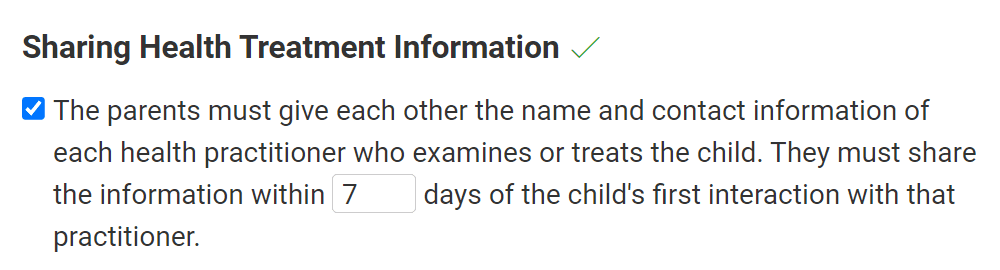
The result is a professional document that demonstrates your competence as a parent from the first glance.
The easiest and most reliable way to make a parenting plan is with Custody X Change.
Visualize your schedule. Get a written parenting plan. Calculate your parenting time.