
Examples of Parenting Time Schedules Part 3

In continuing to look at examples of parenting time schedules for your parenting agreement, we’re going to look at some common schedules where the parents have more equal time with the children.

Alternating Weeks

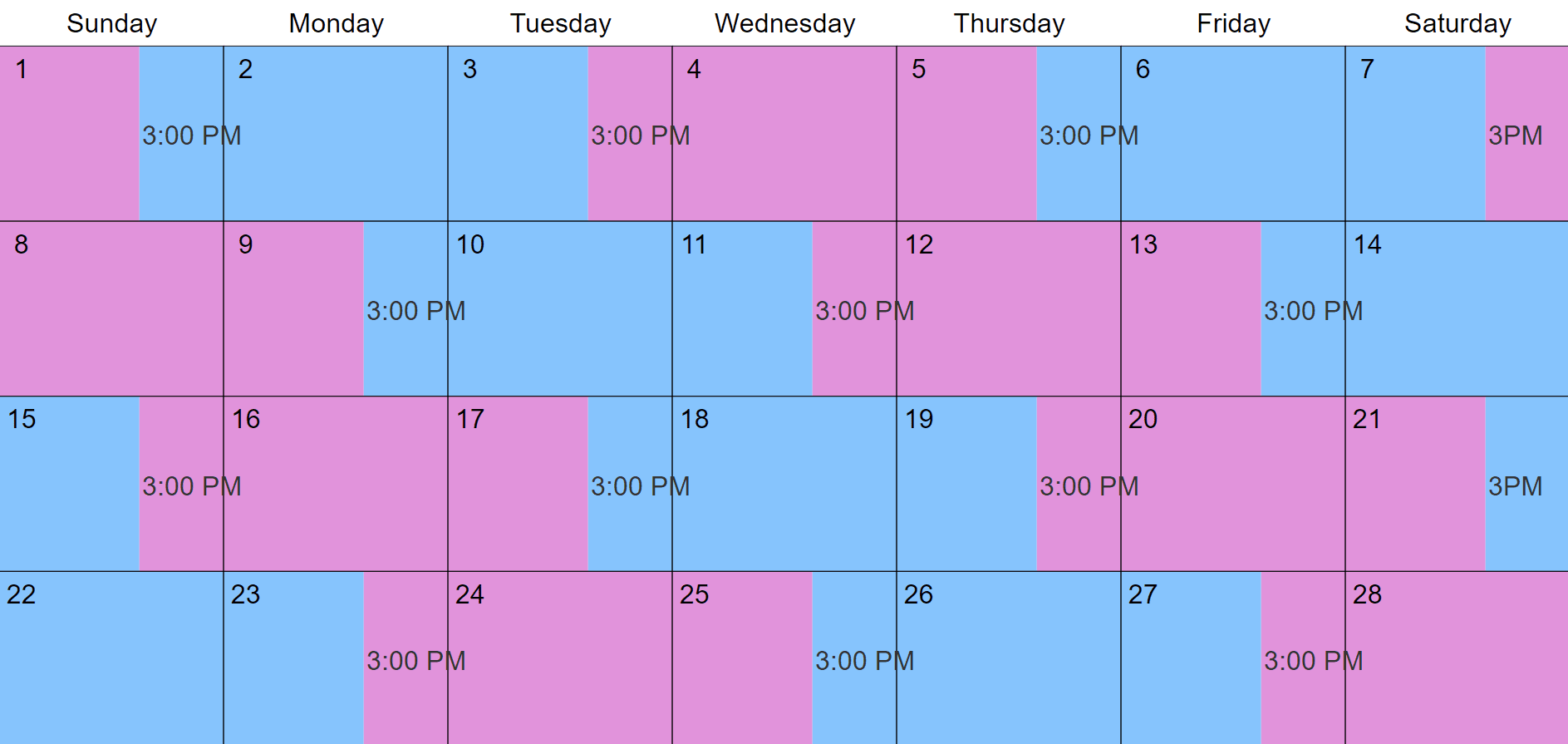
In this schedule, the parents simply alternate weeks with the children. You can choose what day to switch, and you can also alternate every two weeks.

Alternating Weeks with Mid-Week Visits

This schedule is the same as above, but each parent has a visit sometime during the week. The visit can be an overnight visit (shown) or an evening visit. The parents can also schedule multiple visits.

2-2-3 Parenting Time Schedule

In this schedule, one parent has the children for 2 days, the other parent then has the child for 2 days, and then the child goes back to the first parent for 3 days. The schedule keeps rotating, and the child goes to the second parent for 2 days, the first parent for 2 days, and the second parent for 3 days.

In the final post in this series, we’ll take a look at some other common joint custody schedules.

Categories: Parenting Time Schedule

Sample Parenting Time Schedules Part 2

Let’s look at some more sample parenting time schedules. This post will continue looking at schedules where the child lives primarily with one parent and visits the other parent. These schedules are all variations on the basic weekend schedule (where the child lives with one parent during the week and visits the other parent on weekends, alternating weekends, and during the evenings and on weekends).

Alternating Extended Weekends

In this schedule, the parent has visitation alternating weekends, but the weekends are extended. This calendar shows the extension on a Monday, but the extended weekend could also start on Thursday night or Friday morning.

Alternating Extended Weekends with an Overnight or Evening Visit

This schedule is the same as above, except the other parent also has a visit sometime during the week. The visit can be an evening visit for a few hours, or an overnight visit (shown). Parents can also schedule multiple visits.

1st, 3rd, and 5th Weekends

One parent has the children all the time except on the 1st, 3rd, and 5th weekends. There are several variations to this schedule as well. The visitation can occur on the 2nd, 4th, and 5th weekend or the parents can alternate the 5th weekend. Mid-week visits can also be added.

In the next post, we’ll look at parenting time schedules where the parents have almost equal time with the children.

Categories: Parenting Time Schedule

Example Parenting Time Schedules Part 1

Setting up a parenting time schedule is an enormous task for divorced and separated parents. Many times, parents aren’t even sure how to begin making the schedule. The most frequent question asked is if there are any common example parenting time schedules. To help with this answer, we’re going to provide a series of posts that show some common schedules. In this first post, we’ll start by looking at some parenting time schedules where the child lives primarily with one parent and visits the other parent (these are also called sole custody schedules).

Every Weekend

In this parenting time schedule, the child lives with one parent during the week and has visitation with the other parent every weekend.

Alternating Weekends

The child lives with one parent during the week and on alternating weekends. The other parent has visitation on alternating weekends.

Alternating Weekends with an Evening Visit

The child lives with one parent during the week and alternating weekends. The other parent has the child on the other weekends and for one evening visit during the week. Parents can have the visit on any evening, and they can also have visits on multiple evenings during the week.

Alternating Weekends with a Weekly Overnight Visit

This parenting time schedule is similar to the one above, except that instead of an evening visit, it is an overnight visit. Again, parents can choose what day of the week to have the overnight and there can be multiple overnight visits. Or parents can have an evening visit and an overnight visit during the week.

In the next post, we’ll look at some more sole custody schedules with some variations on weekend time.

Categories: Parenting Time Schedule

How to Get the Other Parent to Follow the Custody Agreement

Some of the most frequent stories we hear are from divorced and separated parents who are trying to follow the custody agreement, but they are having a hard time because the other parent isn’t following it. Is there any way to encourage the other parent to follow the agreement better?

First, you need to know that if the other parent violates the terms and conditions of the agreement, he/she can be held in contempt of court. There really isn’t any excuse for not following the agreement if it has been approved in court. Once the court accepts an agreement, it becomes a custody order. This makes it legally binding.

So, you should keep track of when the other parent doesn’t follow the order. If necessary, you can take the parent to court and prove that they didn’t follow the order. The court will then impose a fine or other penalty.

But, you may not want to go to court right away. If you are looking for a less drastic solution, there are some things you can try instead of rushing off to court.

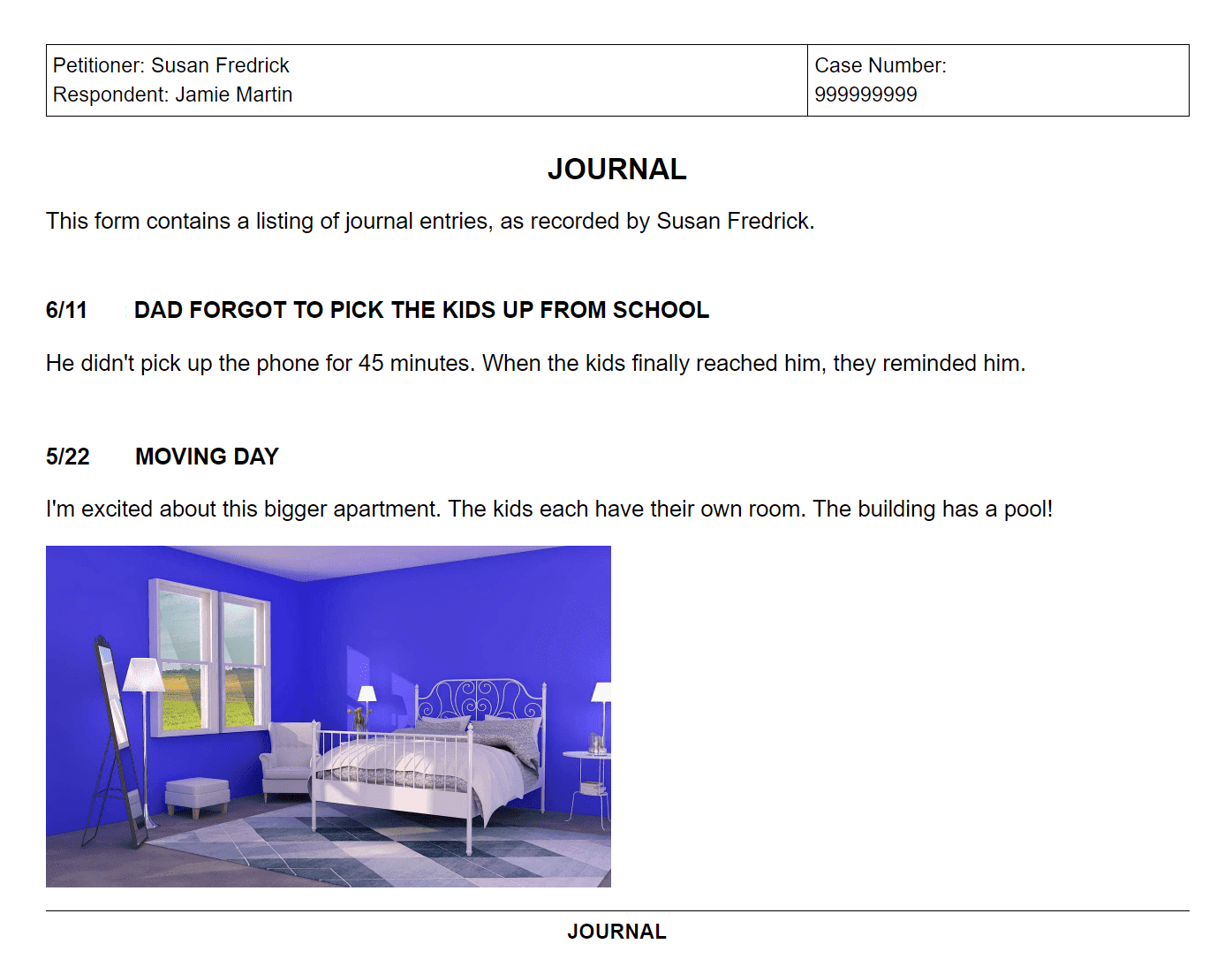
To begin, you need to keep a journal or log book about the infractions. If the other parent is repeatedly late about dropping the child off for visitation, you should keep notes about the actual visitation time. After a few times, you can talk with the other parent and show him/her the discrepancy in time. Depending on the amount of time that is missing, you could suggest an extra visit to make up for it. Perhaps you can make a deal where when the other parent is late, you’ll keep track of the time and get an extra visit at the end of the month.

No matter what the issue is, if you have records of it and talk to the other parent you can explain what is going on with evidence. If the other parent refuses to discuss the issue, you can explain that the only other option you have is to go to court. This should help you resolve the matter.

Categories: Custody Agreements

Visitation Timeshare Calculator

What’s a visitation timeshare calculator? Can it help you in your custody situation?

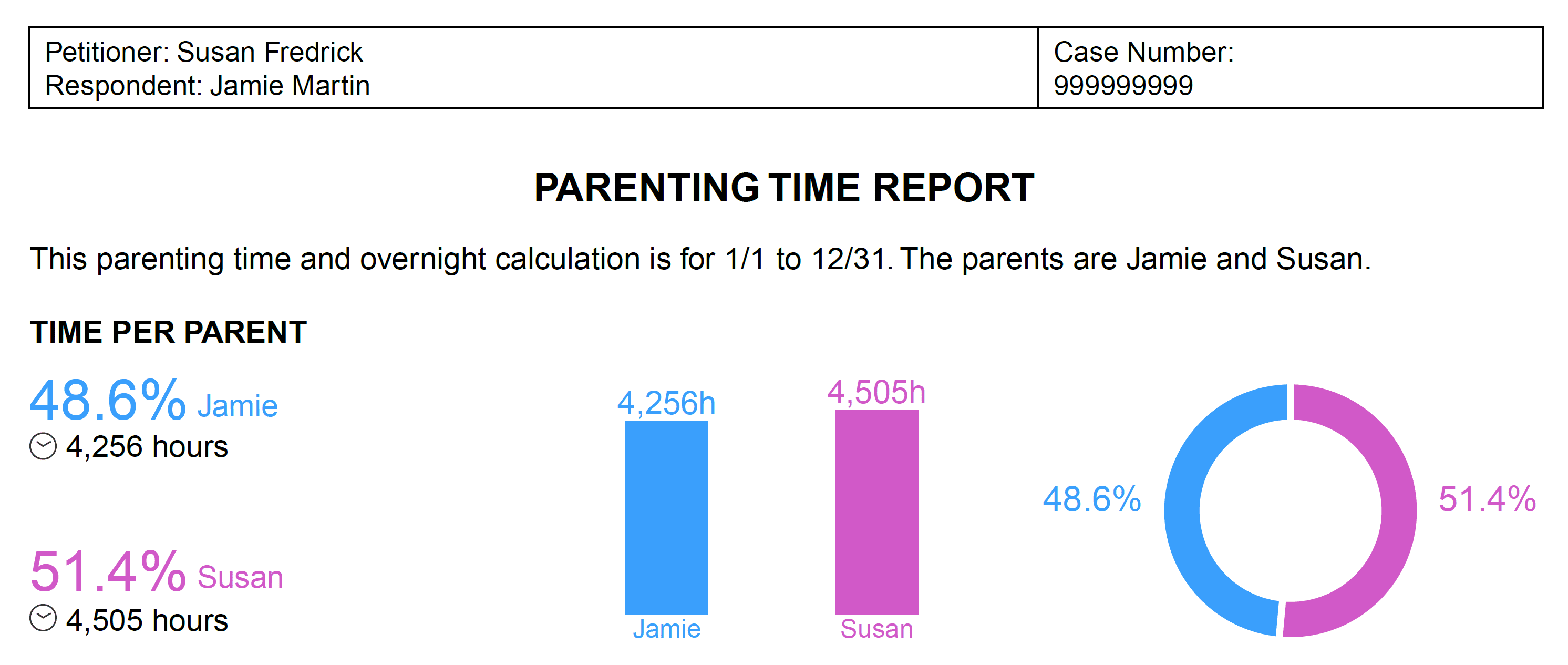
A visitation timeshare calculator calculates the percentage of time that the mother and father have with the children. So, if you have a this calculator when you set up your custody and visitation schedule, you will know the exact amount of time that each parent has with the children. This is very helpful for parents as they set up a schedule, and it is also necessary to figure out child support. Every state determines child support a little differently, but pretty much every state uses some variation of the visitation timeshare in the calculation. Generally speaking, the parent who has the most time with the child gets child support. In figuring out what the other parent will pay, the court factors in the visitation timeshare of that parent–the more time the parent has with the children, the less child support that parent pays.

Let’s look at a true examples of how a parenting timeshare calculator have helped people in their custody situations. Doug Conway, from Fargo, North Dakota, shared this story:

“I entered into what seemed to be a reasonable mediated settlement and was due to sign it in a few days. I was uncertain about some of the provisions of the visitation schedule as proposed, so I searched the internet for some way to help me sort it all out, and I found Custody X Change [which has a visitation timeshare calculator]. I downloaded the free trial, entered the terms of the proposed visitation schedule, and was shocked at what I saw. There in clear graphic as well as report views, Custody X Change showed me how the visitation schedule as proposed would result in far less time with my son than the paperwork had led me to believe. It also revealed multiple weekends in a row without any visitation at all, due to the proposed holiday and special event schedule. I printed off the schedule and brought it to the next mediation meeting. As a result, I was able to change the proposed schedule to avoid the problems. Without Custody X Change, I would have signed the proposed agreement and found out about the problems and conflicts only after it was too late. Custody X Change took the raw date that I had been staring at for days, and in a few minutes, gave me a crystal clear picture of the resulting schedule.”

Doug was able to use the timeshare calculator in Custody X Change to help him see the true picture of the schedule. This is one of the benefits of the software–you can enter in your schedule and see the exact time that you have with the children. Then you can know for certain that you have a shared schedule, or that you have fair visitation time.

Categories: child custody

Sample Parenting Agreements Part 2

In the last post we explored some sample custody and visitation schedules. In this part of the sample parenting agreements series, we’ll look at the second big section of the parenting agreement.

Custody Provisions and Stipulations

Once you have your schedule all figured out, you can move on to the custody provisions and stipulations. This is a vital part of your agreement because it sets up important custody rules and guidelines for your situation. The first thing to do is find out if your state requires any specific provisions in the agreement. The most common required provisions are: how parents will resolve future disputes, how changes will be made to the agreement, how the parents will handle visitation, what happens if a parent doesn’t follow the agreement, information about legal custody, etc.

After you’ve included the required provisions, take some time to think if you want to add any other stipulations. To decide this, think about the issue that causes the most problems. Then, address the issue and present a solution in the provision. For example, if you and the other parent argue about late visitation then you could include a provision that has a consequence for arriving late for visitation.

Some sample provisions that people include in their parenting agreement are:

  • A parent must give the other parent a travel itinerary when traveling with the child,
  • Each parent is allowed to take the child on vacation for a week during the year if they give thirty days notice to the other parent,
  • A parent must inform the other parent when getting a passport for the child,
  • Each parent is required to give the other parent an accurate address and telephone number,
  • The mother and father must inform the other parent if they move,
  • The parents must both agree on extra-curricular activities the child will be involved in,
  • The parent must be informed if another adult is living in the house with the child,
  • Each parent has access to the child’s records, etc.

There are countless provisions and stipulations that can enhance the agreement. Be sure to include ones that can help you.

Categories: Parenting Agreement

Custody X Change 3.15

Custody X Change version 3.15 has been released. This update changes the principle interaction with the repeating cycle and vacations.  The new interactions are:

Left Click: Does nothing (previously it swapped up to a 24-hour period).
Left-Click & Drag: Swap time between parents (same as before)
Right-Click: Open the new “Day Magnification”.
Right-Click & Drag: Does nothing (though it will be used to add 3rd-party time when I finish that)

This new Day Magnification feature makes it easy to get the exact time you want without the frustration of mouse precision.

This feature had been requested by a customer, and I think it adds a lot to the ease of use of the software.  And if you have any feature suggestions, please send me an email and let me know.

If you haven’t tried Custody X Change, download the free edition of the program by filling out the box on the left. You’ll quickly discover that that program makes it easy (especially with the new feature in 3.15) to create your parenting plan and custody agreement.

NOTE: If you did not qualify for the version 3 upgrade (parents who purchased before July 11th 2009), do not install this update.  It will invalidate your old key and you will have to login to create a new one.

Categories: Custody X Change

Sample Parenting Agreements Part 1

Many parents feel confused and overwhelmed as they begin the process of making their parenting agreement. This is understandable, because there is a lot of information about parenting agreements that parents need to process. Many states also have different requirements for the agreement, and this can make it even more confusing.

To help parents get started, here are some sample parenting agreements. We’ll look at some of the different parts of the agreements and give examples of them. Hopefully this can make things a little more clear, and give some good ideas about how to begin the agreement.

The Custody and Visitation Schedule

This is the first part of the agreement, and it can also be the trickiest part to set up. The custody and visitation schedule, also called the parenting time schedule, outlines the time that each parent has with the children. For the schedule parents can choose between a sole or joint custody arrangement. In the sole custody arrangement, the child lives primarily with one parent and visits the other parent. In a joint custody arrangement, the child spends time living with both parents (a joint arrangement doesn’t necessarily mean that each parent has fifty percent of the time with the child–parents just try to share the time more equally).

Sample Sole Custody Schedules

  • Every Weekend: In this schedule, one parent has the child on the weekdays, and the other parent has custody every weekend.
  • Alternating Weekends: One parent has the child on the weekdays and every other weekend, the other parent has them on the other weekends.
  • Alternating Weekends with a weekday visit: One parent has the child weekdays and alternating weekends, the other parent has alternating weekends and an evening visit during the week.
  • Alternating Weekends with an overnight visit: Same as above, only the visit is overnight.
  • Extended Weekends: This can go with any of the above schedule. The parent who has weekends has extended weekends–they start early (on Thursday) and/or end Monday night or Tues. morning.
  • 1st, 3rd, 5th Weekends or 2nd, 4th, 5th: A parent has visitation on these weekends.

Example Joint Custody Schedules

  • Alternating Weeks: Parents alternate weeks of custody
  • Multiple overnight and evening visits: The child spends significant evening and overnight time with both parents.
  • 2-2-5-5: The child spends two days with the first parent, goes to the second parent for two days, returns for five days with the first parent and then spends five days with the second parent.
  • 3-3-4-4: Same as above, only it’s 3 and four days.

In Part 2, we’ll look at samples of the next section of the parenting plan: custody provisions and stipulations.

Categories: Parenting Agreement

A Visitation Timeshare Calculator and Lowering Child Support Payments

Can a visitation timeshare calculator help you lower child support payments?

Well, a visitation timeshare calculator is something that calculates the timeshare percentage that each parent has with the children. For example, if a mother and father both split the custody time exactly in half, the timeshare percentage of each parent is fifty percent. However, because most custody and visitation schedules are not that simple, the visitation timeshare calculation is quite difficult to figure out. Parents can do the calculations themselves, or they can get a computer program (like Custody X Change) to do them.

The timeshare calculation is important because it affects the child support calculation. Pretty much every state uses some form of the timeshare percentage to determine child support (remember that every state calculates child support differently–check your state laws to know exactly how much the timeshare calculation matters). However, since this number is hard to determine, many courts and attorneys simply estimate the percentage. This means that there is a good chance that you are paying the wrong amount of child support.

So, the first step in lowering child support payments is to figure out the correct amount of support you’re supposed to pay. After that, you can use the timeshare calculator and explore some options in your visitation schedule to give you more time with the children. If your visitation timeshare increases, you’ll pay less child support. And, you’ll have more time with your children.

Categories: Child Support Software

New Features in Custody X Change

There are some exciting new features in Custody X Change!

In case you haven’t heard, Custody X Change is great custody software that lets parents set up their parenting plans and custody agreements. The software makes it easy to create your ideal custody and visitation schedule and add provisions. Then you can print out professional documents with your entire plan. And, you can export all of your information to Word, Excel, and PDF. After you make the plan, you can also use the program to track visitation time and keep a custody journal.

And, now you can do more. In addition to exporting to Word, PDF, and Excel, the parenting time calendar can now be exported to be sync’ed with external programs and devices. This uses an established calendar standard, so it should work with pretty much anything, including:

  • Google Calendar
  • Yahoo! Calendar
  • Windows Live
  • Outlook
  • iPhone
  • BlackBerry
  • Palm / PDAs
  • Excel

Once you export it, just follow the instructions from whichever program / device on how to import a calendar file. (This feature is available to the Deluxe / Professional versions only.)

And, you can now get the perfect holiday schedule with holiday localizations. During the install, you can now pick what holiday set you want loaded.  The current options are: United States, Canada, & Australia.  (This is available to all versions of the software.)

You can download the free edition of the software to find out how it can help your situation.

Categories: Custody X Change

Parenting Time Schedules

What should go into your parenting time schedule?

The parenting time schedule is the calendar that shows when the child is with each parent. It is also commonly called the custody and visitation schedule. Some states call it the parenting time schedule because they want to get away from the terms “custody” and “visitation”. There really isn’t any difference–just semantics. You do want to find out what type of language your state prefers, though, because that impacts the parenting plan and custody agreement. Some courts won’t accept a plan that says custody and visitation schedule–they want the plan to say parenting time schedule.

Anyway, once you have the language figured out, you can move on to actually created the schedule. Parenting time schedules generally include three parts:

  • The repeating cycle of parenting time,
  • A holiday schedule, and
  • Vacation time and special events

The repeating cycle of parenting time is the foundation for the schedule. This is the basic arrangement of when the child is with each parent. It is usually easiest for the parents to figure out arrangements for a few weeks, and then repeat those weeks of arrangements through the year.

The holiday schedule shows where the child is during the holidays. Parents can make this schedule according to what holidays they want to include. They need to determine the length of the holiday–when it starts and stops–and then divide the holidays between the parents.

Vacation time can go into the schedule in a few ways. Sometimes parents change the repeating cycle during the child’s vacations from school. So, for summer break the mother and father may shift the regular schedule. Parents can also add time in the schedule when they are allowed to take the child on vacation. The mother and father can schedule this right into the schedule, or they can include this as a provision in their parenting plan. Special events are any times that the normal schedule changes. Parents can add these to the schedule as they come up.

Categories: Parenting Time Schedule

Parenting Agreements

A parenting agreement is another word for custody agreement and parenting plan.

Basically, your parenting agreement should contain the information about your child custody arrangements after you and the other parent divorce or separate. You make this agreement so that the state you live in knows that your child will still be cared for after the parents are separated. The agreement is also helpful for you and the other parent–it lets you specify how you and the other parent will share the responsibility of caring for the child.

Almost every state requires that divorced parents submit parenting agreements to the court. Some states have specific requirements for the agreement, and some states leave it all up to the parents. You should check your local custody laws to make sure that your agreement has everything it needs to. There are even some counties that have regulations–so you need to check with those laws as well.

Most states accept an agreement that contains a custody and visitation schedule and parenting provisions. The parenting provisions should contain the information about legal custody that you and the other parent have decided. You may also need to add provisions based on what the state mandates. Many states require that parents add provisions to the agreement that cover how the parents will resolve disputes, how the parents will make changes to the plan, how the parents will handle visitation transportation, etc. These are actually good provisions to put in any agreement–even if your state doesn’t have the requirement.

Your parenting agreement should be made in the best interest of the child. This is a law in every state–all custody decisions are made with the child’s best welfare in mind. Most of the time it is best for the child to have frequent contact and visitation with both parents. More and more states have joint custody as the best default option. If you want a different type of arrangement, you need to show how it is in the child’s best interest.

Categories: Parenting Agreement

Spring Break!

Well, spring is here, and that means spring break is just around the corner. Many people have a visitation schedule for spring break, which means that a non-custodial parent has more time during the break. If you have the kids for spring break, here is an idea to enjoy the time.

You don’t have to leave to have fun. Many parents, especially a non-custodial parent who doesn’t see the children often, feel pressure to do something big for holidays or breaks. This, of course, is fun and everyone enjoys it. However, it isn’t necessary to travel or spend a lot of money to have fun during spring break. If you have older children, it could be fun to look around where you live and see if there are things to do there. Play the tourist where you live, and you’ll discover a lot of fun things to do.

If you have younger children, they are happy to spend time with you. Plan some fun activities close to home–go swimming (if warm enough), play outside, sleep in the yard in a tent, etc. If the weather is still cold, you can have fun by playing games inside, watching movies, going to the library, etc.

A fun family activity is anything that you and the children do together. So, if you want to have a good meal, instead of going out, take your child to the grocery store and get groceries. Then come home and make dinner together. This is a good activity because you are working on something together and there is a fun result.

The same is true of any project around the house. Work with your children on a home project and you’ll have a good time together. You can build a birdhouse together, paint a wall, or build something else. Keep the project reasonable and appropriate to your child’s age.

You can have fun with the kids and not spend too much money during spring break. Focus on the children and staying close to home, and you’ll have a spring break that everyone loves.

Categories: Child Visitation

Washington DC Child Custody

The Washington DC laws about child custody are found in Title 16, Chapter 9 of the Washington DC Official Code. Within these laws, parents can find the necessary information they need to make a Washington DC parenting plan. Here is a highlight of some of the more important laws.

Joint Custody

A Washington DC custody agreement can have a sole or joint custody arrangement. However, there is a presumption in DC that joint custody is in the best interest of the child. If a parent wants a different agreement, s/he needs to show that a sole custody arrangement is best for the child and that a joint arrangement would be harmful to the child.

Best Interest of the Child

As parents make a Washington DC custody schedule, they need to make it in the best interest of the child. This is the standard that the courts use when making any custody decisions, and it ensures that the schedule will be accepted by the court. When parents agree on a Washington DC visitation schedule, the court will accept it. If the custody situation is contested, the court has authority to decide the schedule. When determining what kind of schedule is in the child’s best interest, the court will look at:

  • wishes of the child and the parents;
  • the interaction and interrelationship between the child and the parents, the child and other siblings, and the child and other significant family members;
  • the willingness of the parents to share custody;
  • the prior involvement of each parent with the child;
  • the potential disruption of the child’s school and social life;
  • the geographic proximity of the parents;
  • the demands of parental employment;
  • the age and number of children;
  • the sincerity of each parent’s request;
  • the parent’s ability to financially support a joint custody arrangement;
  • and the benefit to the parents
Categories: State custody information

Wyoming Child Custody

Wyoming custody laws are found in Chapter 20 of Title 20 in the Wyoming Statutes Annotated. Here is a highlight of some of the laws–especially those that affect the Wyoming parenting plan.

Types of Custody

The state allows parents to have any combination of joint or shared custody or a sole custody agreement. A joint or shared arrangement means that parents divide the legal and physical responsibilities of parenting between them. They can divide this however they choose and they should define their divisions in their Wyoming custody agreement. In a sole custody arrangement, one parent primarily cares for the children while the other parent has visitation.

Authority of the Court

Generally, when parents work together to make a Wyoming custody schedule, the court will accept it. When the terms and conditions of custody are contested, the state gives authority to the court to make decisions about the custody decision. This means that the court can create a parenting plan or custody schedule and the parents will have to follow it.

Best Interest of the Child

When the court makes any custody decisions, it does so in the best interest of the child. Parents should also focus on the child’s best interest and make a Wyoming visitation schedule that meets the needs of the child and promotes the child’s welfare. Here are some of the factors that the court will consider when determining what custody arrangements are in the best interest of the child.

  • The quality of the relationship each child has with each parent.
  • The ability of each parent to provide adequate care for each child.
  • The relative competency and fitness of each parent.
  • Each parent’s willingness to accept all responsibilities of parenting.
  • How the parents and each child can best maintain and strengthen a relationship with each other.
  • The ability and willingness of each parent to allow the other to provide care without intrusion.
  • Geographic distance between the parents’ residences.
  • The current physical and mental ability of each parent to care for each child.
  • Any other factors the court deems necessary and relevant.
Categories: State custody information
Parenting plans & custody agreements:
  • AL
  • AK
  • AZ
  • AR
  • CA
  • CO
  • CT
  • DE
  • FL
  • GA
  • HI
  • ID
  • IL
  • IN
  • IA
  • KS
  • KY
  • LA
  • ME
  • MD
  • MA
  • MI
  • MN
  • MS
  • MO
  • MT
  • NE
  • NV
  • NH
  • NJ
  • NM
  • NY
  • NC
  • ND
  • OH
  • OK
  • OR
  • PA
  • RI
  • SC
  • SD
  • TN
  • TX
  • UT
  • VT
  • VA
  • WA
  • DC
  • WV
  • WI
  • WY
  • Canada:
  • AB
  • BC
  • MB
  • NB
  • ON
  • QC
  • SK
  • Australia
  • Custody & visitation schedules:
  • AL
  • AK
  • AZ
  • AR
  • CA
  • CO
  • CT
  • DE
  • FL
  • GA
  • HI
  • ID
  • IL
  • IN
  • IA
  • KS
  • KY
  • LA
  • ME
  • MD
  • MA
  • MI
  • MN
  • MS
  • MO
  • MT
  • NE
  • NV
  • NH
  • NJ
  • NM
  • NY
  • NC
  • ND
  • OH
  • OK
  • OR
  • PA
  • RI
  • SC
  • SD
  • TN
  • TX
  • UT
  • VT
  • VA
  • WA
  • DC
  • WV
  • WI
  • WY
  • Canada:
  • AB
  • BC
  • MB
  • NB
  • ON
  • QC
  • SK
  • Custody X Change is the leading software for creating and managing custody agreements.

    Download it for Free

    I can't thank you enough for the software. The Parenting Plan passed with flying colors in the courts and with my ex. Now the best part is that I am using the deluxe edition to adjust and record my times. Thanks again.

    Gabriella Selmi
    Granbury, TX

    Without this software, I would have signed the proposed agreement and found out about the problems and conflicts only after it was too late. Custody X Change took the raw data I had stared at for days, and in a few minutes, gave me a crystal clear picture of the resulting schedule. Custody X Change is a must-have resource for parents and attorneys working with visitation issues.

    Doug Conway
    Fargo, ND

    Try Custody X Change for Free:

    No credit card required. Nothing to cancel.
    *Custody X Change is Windows-only software. See the FAQ for information about Macs, tablets, & phones.
    *You'll receive the download link in your email so you can download it to your Windows computer later.

    What you get:

    The free download does everything except printing, exporting and calculating.

    Close