
About Us | Sign In | Contact Us
Custody X Change Logo

Parenting Plan Template

Custody X Change provides a great parenting plan template for parents who are creating their custody agreement.

template

This is a screen shot of the tabs in Custody X Change. In the software, you simply click on the tab to create that part of your parenting plan. Let’s briefly go over each part of the template.

1. Repeating Cycle. In this tab you set up your repeating cycle that the computer applies to the whole year. You can put in your own custom cycle or pick from a list of common cycles.

2. Vacations. You can enter in the specific dates that each parent can take the children on vacation, or you can put in an unspecified vacation clause in your agreement.

3. Holidays. Custody X Change provides a comprehensive list of common holidays people put in their custody and visitation schedules. You simply click on the holidays you want included and assign them to the parent who has custody. You also put in the times the holiday starts and stops.

holiday

4. Calendar. When you open the calendar you will see the repeating cycle and also any holidays you’ve entered. In this tab you can also add in any special events or other times when the custody changes. You simply click on the day to add the time.

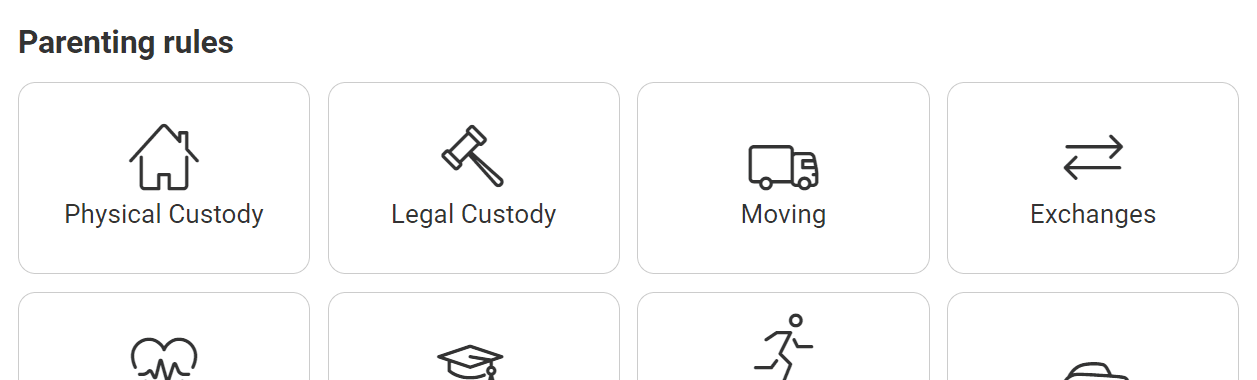
5. Parenting Provisions. Custody X Change gives you a detailed list of parenting provisions to put in your plan. You simply check the ones you want. If you want provisions that aren’t listed, you can add your own.

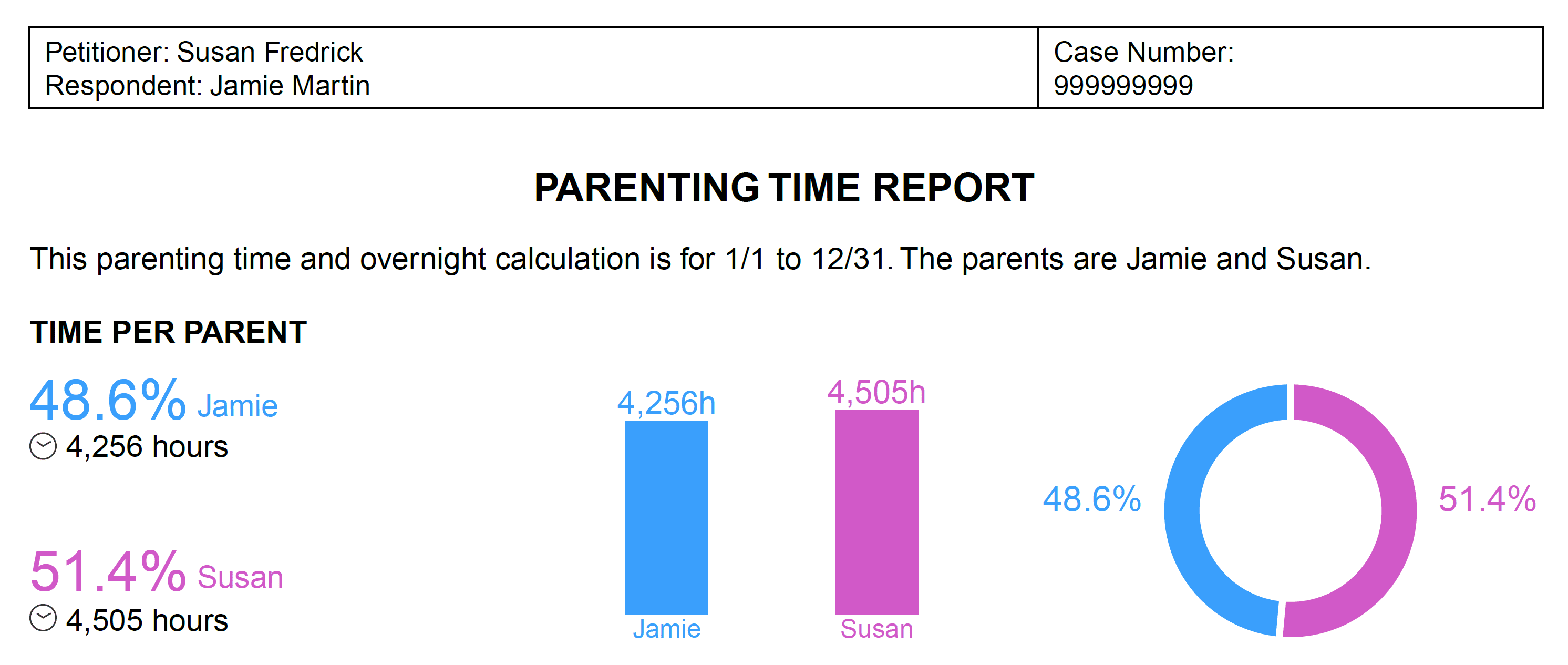
6. Reports. You can print out your entire parenting plan. This includes reports that give a detailed account of the time-share percentage that each parent has with the children. There is also a report that spells out the custody and holiday schedule, and includes the parenting provisions.

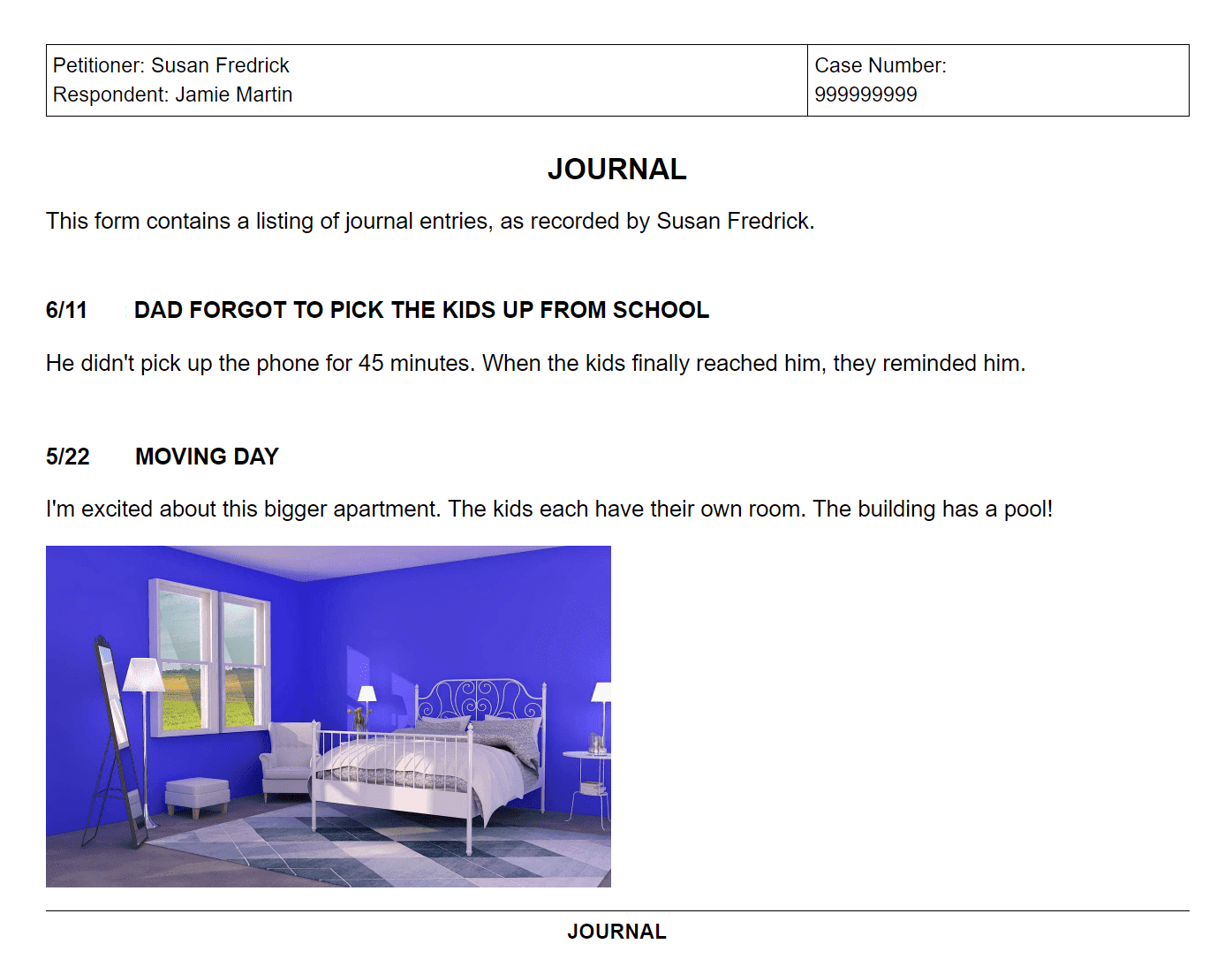
7. Tracking. After you’ve followed the parenting plan template and your plan is in place, you can use the final tab to keep track of what actually happens. This also prints a report that shows any differences to the schedule. You can also keep notes in this tab.

Remember that you can download a free 30 day trial of Custody X Change to see how it can help you.

Categories: Uncategorized

Step Parenting and Child Custody

Step parenting brings a host of challenges to the step parent. Some of those challenges arise from complications with the child custody situation. Here are some tips for step parents about coping with some of the child custody difficulties.

1. Don’t bad mouth the child’s other parent in front of the child. If the parents are having problems with child custody, there will probably be ample opportunity to be angry and frustrated with the child’s other parent. However, it is imperative that you avoid saying negative things about that parent in front of the children. It doesn’t help the situation and your words can be used against you (the child may tell the other parent what you said). Many times your angry statements alienate the step children. The odds are pretty good that you’ll be upset with the other parent, so you need to learn to talk to an objective outsider, write down your feelings, or discuss things in private with your spouse.

2. Accept the situation. Many times step parents come into a custody situation and they feel like everything needs to change. They may feel like their spouse is being taken advantage of or that the other parent isn’t playing fair. As a step parent you simply have to accept the fact that this is the situation–and it won’t change overnight. Continually pointing out everything that is wrong with the situation won’t help things. Instead, pick one or two things that you feel should change. Discuss in depth with your spouse about why things are the way they are (there are likely many reasons you’re not aware of) and talk about ways the custody situation could improve. Work slowly to make improvements.

3. The child’s other parent will be part of your life. As a step parent, you married into a situation where there will always be another parent in the background. Don’t think that person will just disappear or that they won’t have any impact on your family. Be prepared to deal with things the best way you can and remember to keep the child’s welfare first.

Step parenting is very rewarding and has great benefits. Hopefully the child custody issues can be worked out so that everyone can enjoy things more.

Categories: Step Parenting

Help for Child Custody Issues

Divorcing parents are going to need help figuring out all of their child custody issues. Fortunately, there are many resources for parents searching for child custody help. Here’s a brief overview of just some of the ways that parents can get help for their situation.

1. Child custody mediation. Custody mediation is a good way for parents to work out their custody agreement or parenting plan. There is a high success rate in mediation, and the parents get a personal custody coach to work through their issues. The mediator is a neutral party who helps the parents make decisions that are the best for the children. To find a mediator, look in your local phone book, check online, or ask at the courthouse. Some states require that parents go through mediation, and you can save money by going through the court mediator.

2. An attorney. This is usually the resource parents think about. Attorneys are valuable for how much they know about the law, but they are also very expensive. You can usually consult with an attorney before you retain one, and you should do so if you feel like you need a lawyer. If a parent is deeply involved in a custody battle, they may need an attorney to help them.

3. The courthouse. There should be help at the courthouse when you file your custody papers. Some courts even have a little reference library where parents can look up information about the custody laws in their state. You can also ask questions about forms and papers to the people who work at the court.

4. Online information, forums, books and other literature. Many states have pages about their custody laws and you can even find a lot of forms online. You can also find advice and forums to help you figure out some of your custody issues. Even though there is a lot of information available on the internet, don’t forget about your local library. There are numerous books that can help your with child custody and your library may have a reference section where you can learn more about the state laws.

5. Support groups. Many areas have support groups for divorced or divorcing parents that provide custody help. Check in your local paper, at the library or other public place, or online to find out more information about support groups in your area. It can be a great benefit to meet with people who have gone or are going through a similar situation that you are. And, you can get good advice about how to handle your custody situation.

6. Custody software. If you need help creating a custody agreement or parenting plan, you can get software (like Custody X Change) to help you. This can be a way to take some of the stress out of your situation and create an agreement that works for you.

Categories: Child Custody Help, Child Custody Issues

Child Custody Modification

If you want to change your existing child custody order, then you need to go through a process to get it modified. Now, every state has different laws and procedures that govern child custody modifications, so if you want to change your custody agreement you need to find out the specific laws where you live. But, there are some general principles about how to get a child custody modification that help regardless of where you live. Here are a few suggestions to get you started.

If you want your custody order modified, you need to go through the courts. However, there are two ways to get your change accepted by the courts. If you and the other parent agree on the modification, you simply file some papers and the court accepts the change. If you and the other parent do not agree on the modification, a court date will be scheduled where both parents present their side of the case. The court will then decide if the order will be changed.

So, the first thing to do if you want a child custody modification is to approach the other parent and find out what they think. Do some preparation so you can fully explain the change you want, why you want it, and how the change will help the child. Listen to the other parent and make some compromises to the change if needed. If you can both agree on a new schedule or arrangement it will make things a lot easier.

However, if the other parent won’t discuss the issue and refuses to make any changes, you will need to prepare to present your case in court. You may want to consult with or hire an attorney to help you. You will basically need to prove to the court that the changes you are suggesting are in the best interest of the child. If you are asking for a major custody modification (like a change of custodial parent or an overhaul of a custody schedule) you should be prepared to show that the child will be harmed if these changes don’t happen.

The courts like children to have stability so they don’t look favorably on parents who are constantly trying to modify their custody order. Pick your battles carefully and don’t rush to court every chance you get. Be sure you have a good reason for wanting your order changed.

If you are worried about your child’s safety or well-being, you should file for an emergency custody modification. Check with your local courthouse to find out more information, but there should be some way you can immediately meet with a judge to share your concerns and get your child to a safe place.

Categories: Child Custody Modification, Child Custody Order

Grandparents and Child Custody

abuelaIf you’re a grandparent and your child is going through a divorce, you may have some concerns about the child custody situation of your grandchildren. Grandparent’s worries range from wondering how much they’ll get to see their grandchildren after the divorce or trying to decide if they should step in and try to get custody. Here is some general information about grandparent’s child custody and visitation rights.

1. If your child is going through a divorce and trying to resolve the custody situation, you can help by being supportive. Grandparents can play a big part in providing emotional and other support to their children and grandchildren at this time. They can listen to their child and offer to help take care of the grandchildren. Grandparents can also help explain things to the grandchildren and show them love and understanding during this difficult time.

2. If you are worried that neither parent is capable of providing good care for the children, you should think about becoming a legal guardian for the children or seeking custody of the kids. A legal guardian has legal responsibility for the children and can make decisions for them. This is usually a good thing for grandparents because the parents don’t have to give up their rights, but the grandparents can step in and help. Grandparents can also get custody of the grandchildren if they can prove to the court that it is in the children’s best interest to live with them.

3. Grandparents can try to maintain friendly relations with both parents. This needs to be done with care, but grandparents can offer help to both parents with regard to the grandchildren. At least, the grandparents can let the other parent know that they still want to be involved in the grandchildren’s lives and come to extra-curricular or special events. This very much depends on the parents of the children and how each one will respond.

4. A grandma and grandpa will still be able to see their grandchildren anytime their child has them in the child custody schedule. So, they shouldn’t worry too much about never seeing the grandchildren–they will still have opportunities.

Categories: Grandparent Child Custody and Visitation

Parental Custody and Child Visitation

Parental custody is the term used to imply the rights and duties that parents have towards their children. Basically, parents have the obligation to care and provide for their children financially, physically, emotioanally, and otherwise until their children are adults. This responsibility doesn’t change if the parents divorce or separate.

In a custody situation, parental custody can refer to one of the parents living with the children and caring for them the majority of the time. This is also called sole custody. Parents can also share custody in a joint custody situation.

If parental custody is given to one parent, the mother and father need to arrange for child visitation. Child visitation is when the child spends time with the parent who doesn’t have custody. Parents should schedule as much visitation as the child needs to maintain a good relationship with that parent.

It is up to the mother and father when they separate to come up with the right custody and visitation schedule. They should create it based on what their children need. This is how they can continue to support their children.

Categories: Child Visitation, Parental Custody

Child Custody Rights of Mothers and Fathers

Both mothers and fathers need to know their child custody rights when they begin a custody case. If both parents understand their rights and obligations, it can help them to work out the best agreement for the children. Here are some of the basic rights that a mother and father should know.

spring06_013Fathers’ Child Custody Rights

1. A father has equal right to custody and visitation. Sometimes fathers think that the courts will automatically give custody to the mother so they don’t even try. Instead, the father should focus on coming up with an agreement that is the best for the child. This generally means that both parents share custody and have close to equal time with the child. If the case goes to court, the father should be prepared to prove that his plan really is the best for the child.

2. A father has the right to know he is the father of the child. If a couple is unmarried, or a married man has suspicions that his wife’s child isn’t his, a man can requent a paternity test to establish paternity. That way he knows for certain the child he is caring for is his.

3. A father has the right to help in and out of court. A father has the right to seek legal and other help during the case. He also has the right to discuss custody issues with the mother. He can also suggest the father and mother go to mediation to work things out. Sometimes parents forget that there are other ways to solve custody issues than with a lawyer.

4. A father has the right to love and provide for his children. A father has an obligation to care and support his children. It is also his right to protect and watch over them–and to be involved in raising them. He needs to remember this and fight to get the best agreement possible.

DSCN4921Mothers’ Child Custody Rights

1. A mother has the right to custody and visitation. Both parents have equal claim to custody for the children. A mother shouldn’t assume that she’ll be granted custody–nor should she necessarily try for sole custody. A mother should have fair time with her child, but she should also come up with a custody and visitation agreement that works the best for the child. This usually means that the father is also involved. It also means a mother shouldn’t be intimidated and think she shouldn’t fight for custody. She also needs to be in the child’s life.

2. A mother has the right to have the support of the father of the children. An unmarried or divorced mother has the right to help from the father in raising the children. Generally, if the children are living with the mother, the mother has the right for child support from the father. She also has the right to bring a paternity suit against the man she knows is the father and have him court ordered to help if necessary.

3. A mother has the right to seek help for custody issues. A mother can always hire a lawyer if the custody case has turned into a battle. She also has the option to suggest mediation or other ways of working together. A mother should seek help before giving up on her custody situation.

4. A mother has the right to mother her children. Children need the love of their mothers. They also need their support and protection. No matter what the custody arrangement is, a mother has the right to love and provide for her children.

Categories: Child Custody Rights

Answers to Common Child Custody Questions

younghogfans

Parents involved in a child custody situation have a lot of questions. Here are some answers to frequently asked child custody questions.

1. Do I have to hire a lawyer? Parents do not have to hire an attorney for their custody case. Usually if the parents are able to work together on an agreement they don’t really need a lawyer. If the parents do not get along though, and if one parent is being very difficult to work with and wants to pursue full custody, you should probably hire an attorney. You should meet with an attorney and ask questions about your case to find out if they will really be that helpful. And, if you hire an attorney, you can do some things on your own (like develop a parenting plan or custody agreement) that will save you some money in legal fees.

2. What is custody court? Custody court is actually the family law court. This is the same place where you get your divorce. Custody court simply refers to the parents going to the courthouse and meeting with the judge. If the parents agree on their custody case, they judge will accept their plan. If there are disagreements, the parents and their legal counsel will present their cases and the judge will make the final decision about the custody arrangements.

3. How do I make a parenting plan or custody agreement? A parenting plan or custody agreement is the plan that outlines the information about your child custody arrangements. It includes a child custody and visitation schedule, a holiday schedule, and information about special events. It also has any parenting provisions or stipulations that the parents want to include. Parents can also put in other information about child custody that they want.

4. What is child custody mediation? If parents are not able to work out a parenting plan together, they can attend child custody mediation. This is where the parents meet with a neutral third party who knows about custody agreements. They work with the mediator to create their parenting plan so they can get it accepted by the courts. Some states require that parents go to mediation before their court day.

5. How do I win child custody? Winning child custody means that you are happy with the final custody arrangements. The best way to do this is to work with the child’s other parent to create a custody and visitation schedule that both of you like. This way the schedule will last longer and both parents will uphold it. If the other parent is impossible to work with, you should prepare to present your case to the court. You should make the parenting plan you want the court to adopt and then explain why it is best for the child.

Categories: Child Custody Questions

Filing for Temporary Custody

As soon as one parent moves out of the house, or the parents separate, they need to think about what they’re going to do about child custody. Usually during this time the parents are in a stage of waiting. They are waiting to see how the separation turns out, or they are waiting for a divorce to finalize. Since the final circumstances are unclear, the parents should come up with a temporary child custody arrangement. They can do this by filing for temporary custody. Here are some suggestions if you are in the situation.

  • Filing for temporary custody is similar to filing for child custody. You simply go to the courthouse (or you can look for the right forms online) and fill out some papers. In temporary custody, you will be assigned a court date within a week or two. On that date, the parents will meet with the judge in a meeting and they will work out the temporary custody agreement. The judge will put a date when the agreement ends–usually the day of the final custody hearing.
  • To prepare for your temporary custody meeting, you should meet with the other parent and try to work out the custody arrangements you want. You will need to figure out where the children will live and how often they will meet with the other parent.
  • Work out a custody and visitation schedule and calendar that you can show the judge. If you and the other parent can figure it out together and both agree on it, things are easier. It really is best if you both can show the judge what you want–then it will just be accepted.
  • If you and the other parent are not able to work things out, you should prepare to present what you want for temporary custody. Work out a custody and visitation schedule and include a calendar. Mark out the time each parent has with the children and be prepared to explain why this is the best arrangement for the children.
  • Remember that the temporary custody arrangements have a big impact on the permanent child custody arrangements. If the temporary agreement is working for the kids, the courts will usually adopt it as the permanent arrangement. So, don’t accept things for temporary custody that you wouldn’t want to last forever.
Categories: Filing Child Custody, Temporary Child Custody

Using Family Law Software to Set up Joint Custody Agreements

In a joint custody agreement, the parents have about equal time with the children. There are a myriad of ways to set up a joint custody schedule. You can set up an Ackerman plan, a 2/2/5/5 schedule, a 3/3/4/4 schedule, switch custody every other week or every two weeks, etc. One way to make setting up this schedule easier is to use family law software.

There are a few different types of family law software that have been developed. For setting up a custody agreement, parents can get custody family law software. The software make is easier to create joint custody schedules in a few ways.

1. It makes it easy to experiment with ideas. In order to make the best joint schedule for the parents and the children, the parents will need to play around with some different options. Custody software makes it very easy to do this. Custody X Change lets you make as many plans as you want. You can experiment with different repeating cycles and visitation until you find one that works for you.

2. The software can give you an accurate time-share percentage for each parent. While you create a calendar in Custody X Change it constantly gives you the time-share percentage that each parent has with the children. This is especially helpful in joint custody arrangements because the parents can know for sure they aree sharing time equally.

3. You can easily make changes. Usually the parents who have joint custody schedules are a little more flexible with time because they are trying to work together. If the parents need to make a change in the schedule, having it on the computer makes it easy. You don’t need to remake your entire schedule or count all of the days. You simply open the calendar, click a few times, and everything is updated.

Categories: Family Law Software, Joint custody

How Tracking Helps Your Parenting Plan

Here’s a final thought about how tracking can help your parenting plan.

A big benefit that tracking provides is the follow up to both parents agreeing to the plan. Essentially, when the parenting plan is accepted by the court, both parents agree to follow it. If the parents are keeping track of each other, then they will be even more likely to abide by its terms.

To illustrate this point, let’s use the example of you telling your child to clean his/her room. Are they more like to clean their room if you say “You need to clean your room today. I’ll check before you go to bed to make sure it’s done.” or “You need to clean you room today. Really, you can just agree to what I’m saying because I’ll never check up on you.” Your children may prefer the second command, but they will live in a messy room.

It’s the same idea with the parenting plan. Your former spouse will be much more likely to follow it if they know you’re checking up on them and keeping tabs. They will be more careful about returning the kids on time from visits, about paying their child support, and other imporant things.

Once the parenting plan is in place, tracking is the maintenance that can keep it running.

Categories: Parenting Plans, Tracking Visitation

Tracking with Custody X Change

In that last post we discussed why it’s important to keep track of visitation. Here’s the new feature in Custody X Change that makes tracking easy.

The first step is to enter in your custody and visitation schedule. Once you have that completed you can track the visits that have happened. You click on the tracking tab in the software and then you put in a starting date. The program imports your child custody schedule. It’s important to not change your schedule after this because any changes you make in the original schedule will show up as custody deviations in the tracking. This will give you an erroneus report. Here’s what it looks like.

track1

From here it’s easy to track the time. If there was a change in the actual visitation, you merely left click on the day and put in the actual time the visit lasted. You can hold the mouse down and drag to quickly change the time.

In the bottom right corner you can see the updated time-share percentage that each parent has. This will change as your visitation schedule changes.

You can also right click on the day to type in the reason the visitation was changed. This can help you take notes.

You can then print out a report that shows the time-share difference in the scheduled time versus the actual time. You can use this to show the other parent or the court.

If you want to try out Custody X Change, you can sign up for a free 30 day trial and explore all of the features.

Categories: Custody X Change, Tracking Visitation

Importance of Tracking in Child Custody

Last week we revealed the new tracking feature that Custody X Change offers. We’re excited to have this additional feature in the software and we think it can be very useful for parents and their child custody.

Tracking is important for child custody arrangements because parents should be aware of how much actual time they’re spending with their child in comparison with the scheduled time. Let’s say a mother is granted custody of the children and the father has visitation one overnight a week and every other weekend. Once the agreement is in place, the mother calls and asks if the father can babysit the children an extra night a week. He’s happy to get the time so he agrees. Then the one extra night a week turns into two extra nights…then three. The mother is also dropping the kids off early for the weekend and letting them stay later.

Should the father just be happy he’s getting more time with the children? Well, that is probably the case. The father should also be aware of the fact that he is paying child support for all of the extra time he has with the children because the child support is based on the time-share percentage. And, if the father is the primary caretaker of the children, he should be the custodial parent–that should be the legal arrangement. If the father keeps track of all the extra time he has with the children over a few month period, he will be prepared to go back to court and show the difference between the scheduled time and the actual time (Custody X Change provides this convenient number and gives you an easy way to keep track of the changes).

Tracking is also very helpful in the reverse situation. Let’s take the same custody agreement from above,  only this time the mother frequently forgets to drop off the children for their overnight visit or she schedules things for the children during this time. And, she always has excuses and reasons for dropping the kids off late for the weekend visit and needing to pick them up early. If the father keeps track of all the missed visitation, in a few months he will be prepared to go to court and show how the custody agreement isn’t being honored. He can even let the mother know he is keeping track–usually if a parent knows the other one is tracking things, they are more likely to follow the rules.

In the next post we’ll look at the specific feature in Custody X Change that makes it easy to track.

Categories: child custody, Custody X Change

Preparing for Child Custody Mediation

Many couples who attend child custody mediation find that it helps them figure out their custody situation. Custody mediation is recommended for any set of parents who have a hard time working together to form a custody agreement. This includes parents who have a lot of disagreements and can hardly stand each other to parents who just need a little help to point them in the right direction. Some states require parents to go to mediation before they go to court. Here are some things you can do to prepare for custody mediation.

1. Focus on your children. It really is better for everyone involved if the parents can come to an agreement about custody. Before you attend mediation, take some time to reflect on why you are having such a difficult time with the other parent. Set aside any personal issues you have with the other parent, and truly think about what is best for you child. Think of something you can do to help you focus on your child during mediation (the mediator should help with this too). Perhaps you could take a picture of your children, or create a mental image that brings you back to working on what’s best for the children.

2. Be flexible. In order for both parents to be satisfied with the agreement, both parents will need to compromise. Think about a few very important issues for you–and be flexible with the rest. The more open you are to changing and modifying the custody and visitation schedule, the more likely you’ll be able to find one you like.

3. Get ready to listen. The goal of mediation is for both parents to communicate about what they think is best for the child. Be prepared to listen to the other parent and to not interrupt or interpret everything they say negatively. Really listen to what they are saying and don’t make negative comments. This will encourage the other parent to treat you the same way.

4. Prepare some plans. It’s useful to go into a mediation setting with some ideas of how you want your custody and visitation schedule to go. Prepare several different child custody calendars and schedules that you can show the other parent. Use these as a springboard to find something you both like. Also think about the holidays and how you want those divided.

5. Think about parenting provisions. Think about any rules you want in the custody agreement that the other parent needs to follow. Perhaps you’d like a stipulation that says if the other parent leaves the child for more than 8 hours during their custody time, the other parent has the first claim to babysit. There are many useful provisions that parents add to help things run more smoothly.

Categories: Child Custody Mediation

Common Custody Forms and Papers

If you are in the process, or about to begin the process, of filing for child custody, you need to know some of the common child custody forms that you need to fill out. Now, every state has different laws about custody, so the forms are all individual to the states as well. However, there are some general custody forms that every state has. Here are some of the child custody papers that you’ll find in almost every state (the paper may have a different name in your state, but the function will most likely be similar).

Summons and Petition for Custody: This is the form that the parent initiating the child custody process fills out. This paper starts the custody case and is served to the other parent. After the paper is filed and served, the other parent has a chance to respond. Along with this paper usually comes a restraining order that prohibits both parents from leaving the state with the child.

Response to the Petition: This is the form filled out by the other parent when they are served the summons and petition for custody. The parent needs to respond within a certain amount of time, or the court automatically grants the other parent custody.

Custody Agreement Papers: Depending on where you live, you will need to fill out multiple child custody forms about the custody agreement. This usually includes papers where you outline the repeating custody and visitation schedule, the holiday schedule, the type of custody, etc. Some states have you fill out one set of papers if you and the other parent agree on the parenting plan and a different set if you disagree.

Child Support Information: One parent usually files for child support and both parents are required to fill out papers that outline their financial information. The states require different things, but be prepared to show how much money you make, the amount you pay for insurance, other debts and obligations, etc.

There are fees to file your child custody forms at the courthouse. If you can’t pay these fees, you can fill out a paper to have them waived.

These are the broad papers that pretty much everyone has to fill out. You can find more information about your specific state custody forms by contacting the courthouse, an attorney, or looking online.

Categories: Child Custody Forms, Filing Child Custody
Parenting plans & custody agreements:
  • AL
  • AK
  • AZ
  • AR
  • CA
  • CO
  • CT
  • DE
  • FL
  • GA
  • HI
  • ID
  • IL
  • IN
  • IA
  • KS
  • KY
  • LA
  • ME
  • MD
  • MA
  • MI
  • MN
  • MS
  • MO
  • MT
  • NE
  • NV
  • NH
  • NJ
  • NM
  • NY
  • NC
  • ND
  • OH
  • OK
  • OR
  • PA
  • RI
  • SC
  • SD
  • TN
  • TX
  • UT
  • VT
  • VA
  • WA
  • DC
  • WV
  • WI
  • WY
  • Canada:
  • AB
  • BC
  • MB
  • NB
  • ON
  • QC
  • SK
  • Australia
  • Custody & visitation schedules:
  • AL
  • AK
  • AZ
  • AR
  • CA
  • CO
  • CT
  • DE
  • FL
  • GA
  • HI
  • ID
  • IL
  • IN
  • IA
  • KS
  • KY
  • LA
  • ME
  • MD
  • MA
  • MI
  • MN
  • MS
  • MO
  • MT
  • NE
  • NV
  • NH
  • NJ
  • NM
  • NY
  • NC
  • ND
  • OH
  • OK
  • OR
  • PA
  • RI
  • SC
  • SD
  • TN
  • TX
  • UT
  • VT
  • VA
  • WA
  • DC
  • WV
  • WI
  • WY
  • Canada:
  • AB
  • BC
  • MB
  • NB
  • ON
  • QC
  • SK