

4 Ways Custody X Change Simplifies Your Life
1. Brings your custody schedule to life with an interactive calendar
A visual calendar allows parents, lawyers, mediators, and judges to make sense of a schedule at a glance.
Our calendar autosaves changes, syncs with popular calendars like Google Calendar, and provides professional-looking printouts to help you win in court.

2. Accurately calculates your parenting time
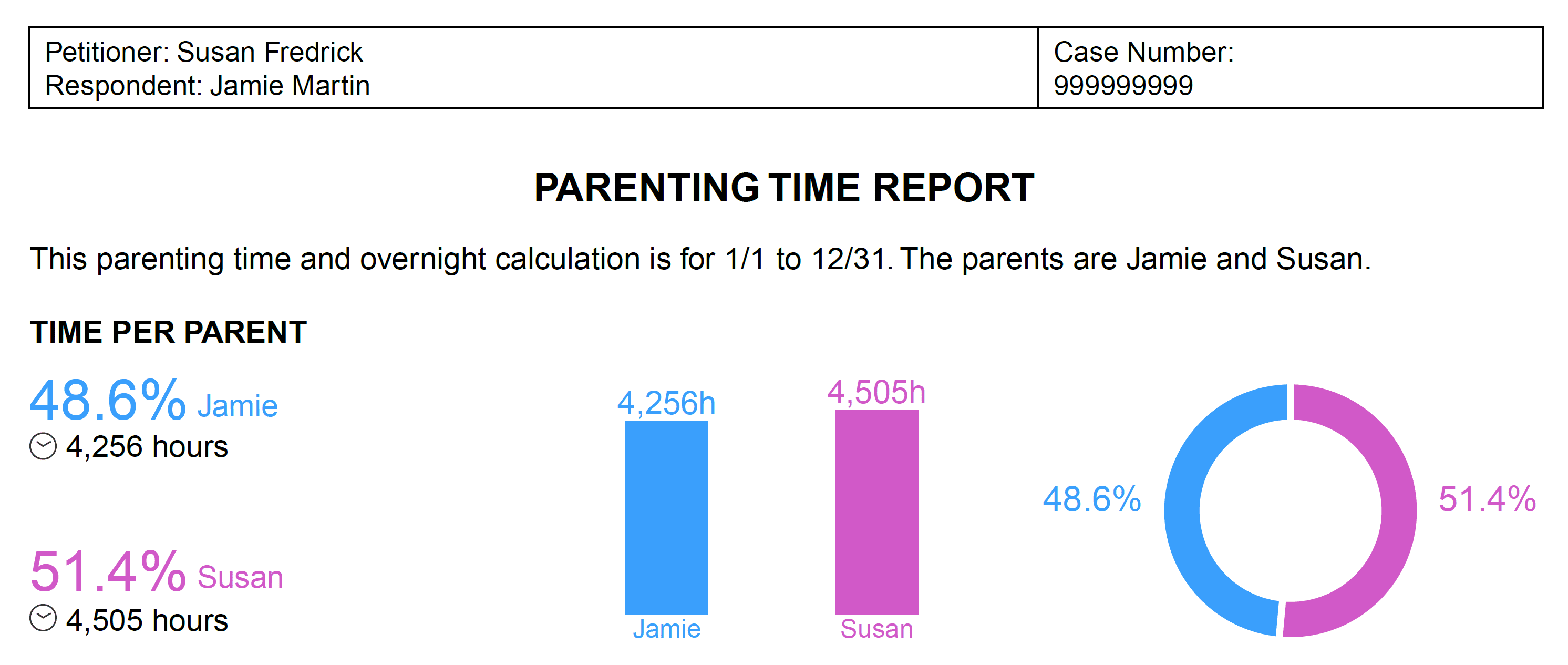
An accurate record of your parenting time is crucial throughout the custody process. It helps determine how much child support you pay or receive and shows the judge how closely you and your ex are following your parenting plan. Custody X Change instantly calculates your exact parenting time for any period, past or future.
3. Provides a step-by-step guide for creating a parenting plan
Most custody cases result in a parenting plan, which outlines how the children will be cared for. A plan becomes a court order once signed by a judge.
Custody X Change takes the guesswork out of the equation by walking you through each step of creating a comprehensive plan.
4. Keeps everything you need in one place
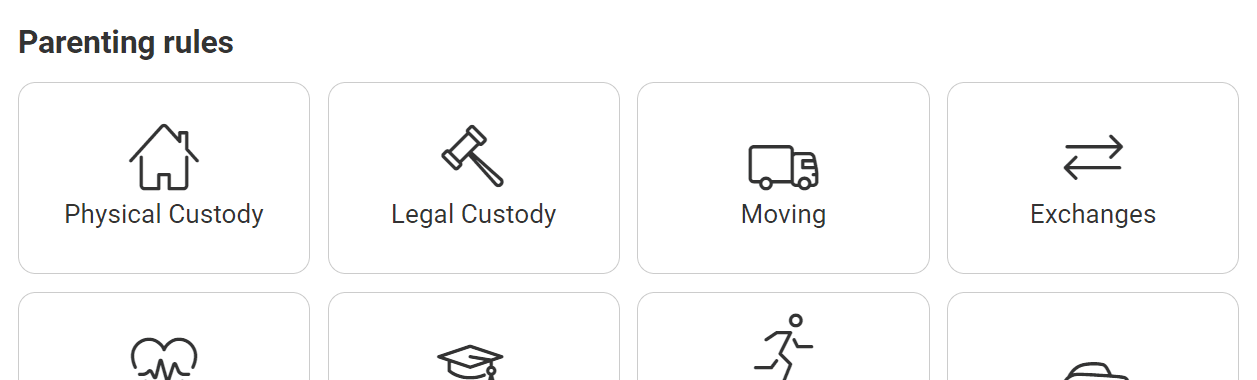
Custody X Change is the only tool that combines everything you need to make co-parenting easier, including:
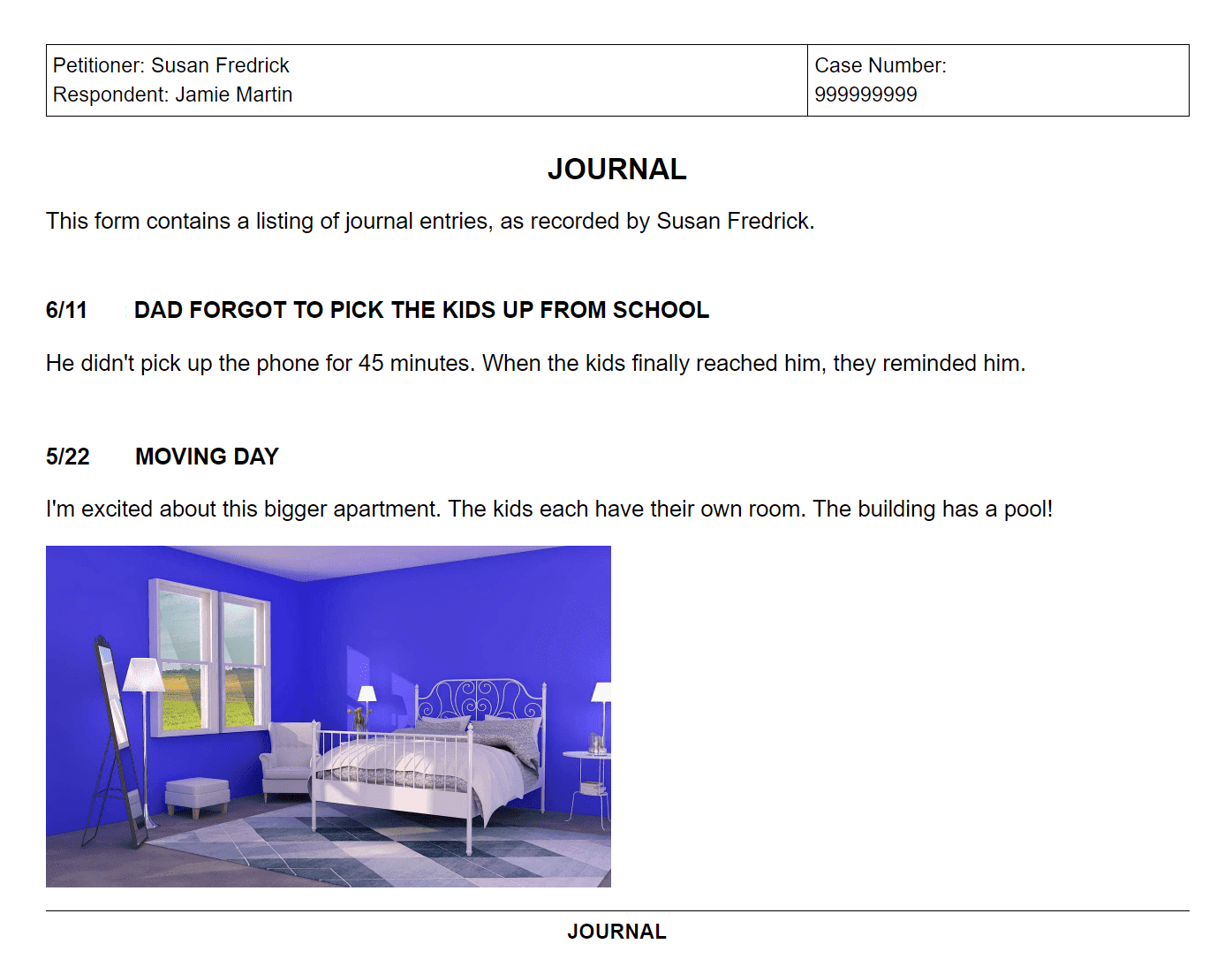
- A journal to record what happens
- An expense tracker
- All of your child's activities and info
- A messaging platform with a hostile language detector
- Calendar, parenting plan, and custody calculator
Join the 60,000+ other parents who have used our co-parenting tools since 2005

Save up to $50,000 by avoiding court
Write up your parenting agreement
without involving lawyers. Our templates
walk you
through each step.

Co-parent civilly
Our parent-to-parent messaging system,
which detects hostile language, lets
you
collaborate without the drama.

Get an accurate child support order
Child support is based on parenting time
or overnights in most jurisdictions.
Calculate
time instead of estimating.

Succeed by negotiating
Explore options together with visual
calendars and detailed parenting plans.
Present
alternatives and reach agreement.

Never forget an exchange or activity
Get push notifications and email
reminders, sync with other calendar apps
and share with
the other parent.

Organize your evidence
Track your expenses, journal what
happens, and record actual time. Print
organized,
professional documents.
I'm a stay-at-home mom and I've been stressing over my husband trying to pay as little as possible for child support. Your software has been more helpful than you will ever know.
— Gena McLellan, Rio Rancho, NMAre you a legal professional looking for a tool to help clients?
We can help you improve client satisfaction
with less time and effort
- Perform advanced calculations easily
- Create court-ready plans and reports
- Show clients multiple scheduling options
- Share the calendar and data with clients
- Stay up-to-date with clients' plans
- Use phone, tablet and computer apps
Our partnership with Custody X Change has been invaluable...It's a very thorough platform that can save thousands of dollars in legal fees. It also lets our clients make it easier for the (overburdened) judge, custody evaluator, or any other professional involved in their case to take their side by making their jobs easier. Highly recommended!
— Chris Barry, BeenThereGotOut.com